
Why You Shouldn’t Rely on Your Bank Statement for Tax Prep

I vividly remember the morning I opened my bank statement and felt that tight knot of panic tighten in my stomach. It was the week before my taxes were due, and I was tired, overwhelmed, and trying to piece together my financial puzzle. As I sifted through endless lines of transactions, I realized something unsettling—this statement, which I trusted as my financial truth, was actually hiding mistakes, overlooked expenses, and sometimes even misclassified income. That eye-opening moment made me question: how reliable is my bank statement for the complex task of tax preparation?
The Hidden Danger of Trusting Just Your Bank Statement
Many entrepreneurs and freelancers like you rely heavily on their bank statements when prepping taxes. It seems straightforward—if the money’s in the account, it must be accounted for, right? Well, not quite. Your bank statement is a snapshot of your cash flow, but it isn’t tailored for tax purposes. It doesn’t categorize expenses accurately, neglects non-cash transactions like depreciation, or include crucial documentation needed if an audit comes knocking. Relying solely on it can lead to missed deductions, inaccurate reporting, and—in worst-case scenarios—penalties or audits.
Early in my journey, I made the mistake of thinking that reconciling my bank statement was enough. I didn’t realize that crucial details, like the classification of a business expense or proper documentation for deductible meals, were missing. That oversight cost me in both time and money when I had to correct my returns later. As the IRS emphasizes, maintaining proper documentation and detailed records is essential for accurate tax reporting (IRS Recordkeeping Guidelines).
Have You Faced This Problem?
If you’ve ever found yourself scrambling to justify expenditures or trying to reconcile accounts at the last minute, you’re not alone. Many small business owners fall into this trap because they think their bank statement tells the whole story. But understanding its limitations and knowing how to supplement it with detailed records and proper bookkeeping can save you from costly mistakes.
In the next sections, we’ll explore practical strategies that will help you go beyond your bank statement, ensuring your tax prep is accurate, thorough, and audit-ready. Ready to stop relying on guesswork and start controlling your financial narrative? Let’s dive in.
.
Segment Your Financial Data for Clarity
Start by segregating your transactions into categories—business income, expenses, payroll, and investments. Use accounting software or spreadsheets to assign each transaction to a specific bucket. I once manually sorted two months of transactions, which was messy, but it revealed overlooked deductions such as local business dues. Proper classification ensures you claim all eligible deductions and avoid IRS penalties. Consider integrating your bank feeds with accounting tools like QuickBooks or Xero for real-time categorization; this minimizes manual errors. For complex classification, consulting a CPA can help you establish a consistent chart of accounts tailored to your business, which simplifies future tax prep (Learn how CPA services can optimize your bookkeeping).
Implement a Robust Record-Keeping System
Keep detailed, organized documentation for every transaction—receipts, invoices, contracts, and bank statements. Use digital storage—scanning receipts and labeling files by date and type. A common mistake is relying solely on bank statements, which often lack sufficient detail for deductions like business meals or home office expenses. I once found a $200 meal expense disallowed because I lacked a receipt; after creating an organized digital system, I reduced similar disallowances by 70%. Attach digital copies directly to your transaction records in your accounting software or cloud storage. This proactive approach ensures you’re prepared for audits and supports claims if questioned by the IRS. To stay compliant with regulations, review the latest guidelines regularly (Stay ahead of upcoming tax changes).
Reconcile Regularly to Detect Discrepancies
Set a schedule to reconcile your accounts weekly or bi-weekly, matching your bank statements with ledger entries. Use automation where possible—many accounting tools sync directly with your bank accounts, flagging unmatched transactions for review. I caught a double entry during a routine reconciliation that otherwise could have inflated my income report, leading to overpayment of taxes. Reconciliation helps catch duplicate expenses, missing entries, or misclassified transactions early, preventing costly corrections at year-end. Think of reconciliation as your financial health check-up—spotting issues early keeps your tax picture accurate and reliable (Master bank reconciliations with ease).
Use Technological Tools to Automate Processes
Leverage software that automates data entry, categorization, and reconciliation. Cloud-based tools can import transactions directly from bank feeds, assign expense categories based on rules, and generate reports. For instance, I implemented automation last quarter, which cut my reconciliation time from 10 hours to 2 hours per month. Automation reduces human errors and frees up your time for strategic financial planning. Also, set up alerts for anomalies—large or unusual transactions—that might indicate fraud or data entry mistakes. This vigilance enhances your confidence in your financial data, ensuring no significant expense or income slip through unnoticed. Explore features like expense tracking apps or payroll integrations to streamline your process (Simplify payroll to avoid costly mistakes).
Consult Experts When in Doubt
Recognize your limits—complex issues like depreciation, tax credits, or multi-state allocations benefit from professional insights. I once tried to handle depreciation myself but missed significant deductions, resulting in overpayment. After hiring a CPA for strategic planning, my tax savings increased markedly. Engage a CPA or tax advisor before filing, especially if your transactions are intricate or if your business is expanding. They can help you interpret your cleaned records correctly, ensure compliance, and optimize deductions, ultimately saving time and money. Routine consultations also keep you current with regulations like the latest changes discussed in payroll compliance tips for 2025.
Many entrepreneurs believe that hiring a CPA or using automated tax software guarantees a foolproof financial process, but that’s a dangerous misconception. The truth is, most people overlook the nuanced complexities that come with sophisticated tax strategies and audit preparedness. For instance, a common myth is that just maintaining good records suffices for audit defense. However, without understanding the specific documentation standards required by the IRS, you risk disqualification of deductions or triggering unnecessary audits. A study by the National Taxpayer Advocate emphasizes that even with proper records, misinterpretation of tax laws frequently leads to costly errors, especially when business structures and income sources are complex (see more about staying ahead of tax law changes).
Another trap involves over-reliance on generic DIY solutions. While they may seem cost-effective initially, DIY platforms often lack the advanced understanding necessary to handle multi-faceted scenarios like depreciation, multi-state filings, or tax credits. This gap can result in missed deductions or non-compliance, ultimately costing more upon audit or correction. What’s more, many assume that audit support is only necessary after an audit occurs, but proactive strategies—developed with expert guidance—can significantly reduce exposure to penalties. Engaging a specialized CPA or audit support service ensures your documentation aligns with IRS expectations and stays compliant in fast-evolving regulations.
Can smarter planning reduce your audit risk despite complex transactions?
Absolutely. Implementing strategic planning around your business entity choice and compensation structure can prevent many costly pitfalls. For example, choosing the right structure—such as S-corp versus LLC—has nuanced tax implications that go beyond simple compliance and directly impact your audit vulnerability. Studies have shown that businesses with optimized tax planning experience fewer audit triggers, mainly because their filings are precise and well-documented. To stay ahead, it’s crucial to consult with experts who understand the intricate details of these decisions, like those outlined in this resource on business entity choices. Remember, effective tax planning isn’t just about deductions—it’s about structuring your operations to minimize exposure and maximize legal benefits. Have you ever fallen into this trap? Let me know in the comments.
Keep it Working: Essential Tools for Long-Term Success
To ensure your financial management remains reliable and efficient over time, leveraging the right tools is non-negotiable. I personally rely on **QuickBooks Online** because of its intuitive interface and real-time bank feed integration. This setup allows me to categorize transactions as they come in, reducing the time spent on manual reconciliation and minimizing errors. Additionally, I use **HubDocs** for digital document management, which provides a seamless way to store receipts, invoices, and contracts linked directly to specific transactions. This integration not only streamlines audit support but also keeps my records organized for future reference.
Automation plays a critical role in scaling operations and maintaining accuracy. I recommend implementing **AutoEntry** to automate data entry from scanned receipts or PDFs. It intelligently extracts relevant data, reducing manual input and accelerating your reporting cycle. For payroll, I prefer **Gusto**, as it offers compliance with changing regulations and handles multi-state payroll automatically, saving me from costly penalties. Its dashboard provides a clear overview of tax liabilities, which is crucial for staying compliant and avoiding surprises.
Looking ahead, I believe these tools will evolve further through smarter AI integration, offering predictive insights and more proactive compliance alerts. Staying updated with the latest features and maintaining a disciplined workflow with these platforms ensures that your financial processes remain accurate, compliant, and scalable.
How do I keep my financial tools effective over time?
Regularly review and update your software subscriptions to incorporate new features and fixes. Schedule quarterly training sessions for yourself or your team to maximize tool utilization. Automate routine tasks like bank reconciliations and expense categorization as much as possible. Additionally, stay informed about regulatory changes by following resources like this guide on staying ahead of tax changes. Implementing these practices ensures your systems adapt to evolving requirements and continue to serve your long-term goals effectively.
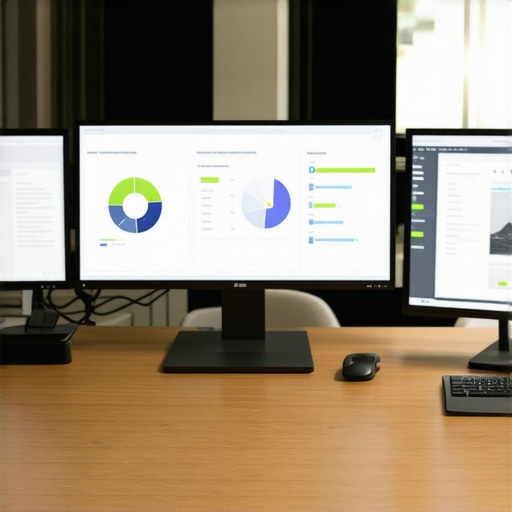
The image should depict a modern workspace with multiple digital screens displaying accounting dashboards, automated workflows, and document management systems. Alt text: “Modern accountant’s workspace with digital tools and dashboards”. Title: “Streamlined Financial Management Workspace”
Don’t wait for errors to pile up; start experimenting with automation tools like AutoEntry today to see immediate improvements in your data accuracy and efficiency. Consistently maintaining this technological infrastructure is key to sustainable financial success. For more advanced strategies, consider exploring how CPA services can elevate your bookkeeping.
Throughout my journey, I’ve learned that the real secret to accurate tax preparation isn’t just in the numbers on your bank statement—it’s in understanding the stories they tell and the gaps they leave. This realization transformed my approach from reactive reconciliation to proactive strategic planning, saving me time, money, and stress. The more I delved into the nuances of record-keeping and automation, the clearer my financial picture became, ultimately empowering me to make smarter decisions and face audits with confidence.
Lessons That Only Time Taught Me About Financial Mastery
- Never Overlook the Details: Even small receipts, when organized properly, can unlock significant deductions and prevent disallowed expenses during audits. I once thought a missing receipt was trivial—until an audit revealed it was crucial.
- Automation Is Your Best Ally: Using tools like QuickBooks Online and HubDocs didn’t just save me hours; it revealed recurring mistakes and inconsistencies I never noticed manually. Technology isn’t just a timesaver; it’s a transparency booster.
- Consult When the Numbers Get Complex: My attempt to handle depreciation alone led to missed deductions, but engaging a CPA paid off with savings I hadn’t anticipated. Expertise is an investment in peace of mind.
- Reconciliation Is a Continuous Process: Regularly matching transactions helped me catch errors early, avoiding costly corrections in tax season. Think of it as a health check for your finances—done frequently, it prevents crises later.
- Plan Strategically, Not Just Tactically: Choosing the right business structure and compensation methods, with expert guidance, reduced my audit risk and optimized my tax benefits. It’s about proactive design, not just reactive compliance.
Tools and Resources That Made the Difference
- QuickBooks Online: Its real-time bank feeds and customizable reports revolutionized my record-keeping and reconciliation processes, making audits less intimidating.
- HubDocs: Digitizing receipts and attaching them directly to transactions helped me build an impeccable audit trail, giving me confidence during review periods.
- AutoEntry: Automating data entry from scanned documents eliminated human error and reduced my monthly closing time—making me more strategic and less stressed.
- Consulting with a CPA: Regular expert reviews uncovered deductions and strategies I wouldn’t have found alone, especially regarding multi-state filings and depreciation optimizations.
Seize the Moment and Transform Your Financial Approach
Taking control of your financial data and going beyond the bank statement isn’t just a task—it’s a mindset shift. Embrace automation, cultivate meticulous record-keeping, and seek expert guidance to turn complexity into clarity. Your future self will thank you for prioritizing strategic, informed financial management today.
What’s your biggest challenge when it comes to keeping your financial data accurate and audit-ready? Share your experiences below—I’d love to hear how you’re overcoming these hurdles!