
The Strategic Way to Handle Accelerated Depreciation

I’ll never forget the pit in my stomach three years ago when I looked at my balance sheet and realized I’d basically handed the IRS a $15,000 interest-free loan. I had just invested in a fleet of new delivery vans, and like a novice, I was grinding through a standard five-year depreciation schedule. My cash flow was tight, my stress levels were through the roof, and I was sitting on a massive tax deduction I wasn’t using. That was my ‘lightbulb moment’—the realization that standard accounting isn’t always the smart way to manage your growth. Today, I want to walk you through how to use accelerated depreciation as a strategic weapon for your cash flow, rather than just a line item on your tax return. We’re going to fix the way you look at your assets so you can keep more of your hard-earned money right now.
Stop Waiting Years to Write Off Your Big Purchases
When you buy a piece of equipment, the instinct is to play it safe. But playing it safe is why most small businesses overpay on their taxes every single year. Accelerated depreciation isn’t some shady loophole; it’s a legitimate strategy designed to encourage us to reinvest in our companies. Early in my career, I made the mistake of ignoring the phase-out limits on Section 179 deductions, and I ended up with a tax bill that nearly sank my expansion plans because I didn’t realize that once you hit a certain threshold, the deduction starts to disappear. I don’t want that for you. By timing your large business purchases correctly, you can dramatically lower your taxable income in the years you need the cash most. This is also why fixed asset tracking is essential for growing businesses; you can’t accelerate what you haven’t properly cataloged. [IMAGE_PLACEHOLDER]
Is this just a fancy way to trigger an IRS audit?
This is the number one fear I hear from my neighbors and fellow business owners. They worry that if they claim too much too fast, the IRS will come knocking. The reality is that according to the Tax Foundation, provisions like bonus depreciation have been a stable part of the tax code specifically to stimulate the economy, though the rules are currently in a phase-down period. Have you ever felt like you were being ‘too aggressive’ with your write-offs? It’s a common concern, but when you have professional CPA services backing your play, these strategies are as solid as a rock. Mastering tax preparation secrets isn’t about breaking rules; it’s about knowing which levers to pull. Think of it like this: the government is actually incentivizing you to buy that new server or delivery truck now by letting you front-load the tax benefit. It’s a win-win, provided you have the document trail that stops auditors in their tracks. Let’s look at the specific steps to make this happen without causing a headache for your future self.
Break Your Assets Down into Bite-Sized Pieces
You can’t just throw a $50,000 expense at your ledger and hope for the best. I learned this the hard way during my second year when I bought a high-end server rack for my office. In my head, it was a ‘business expense.’ In the eyes of the IRS, it was a capital asset that had to be sliced up over five years. Because I didn’t realize why your general ledger is hiding your best tax deductions, I missed out on a huge immediate write-off until my accountant caught it. You have to categorize assets by their useful life—usually 3, 5, or 7 years for most small business gear. This isn’t just paperwork; it is the foundation of your entire tax strategy.
Write Off the Entire Bill with Section 179
Think of Section 179 like a ‘reverse credit card.’ Instead of paying for something over time, the government lets you take the tax benefit all at once, right now. This is where most people get confused, and honestly, why most business owners fail to maximize their depreciation deductions. You can deduct the full purchase price of qualifying equipment—up to a specific limit—in the very year you buy it. If you spend $20,000 on new computers today, you can potentially knock that entire $20,000 off your taxable income this year, rather than trickling out a tiny deduction for the next half-decade.

Timing the Market Without Ever Checking a Stock Chart
Tax strategy is a game of calendars. If you buy a truck on December 31st but don’t put it to work until January 2nd, you’ve just pushed your tax benefit back an entire year. The IRS uses a ‘placed in service’ rule. I once sat in a cold warehouse on New Year’s Eve just to make sure our new packaging line was actually running because I knew we needed that deduction to offset a high-profit quarter. When you know how to project your tax liability six months out, these year-end moves become your biggest cash-flow drivers.
The Vital Gap Between Buying and Actually Using Equipment
It’s not enough to have a receipt. To qualify for accelerated depreciation, the asset must be ready and available for its specific use. This is a common pitfall during audit support strategies every business needs in 2025. If you buy a specialized printer but it sits in a crate because you don’t have the software installed yet, it technically isn’t ‘in service.’ Always document the date the asset actually started producing for your business to avoid any disputes later.
Protect Your Deductions with a Fortress of Records
The IRS isn’t looking to punish you for being smart; they’re looking to punish you for being lazy. If you can’t prove when you bought it, what you paid, and when it started working, they will claw that deduction back with interest. I use a dedicated digital folder for every major purchase over $2,500. This is the best way to document large capital purchases effectively. When you combine this with professional CPA services demystified, you aren’t just guessing; you’re building a wall around your profits that no auditor can climb.
Everyone tells you to write off as much as possible, as fast as possible. But here’s the contrarian truth: front-loading your depreciation can actually hurt you if your business is on a steep upward trajectory. If you’re in the 12% tax bracket this year but expect to be in the 32% bracket in two years, you’re essentially ‘wasting’ a deduction on a low-tax year. By staying ahead of tax changes in 2025, you realize that sometimes, standard depreciation is the better play for long-term wealth. According to the Tax Foundation, the 100% bonus depreciation benefit is steadily declining, dropping to 60% in 2024 and 40% in 2025. This means timing isn’t just about your current income; it is about the law itself changing under your feet. 
Watch Out for the Depreciation Recapture Trap
The biggest ‘oops’ factor I see with high-growth startups is ignoring depreciation recapture. If you use Section 179 to write off a $40,000 piece of equipment today and then sell it for $25,000 in three years, the IRS is going to want their cut back. That $25,000 sale price becomes taxable income in the year of the sale. This is why your business deductions might be getting rejected or causing financial shocks later—you didn’t account for the tail end of the asset’s life. This is also where the hidden risks of using generic tax software become apparent; a DIY app won’t warn you about the tax bill coming three years from now because it isn’t looking at your long-term growth plan. When we look at why most small businesses overpay on self-employment taxes, it’s often because they focus on small immediate wins while ignoring these structural traps.
Does This Strategy Increase My Risk of an Audit?
The short answer is no, provided your records are spotless. However, huge swings in your ‘net income’ can trigger automated flags in the IRS system. If your revenue stays steady but your profit suddenly drops to zero because of a massive equipment purchase, you need audit support strategies every business needs in 2025 ready to go. It’s not just about the tax form; it’s about the payroll data, the purchase orders, and the usage logs. If you aren’t mastering payroll compliance expert tips for 2025 success alongside your tax strategy, you’re leaving a flank exposed. Have you ever fallen into the trap of over-deducting just to see your tax rate spike the following year? Let me know in the comments.
That spike usually happens because the business owner stopped paying attention once the initial deduction hit the books. To avoid that, you need a system that survives the ‘honeymoon phase’ of a new purchase. Managing a fleet of assets or a complex payroll isn’t a ‘set it and forget it’ project. It requires a specific stack of tools and a rhythm of maintenance that ensures you aren’t scrambling every April. I personally moved away from simple spreadsheets years ago because they couldn’t handle the nuance of multi-state nexus or real-time depreciation. Now, I lean heavily on the checklist for vetting a new accounting software integration to make sure my tech talks to each other. If your payroll software doesn’t sync perfectly with your general ledger, you are essentially asking for a reconciliation nightmare.
Stop Drowning in Data Entry
The biggest mistake I see as businesses scale is the belief that more software solves more problems. In reality, bad software just automates your mistakes. I’ve seen founders use high-end automated systems only to realize six months later that they were misclassifying every hardware purchase as a ‘supplies’ expense. This is why automated payroll apps still require a professional human review. Even the smartest AI isn’t going to understand the specific tax intent behind your latest capital investment. I use a combination of a dedicated cloud-based ledger and a human-led quarterly audit to catch these glitches before they become permanent records. 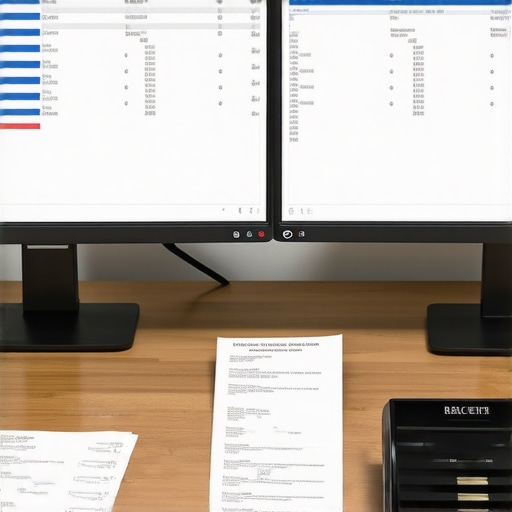
How do I maintain my asset records over the long haul?
Consistency is the only thing that saves you during an IRS inquiry. You need a centralized digital hub where every invoice is linked to a specific asset ID. According to the AICPA’s Statement on Standards for Tax Services (SSTS) No. 1, a tax professional should have a good faith belief that a tax return position has a realistic possibility of being sustained. That ‘good faith’ starts with your record-keeping. I recommend a monthly ‘sweep’ where you or your bookkeeper match every transaction over $500 to a physical receipt or a digital invoice. Learning how to organize your digital receipts for a stress-free audit defense isn’t just about saving space; it’s about building a chronological narrative of your business’s growth. When an auditor asks why you accelerated a specific asset, you should be able to pull up the ‘placed-in-service’ proof in under thirty seconds.
Predicting the Next Wave of Tax Automation
I predict that by 2026, the IRS will transition to more real-time data reporting, meaning the days of ‘fixing it later’ are numbered. We are already seeing a shift toward mandatory electronic filing for even the smallest entities. To stay ahead, you need to be proactive rather than reactive. By following Finance Authority’s guide to staying ahead of tax changes in 2025, you can start implementing the workflows today that will be mandatory tomorrow. This isn’t just about compliance; it’s about competitive advantage. While your competitors are stuck in a cycle of yearly panic, you’ll be making strategic moves based on clean, real-time data. To get there, you must move beyond basic bookkeeping. If you want to truly scale, you need to understand why you need a monthly PL review with your CPA. It’s the single most effective way to spot trends before they become liabilities. My challenge to you this month: pick one day to sit down with a professional and review your asset list for the last two years. You might be surprised at the ‘ghost assets’ you’re still carrying on your books.
Hard Truths from the Depreciation Trenches
Depreciation isn’t a ‘set it and forget it’ line item; it’s a living part of your growth strategy. One of my biggest lightbulb moments was realizing that the tax tail should never wag the business dog—buying equipment solely for a deduction is a recipe for a cash flow crisis. I also learned that missing a mid-quarter convention rule can be a costly mistake, which is how CPA services can transform small business accounting for the better. Finally, remember that your depreciation strategy is only as strong as your worst receipt; audit support starts the moment you swipe your card, not years later when you’re under review.
The Toolkit That Keeps My Ledger Clean
I don’t navigate these waters alone, and you shouldn’t either. I rely heavily on the Tax Foundation’s updates to track the shifting percentages of bonus depreciation to ensure I never miss a deadline. For daily operations, I recommend using a high-quality scanner combined with a dedicated app for how to organize your digital receipts for a stress-free audit defense. Most importantly, I suggest a quarterly ‘strategy sync’ with a professional to review your asset list and catch the most common errors in small business tax filings before they become permanent. [IMAGE_PLACEHOLDER]
Master Your Money and Change Your Future
You now have the framework to turn your tax liability into a powerful tool for reinvestment. Don’t let the technical jargon of tax preparation secrets keep you from claiming what you’ve earned through hard work. By strategically timing your purchases and documenting every move, you aren’t just following rules—you’re building a more resilient, profitable company. What’s the biggest business purchase you’re planning for this year, and are you ready to write it off? Let me know in the comments below.