
How to Survive a State Residency Audit for Tax Purposes

I’ll never forget the cold sweat that broke out when I opened a thick, official-looking envelope from the New York Department of Taxation and Finance. I had moved to Florida months prior, traded my snow boots for flip-flops, and assumed my tax obligations to the Empire State were a thing of the past. I was wrong. The state didn’t just want a piece of my income; they wanted to prove I never actually left. It felt like an invasive interrogation into my very soul—or at least my grocery shopping habits. If you are reading this, you might be staring at a similar letter, wondering how a bureaucrat hundreds of miles away can claim to know where you live better than you do. It’s a terrifying position to be in, but I’ve been through the fire, and I’m here to tell you that you can come out the other side with your bank account intact. Today, I’m going to break down the exact strategies I used to prove my domicile and how you can build a defense that even the most aggressive auditor can’t tear down.
That Moment the State Decides You Never Actually Left
When I first started my move, I made the classic rookie mistake: I thought changing my driver’s license was enough. It wasn’t. State auditors look at what they call ‘primary factors’—your home, your business ties, your time spent in the state, and where you keep your ‘near and dear’ items. My mistake was keeping a small storage unit in my old town filled with family photo albums and my old college trophies. To the auditor, those trophies meant I still intended to return. It’s these tiny, seemingly insignificant details that often lead to the reason most multi-state businesses fail their audits. They aren’t looking for a single smoking gun; they are building a mosaic of your life.
Is a residency audit actually winnable for a regular person?
Skepticism is healthy here because the burden of proof is entirely on you. The state assumes you are a resident until you prove otherwise. According to a report by the Tax Foundation, states are becoming increasingly aggressive with residency audits as remote work makes ‘tax flight’ more common. This is why having professional audit support is non-negotiable. You need to show a clean break. Have you ever felt like you were being watched by your own tax return? Many of my neighbors here in the South have faced the same ‘statutory residency’ trap, where spending just one day over the 183-day limit turns you into a full-year taxpayer in your old state. We are going to fix your record-keeping today. By utilizing specific tax preparation secrets and creating the document trail that stops auditors in their tracks, you can flip the script. We aren’t just filing forms; we are telling a story of a new life, and I’m going to show you how to make that story bulletproof.To survive a residency audit, you have to treat your life like a forensic crime scene where you are the lead investigator. The first step is what I call the Breadcrumb Method, where you intentionally leave a trail of evidence that proves your new location.
Turn Your Bank Statement into a Physical Shield
When I sat down with the auditor, I didn’t just bring my tax returns; I brought a massive binder of credit card statements. Every time I bought a gallon of milk or a tank of gas in Florida, I was creating a geo-located breadcrumb. I once spent three hours arguing over a $4.50 charge at a New York bagel shop because I’d gone back for a short weekend visit. The auditor claimed it proved I was still ‘living’ there. I only won because I had a boarding pass and a hotel receipt to show I was a tourist in my former home. This is why learning how to organize your digital receipts for a stress-free audit defense is the difference between a clean break and a massive bill. You need to show a consistent pattern of life in your new state. If you are still using your old bank for your daily coffee, you are handing the state a weapon. Knowing how to reconcile your bank accounts without the headache ensures that every transaction reinforces your new story rather than contradicting it. 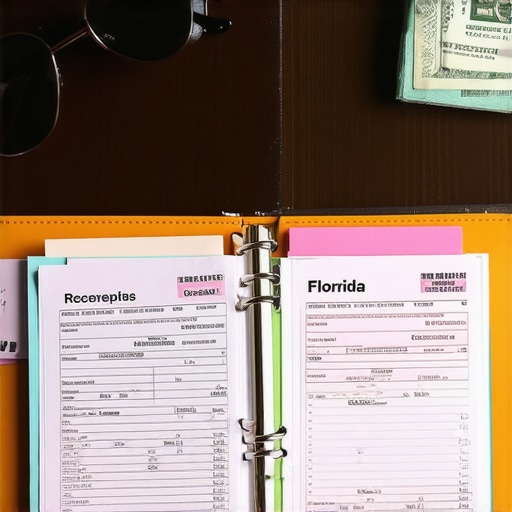
Don’t Leave Your Sentiment in the Old State
States use what they call the ‘Near and Dear’ test. It’s an analogy for where your heart truly lies. If you move to a tax-free state but leave your family heirlooms, your safe, or even your pet in the high-tax state, the auditor will argue you never actually left. In my case, I had to explain why my high-school yearbooks were still in a Bronx basement. They viewed those dusty books as an ‘anchor’ to my old life. To avoid this, you need to literally move your physical history. This is where CPA services demystified can help; a good advisor will tell you that it’s not just about the money, it’s about the ‘stuff.’ You also need to be incredibly careful if you run a business during a move. The costly mistake of mixing personal and business bank ledgers is the fastest way to lose an audit because it blurs the lines of where your economic activity is actually happening.
Stop Guessing and Start Logging Your Days
The 183-day rule is the most famous part of residency, but it’s also the most misunderstood. If you spend 184 days in a state, you are a statutory resident. But here is the kicker: any part of a day counts as a full day. If you land at JFK at 11:55 PM, that’s one full day in New York. I used a dedicated app to track my GPS location every single day because memory is a terrible defense in a courtroom. Providing the specific documents you need for a clean audit review means having a calendar that is beyond reproach. Don’t rely on your best guess. When you implement audit support strategies every business needs in 2025, you realize that the burden of proof is on you to show you were not there. I even had to show my why your monthly bank reconciliation is non-negotiable routines were happening from a Florida IP address. Every digital footprint matters when the state is trying to claw back your income.
The Big Myth About Automated Tax Software
Most people believe that using high-end software is a substitute for professional strategy. This is a dangerous misconception. While algorithms are great for math, they are terrible at defending a lifestyle change. In my experience, relying solely on technology often leads to the hidden risks of using generic DIY tax software for complex filings. State auditors don’t just audit your numbers; they audit your narrative. If your software says you are a Florida resident but your bank feed shows you are still paying a gym membership in Brooklyn, the software won’t flag that as a risk—but an auditor will. This is why audit support strategies every business needs in 2025 focus on the ‘why’ behind every transaction. You need to look beyond the screen and realize that why you shouldnt rely on your bank statement for tax prep alone is a lesson many learn too late. 
Your Vacation Home Is a Secret Tax Magnet
A common trap for high-earners is maintaining a ‘Permanent Place of Abode’ in their former state. You might think that as long as you spend fewer than 183 days there, you are safe. However, according to the Journal of Accountancy, many states apply a two-pronged test: domicile and statutory residency. If you maintain a property that is suitable for year-round use—even if you only visit for the holidays—you are halfway to being taxed as a full-year resident. This nuance is why how CPA services can transform small business accounting by providing proactive advice rather than just reactive filing. If you are a business owner, this risk doubles. I’ve seen founders lose six-figure sums because they didn’t realize why your remote hiring strategy might trigger out-of-state tax nexus, effectively dragging their company’s tax obligations back into the state they just left.
Can your remote hiring strategy actually trigger a multi-state audit?
Absolutely. When you hire someone in your old state while claiming you’ve left, you are creating a ‘nexus’ or a business connection. This is where mastering payroll compliance expert tips for 2025 success becomes your best defense. You must ensure your the fix for messy payroll reconciliation for remote teams is airtight so the state can’t use your employees as proof of your own physical presence. Have you ever fallen into this trap or been surprised by a tax bill from a state you thought you’d escaped? Let me know in the comments below. By integrating finance authority insights navigating financial regulations effectively, you can stay ahead of these aggressive state agencies. Remember, a residency audit isn’t just about where you are; it’s about proving where you aren’t.
The Tech Stack That Saved My Sanity
Moving my life was hard, but keeping the state out of my pocket for three years afterward was the real marathon. I quickly realized that manual spreadsheets were my enemy. I needed a system that automated the ‘I am not here’ proof. I started using a dedicated GPS tracking app that logs every time I cross a state line, providing a tamper-proof digital logbook. This was the move that cut my monthly bookkeeping time in half. Instead of hunting for gas receipts, I had a timestamped map of my life. To supplement this, I moved every single recurring bill to a cloud-based folder immediately. If you want to sleep at night, you need to know how to organize your digital receipts for a stress-free audit defense. I don’t just store PDFs; I tag them by location. When the auditor asks why I have a New York billing address on a legacy account, I can show the digital paper trail of my Florida usage instantly. 
How can I keep my residency status bulletproof for the long haul?
Maintenance is the part everyone ignores. You can’t just move and forget it; you have to live the move every single day. I perform what I call a ‘Residency Scrub’ every quarter. I check my credit card statements for any lingering ‘zombie’ charges—like an old gym membership or a library fine in my former state—that could be used as evidence of an ongoing connection. This is why you need a monthly financeauthoritys health check even if you think your books are clean. According to the American Institute of CPAs (AICPA) in their State and Local Tax (SALT) guidelines, the ‘clear and convincing evidence’ standard is what you must meet to overturn a state’s residency determination. This means your evidence must be highly and substantially more likely to be true than not. Proactive audit support key steps to ensure financial transparency involve constant monitoring of your footprint, ensuring that your finance authoritys guide to staying ahead of tax changes in 2025 is always on your desk.
Brace Yourself for the AI Tax Auditor
Looking ahead, the game is changing. I predict that within the next two years, state revenue departments will move away from manual audits and toward AI-driven ‘anomaly detection.’ They will cross-reference your social media check-ins, EZ-Pass data, and cell phone tower pings with your tax filings in real-time. This is why you must move beyond basic record-keeping. Start using a geo-tagged photo app for major purchases today. If you buy a new car or a major appliance in your new state, take a photo of the delivery in front of your new home with the location metadata enabled. This creates an irrefutable digital anchor. I strongly suggest you try the ‘Breadcrumb Review’ this weekend: look at your last 30 days of transactions and highlight anything that puts you in a different state. If you find more than two ‘accidental’ entries, it’s time to tighten your protocols before the state notices them for you.
The Hardest Truths About Breaking Up With Your State
Reflecting on my own journey, the biggest lightbulb moment was realizing that the state doesn’t just look for where you are, they look for where you are not. I found that cutting the cord requires a ruthless inventory of your life. For instance, keeping your old country club membership just in case is a red flag that screams residency. My advice? Get a local library card, join a local gym, and find a new primary care physician the week you arrive. These small acts of settling in are your strongest defense. I also learned that the reason most multi-state businesses fail their audits is often a lack of a unified narrative between the owner’s habits and the company records.
#IMAGE_PLACEHOLDER_E#
Where I Turn When the Tax Man Knocks
You don’t have to navigate this alone. My go-to toolkit includes a high-quality scanner for physical receipts and a dedicated calendar app that syncs with my GPS to verify my location every single day. I highly recommend looking into CPA services demystified to find an advisor who understands the nuances of domicile law. For staying ahead of the curve, I keep a digital copy of the finance authoritys guide to staying ahead of tax changes in 2025 on my phone. These resources turn a chaotic defense into a methodical win. Remember, implementing audit support key steps to ensure financial transparency is your best friend during this high-stakes transition.
Your Freedom is Worth the Paperwork
Moving is exhausting, but the peace of mind that comes with a bulletproof residency status is priceless. Don’t let the threat of a residency audit steal the joy of your new home or the savings you worked hard to keep. By mastering tax preparation secrets to save money this year and maintaining a solid the document trail that stops auditors in their tracks, you are protecting your financial future. You’ve made the move—now it is time to own it. Have you ever felt like your old state was trying to track you down after you already moved away? Let me know in the comments below!