
Signs your audit trail is actually a dead end for investigators

I still get a pit in my stomach when I think about my first ‘real’ sit-down with an auditor. I had my fancy cloud software, my colorful charts, and a sense of smug security that only comes from thinking you have everything under control. Then, the investigator asked for the source document for a 2022 equipment purchase that looked a bit ‘irregular.’ I smiled, clicked the link in my ledger, and waited. The screen turned white. ‘404 Page Not Found,’ it mocked. I checked my physical backup box; the receipt had been printed on thermal paper that had faded into a blank, ghostly white slip. My ‘audit trail’ wasn’t a trail at all—it was a series of dead ends that looked more like a Swiss cheese map than a professional record. I realized that day that having data isn’t the same as having a trail. If an investigator can’t follow the breadcrumbs from a bank statement to a specific, timestamped authorization, you don’t have an audit trail; you have a massive liability waiting to explode. Today, I am going to share exactly how to stop building these paper bridges that collapse the moment someone walks on them.
Stop Trusting Digital Ghosts to Protect Your Business
We often mistake ‘activity’ for ‘compliance.’ Just because your bank feed is syncing every morning doesn’t mean you’re prepared for an inquiry. I learned the hard way that auto-categorization often ruins your financial reports because it strips away the context an auditor craves. In those early days, I let my software do the thinking, and it nearly cost me a forty-thousand-dollar deduction simply because I couldn’t prove the business intent behind a flurry of transactions. If you aren’t actively verifying that your audit support and financial transparency steps are functional, you are essentially flying a plane with no landing gear. You might feel fine right now, but the descent is going to be rough. We need to move toward a system where every dollar has a story that can be verified in under sixty seconds.
Does your current software actually make you a target?
It is a fair question to ask. Many of us pay for high-end tools thinking they are a ‘shield,’ but often accounting integrations keep deleting important receipts during the sync process without ever sending an alert. I used to think that as long as the numbers balanced, I was safe. But a balanced ledger is meaningless if there’s no evidence to support the entries. According to the Association of Certified Fraud Examiners (ACFE), nearly 5% of corporate revenue is lost to fraud each year, often going undetected because of fragmented and broken record-keeping systems. This isn’t just about catching ‘bad guys’; it’s about proving you’re one of the ‘good guys’ when the pressure is on. I made the classic mistake of assuming my bookkeeper had it covered, only to find out common errors in small business audits usually stem from this exact type of overconfidence. Have you ever tried to find a receipt from two years ago only to find a blank folder or a broken link? If that’s happened even once, your audit trail is already failing. Let’s look at how audit support strategies for 2025 can turn those dead ends into a highway of proof that keeps the investigators happy and your bank account full.
Build an Unbreakable Documentation Chain
To build a trail that actually holds up, you need to stop thinking of bookkeeping as a data entry task and start seeing it as evidence collection. The first rule is the ‘Three-Point Check.’ Every single transaction in your ledger must be anchored by three distinct points: the bank transaction, the source invoice, and a clear business purpose memo. I remember a grueling month where I had to learn how to fix a messy general ledger in three days because I’d gotten lazy with the memos. A thousand-dollar charge simply labeled ‘Amazon’ is a red flag to an auditor. Was it a new printer or a pack of snacks? Without that context, you’re essentially guessing, and auditors don’t like guesses. You have to realize that why your accounting software isn’t a substitute for a pro who knows how to categorize these things correctly. Software can read the dollar amount, but it can’t read the intent.
Why Your Bank Statement is Only Half the Story
Think of your bank statement as the ‘what’ and your receipts as the ‘why.’ If you only have the ‘what,’ you’re missing the heartbeat of the transaction. This is where most people trip up during reconciliations. I once spent six hours chasing a twelve-cent difference, only to realize why your bank reconciliation is always off by pennies—it was a foreign transaction fee that my software had silently buried in a sub-account. #IMAGE_PLACE_HOLDER_B# To prevent this, you need a ‘Hard Close’ every thirty days. This isn’t just checking boxes; it’s a physical verification that every receipt exists in a permanent digital format—not just a link to a portal that might expire.
Fix the Mess Before the IRS Finds It
The most dangerous part of your audit trail is often your payroll. It’s the first place investigators look because the penalties are the highest. When I was starting out, I missed a local tax rate change that resulted in a small underpayment for six months. It seemed minor until the notice arrived. I had to learn the hard way about fixing payroll mistakes before the IRS sends a notice. Now, I treat payroll like a high-stakes flight checklist. You check the rates, you verify the classifications, and you document the ‘reason for hire’ for every contractor. If you aren’t sure if a worker is a contractor or an employee, you are gambling with your company’s future. By cleaning up these ‘ghost’ entries and ensuring every payroll cycle has its own independent folder of proof, you turn a potential explosion into a controlled, verifiable process.
Building a trail is only the first step; maintaining its integrity against the ‘automation myth’ is where the real work begins. Most business owners are told that if they use high-end software, the compliance is ‘taken care of.’ This is the single most dangerous assumption you can make. In reality, software is a calculator, not a consultant. It can compute numbers perfectly while leading you straight into a tax disaster because it lacks the context of your specific operations.
Why Blindly Trusting Your Software is a Massive Risk
We’ve been sold a dream that ‘set it and forget it’ applies to finances. It doesn’t. I’ve seen countless founders rely on default settings, only to realize later that why your accounting software keeps flagging the wrong errors is actually a sign of a deeper structural flaw in their setup. For instance, many people believe that as long as they have a digital receipt, they are safe. But if that receipt is for a ‘software subscription’ that you’ve categorized as ‘office supplies,’ you are creating a consistency gap. Auditors look for these patterns. In fact, the risk of misclassifying your software as office supplies is one of the quickest ways to trigger a manual review of your entire ledger. #IMAGE_PLACE_HOLDER_C# According to the IRS, payroll tax penalties alone account for a significant portion of the billions in penalties assessed annually. This usually happens because owners trust a ‘smart’ system that isn’t smart enough to know when you’ve crossed a state line or changed a worker’s status.
Is Your Payroll Provider Secretly Missing Local Tax Changes?
This is the question that keeps CFOs up at night. As we move into 2025, the complexity of managing a distributed team has exploded. You might think your platform has it handled, but why your payroll provider is likely missing local tax changes often comes down to their lag in updating municipal-level codes. I once worked with a client who had employees in four different states. They assumed the software handled the withholding, but it missed a specific city-level ‘head tax’ that resulted in three years of back taxes and interest. This is where how to manage a remote workforce’s state tax liability effectively becomes a competitive advantage rather than just a chore. If you are just clicking ‘approve’ on your payroll runs without verifying the local updates, you are flying blind.
The Cost of Cutting Corners on Your Professional Advice
The ‘oops’ factor often hits hardest during tax season. I’ve seen businesses spend thousands on fancy software only to skip the CPA review to save a few hundred bucks. This is the definition of ‘penny wise and pound foolish.’ I firmly believe that why choosing the cheapest CPA usually costs the most later is a lesson every growing business eventually learns—hopefully not during an audit. Real expertise helps you find tax preparation secrets to save money that no algorithm is programmed to find. For example, did you know that the timing of your equipment disposal can be just as important as the purchase itself? Software won’t tell you to wait until January 1st; a pro will. Have you ever fallen into this trap? Let me know in the comments. We need to stop viewing these services as an expense and start seeing them as an insurance policy against the chaos of an unverified audit trail.
I’ve learned that a pristine ledger is like a gym membership; it’s useless if you only use it once a year in January. To keep your audit trail from becoming a ghost story, you need to implement a rigorous ritual.
Stop treating your monthly close as optional
In my experience, the biggest threat to your business isn’t the IRS—it’s your own procrastination. This is why I advocate so strongly for why your business needs a monthly closing process. When you close the books every thirty days, you catch the ‘Swiss cheese’ holes in your data while the coffee from the transaction is still warm. If you wait until tax season, you’re not record-keeping; you’re archeologizing. I personally use a combination of automated OCR software and a manual spot-check. I don’t just trust the sync; I verify it. This level of diligence is where how CPA services can transform small business accounting by providing a second set of professional eyes that catch the anomalies you’ve become blind to. 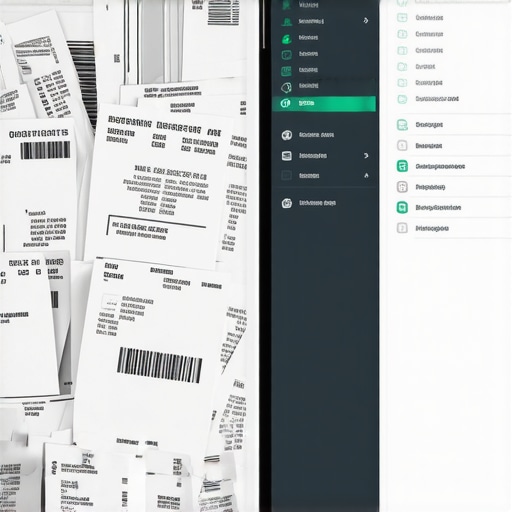
How do I keep my financial records healthy as I scale?
This is the question that separates the lifestyle businesses from the scale-ups. As your team grows, the complexity doesn’t just add up; it multiplies. You might start with one state’s payroll, but suddenly you have a remote developer in Texas and a designer in Florida. To stay ahead, you need to be mastering payroll compliance before you hit that ten-employee mark. I’ve seen too many friends hit a growth spurt only to have their momentum killed by a local tax audit they didn’t even know was possible. The future of this industry is moving toward real-time compliance. According to the Committee of Sponsoring Organizations of the Treadway Commission (COSO) in their internal control framework, the monitoring of these systems must be ongoing, not periodic. This means your ‘trail’ needs to be a living document, not a dusty archive.
Better tools lead to fewer headaches
If you’re still storing sensitive data on a local hard drive or a basic shared folder, you’re playing with fire. The shift toward moving your sensitive financial data to the cloud safely isn’t just about convenience; it’s about encryption and redundancy. I recommend using tools that offer direct API integrations rather than ‘screen scraping’ logins, which are notoriously flaky and lead to those ‘404’ errors I mentioned earlier. Also, keep a close eye on finance authority’s guide to staying ahead of tax changes in 2025 to ensure your tools are updated for the latest legislative shifts. If your software isn’t being patched for new 1099-K thresholds or state-specific withholding changes, it’s a liability, not a tool.
Make the move to strategic oversight
Eventually, you have to stop being the bookkeeper and start being the CEO. This is the moment for CPA services demystified, where you transition from ‘compliance’ to ‘strategy.’ You need someone who can look at your trail and tell you what the numbers mean for next year’s expansion, not just last year’s tax bill. **Advanced Tip:** This week, pick five random transactions from six months ago and see if you can find the source document in under sixty seconds. If you can’t, your system is broken. Take twenty minutes right now to audit your own ‘audit trail’ before someone else does it for you.I still get a pit in my stomach when I think about my first ‘real’ sit-down with an auditor. I had my fancy cloud software, my colorful charts, and a sense of smug security that only comes from thinking you have everything under control. Then, the investigator asked for the source document for a 2022 equipment purchase that looked a bit ‘irregular.’ I smiled, clicked the link in my ledger, and waited. The screen turned white. ‘404 Page Not Found,’ it mocked. I checked my physical backup box; the receipt had been printed on thermal paper that had faded into a blank, ghostly white slip. My ‘audit trail’ wasn’t a trail at all—it was a series of dead ends that looked more like a Swiss cheese map than a professional record. I realized that day that having data isn’t the same as having a trail. If an investigator can’t follow the breadcrumbs from a bank statement to a specific, timestamped authorization, you don’t have an audit trail; you have a massive liability waiting to explode. Today, I am going to share exactly how to stop building these paper bridges that collapse the moment someone walks on them.
Stop Trusting Digital Ghosts to Protect Your Business
We often mistake ‘activity’ for ‘compliance.’ Just because your bank feed is syncing every morning doesn’t mean you’re prepared for an inquiry. I learned the hard way that auto-categorization often ruins your financial reports because it strips away the context an auditor craves. In those early days, I let my software do the thinking, and it nearly cost me a forty-thousand-dollar deduction simply because I couldn’t prove the business intent behind a flurry of transactions. If you aren’t actively verifying that your audit support and financial transparency steps are functional, you are essentially flying a plane with no landing gear. You might feel fine right now, but the descent is going to be rough. We need to move toward a system where every dollar has a story that can be verified in under sixty seconds.
Does your current software actually make you a target?
It is a fair question to ask. Many of us pay for high-end tools thinking they are a ‘shield,’ but often accounting integrations keep deleting important receipts during the sync process without ever sending an alert. I used to think that as long as the numbers balanced, I was safe. But a balanced ledger is meaningless if there’s no evidence to support the entries. According to the Association of Certified Fraud Examiners (ACFE), nearly 5% of corporate revenue is lost to fraud each year, often going undetected because of fragmented and broken record-keeping systems. This isn’t just about catching ‘bad guys’; it’s about proving you’re one of the ‘good guys’ when the pressure is on. I made the classic mistake of assuming my bookkeeper had it covered, only to find out common errors in small business audits usually stem from this exact type of overconfidence. Have you ever tried to find a receipt from two years ago only to find a blank folder or a broken link? If that’s happened even once, your audit trail is already failing. Let’s look at how audit support strategies for 2025 can turn those dead ends into a highway of proof that keeps the investigators happy and your bank account full.
Build an Unbreakable Documentation Chain
To build a trail that actually holds up, you need to stop thinking of bookkeeping as a data entry task and start seeing it as evidence collection. The first rule is the ‘Three-Point Check.’ Every single transaction in your ledger must be anchored by three distinct points: the bank transaction, the source invoice, and a clear business purpose memo. I remember a grueling month where I had to learn how to fix a messy general ledger in three days because I’d gotten lazy with the memos. A thousand-dollar charge simply labeled ‘Amazon’ is a red flag to an auditor. Was it a new printer or a pack of snacks? Without that context, you’re essentially guessing, and auditors don’t like guesses. You have to realize that why your accounting software isn’t a substitute for a pro who knows how to categorize these things correctly. Software can read the dollar amount, but it can’t read the intent.
Why Your Bank Statement is Only Half the Story
Think of your bank statement as the ‘what’ and your receipts as the ‘why.’ If you only have the ‘what,’ you’re missing the heartbeat of the transaction. This is where most people trip up during reconciliations. I once spent six hours chasing a twelve-cent difference, only to realize why your bank reconciliation is always off by pennies—it was a foreign transaction fee that my software had silently buried in a sub-account. #IMAGE_PLACE_HOLDER_B# To prevent this, you need a ‘Hard Close’ every thirty days. This isn’t just checking boxes; it’s a physical verification that every receipt exists in a permanent digital format—not just a link to a portal that might expire.
Fix the Mess Before the IRS Finds It
The most dangerous part of your audit trail is often your payroll. It’s the first place investigators look because the penalties are the highest. When I was starting out, I missed a local tax rate change that resulted in a small underpayment for six months. It seemed minor until the notice arrived. I had to learn the hard way about fixing payroll mistakes before the IRS sends a notice. Now, I treat payroll like a high-stakes flight checklist. You check the rates, you verify the classifications, and you document the ‘reason for hire’ for every contractor. If you aren’t sure if a worker is a contractor or an employee, you are gambling with your company’s future. By cleaning up these ‘ghost’ entries and ensuring every payroll cycle has its own independent folder of proof, you turn a potential explosion into a controlled, verifiable process.
Building a trail is only the first step; maintaining its integrity against the ‘automation myth’ is where the real work begins. Most business owners are told that if they use high-end software, the compliance is ‘taken care of.’ This is the single most dangerous assumption you can make. In reality, software is a calculator, not a consultant. It can compute numbers perfectly while leading you straight into a tax disaster because it lacks the context of your specific operations.
Why Blindly Trusting Your Software is a Massive Risk
We’ve been sold a dream that ‘set it and forget it’ applies to finances. It doesn’t. I’ve seen countless founders rely on default settings, only to realize later that why your accounting software keeps flagging the wrong errors is actually a sign of a deeper structural flaw in their setup. For instance, many people believe that as long as they have a digital receipt, they are safe. But if that receipt is for a ‘software subscription’ that you’ve categorized as ‘office supplies,’ you are creating a consistency gap. Auditors look for these patterns. In fact, the risk of misclassifying your software as office supplies is one of the quickest ways to trigger a manual review of your entire ledger. #IMAGE_PLACE_HOLDER_C# According to the IRS, payroll tax penalties alone account for a significant portion of the billions in penalties assessed annually. This usually happens because owners trust a ‘smart’ system that isn’t smart enough to know when you’ve crossed a state line or changed a worker’s status.
Is Your Payroll Provider Secretly Missing Local Tax Changes?
This is the question that keeps CFOs up at night. As we move into 2025, the complexity of managing a distributed team has exploded. You might think your platform has it handled, but why your payroll provider is likely missing local tax changes often comes down to their lag in updating municipal-level codes. I once worked with a client who had employees in four different states. They assumed the software handled the withholding, but it missed a specific city-level ‘head tax’ that resulted in three years of back taxes and interest. This is where how to manage a remote workforce’s state tax liability effectively becomes a competitive advantage rather than just a chore. If you are just clicking ‘approve’ on your payroll runs without verifying the local updates, you are flying blind.
The Cost of Cutting Corners on Your Professional Advice
The ‘oops’ factor often hits hardest during tax season. I’ve seen businesses spend thousands on fancy software only to skip the CPA review to save a few hundred bucks. This is the definition of ‘penny wise and pound foolish.’ I firmly believe that why choosing the cheapest CPA usually costs the most later is a lesson every growing business eventually learns—hopefully not during an audit. Real expertise helps you find tax preparation secrets to save money that no algorithm is programmed to find. For example, did you know that the timing of your equipment disposal can be just as important as the purchase itself? Software won’t tell you to wait until January 1st; a pro will. Have you ever fallen into this trap? Let me know in the comments. We need to stop viewing these services as an expense and start seeing them as an insurance policy against the chaos of an unverified audit trail.
I’ve learned that a pristine ledger is like a gym membership; it’s useless if you only use it once a year in January. To keep your audit trail from becoming a ghost story, you need to implement a regulatory ritual.
Stop treating your monthly close as optional
In my experience, the biggest threat to your business isn’t the IRS—it’s your own procrastination. This is why I advocate so strongly for why your business needs a monthly closing process. When you close the books every thirty days, you catch the ‘Swiss cheese’ holes in your data while the coffee from the transaction is still warm. If you wait until tax season, you’re not record-keeping; you’re archeologizing. I personally use a combination of automated OCR software and a manual spot-check. I don’t just trust the sync; I verify it. This level of diligence is where how CPA services can transform small business accounting by providing a second set of professional eyes that catch the anomalies you’ve become blind to.
How do I keep my financial records healthy as I scale?
This is the question that separates the lifestyle businesses from the scale-ups. As your team grows, the complexity doesn’t just add up; it multiplies. You might start with one state’s payroll, but suddenly you have a remote developer in Texas and a designer in Florida. To stay ahead, you need to be mastering payroll compliance before you hit that ten-employee mark. I’ve seen too many friends hit a growth spurt only to have their momentum killed by a local tax audit they didn’t even know was possible. The future of this industry is moving toward real-time compliance. According to the Committee of Sponsoring Organizations of the Treadway Commission (COSO) in their internal control framework, the monitoring of these systems must be ongoing, not periodic. This means your ‘trail’ needs to be a living document, not a dusty archive.
Better tools lead to fewer headaches
If you’re still storing sensitive data on a local hard drive or a basic shared folder, you’re playing with fire. The shift toward moving your sensitive financial data to the cloud safely isn’t just about convenience; it’s about encryption and redundancy. I recommend using tools that offer direct API integrations rather than ‘screen scraping’ logins, which are notoriously flaky and lead to those ‘404’ errors I mentioned earlier. Also, keep a close eye on finance authority’s guide to staying ahead of tax changes in 2025 to ensure your tools are updated for the latest legislative shifts. If your software isn’t being patched for new 1099-K thresholds or state-specific withholding changes, it’s a liability, not a tool.
Make the move to strategic oversight
Eventually, you have to stop being the bookkeeper and start being the CEO. This is the moment for CPA services demystified, where you transition from ‘compliance’ to ‘strategy.’ You need someone who can look at your trail and tell you what the numbers mean for next year’s expansion, not just last year’s tax bill. **Advanced Tip:** This week, pick five random transactions from six months ago and see if you can find the source document in under sixty seconds. If you can’t, your system is broken. Take twenty minutes right now to audit your own ‘audit trail’ before someone else does it for you.
The Hardest Lesson I Learned About Ledger Integrity
I used to think a balanced bank feed was the holy grail of financial management. I was wrong. I eventually realized that why your current bookkeeping method is hiding your true margins often stems from a lack of granular detail. It is not just about where the money went, but why it went there at that specific moment. My biggest lightbulb moment was discovering why your CPA should be looking at your lease agreements—those documents contain hidden liabilities that software simply cannot interpret from a simple bank line item. If you want a bulletproof business, you have to stop treating your records as a chore and start treating them as your ultimate defense.
The Books and Tools That Redefined My Financial Sanity
To upgrade your system, I recommend moving beyond basic spreadsheets. I rely on OCR tools like Dext or Hubdoc to ensure that no receipt ever fades away like that thermal paper I mentioned earlier. If you are scaling, I also suggest reading ‘The E-Myth Revisited’ to shift your mindset from a technician to a business owner. For staying updated on the shifting landscape of compliance, finance authority insights on navigating financial regulations effectively is a resource I check religiously. These tools don’t just save time; they provide the peace of mind that comes from knowing your audit trail is actual proof, not just a promise.
Take Control of Your Financial Narrative
At the end of the day, your audit trail tells the story of your hard work and your integrity. Don’t let a technicality or a missing file change that narrative. Every time you verify a transaction or update your tax preparation secrets to save money, you are investing in the long-term health of your company. By embracing the right support, you can move from being afraid of the numbers to using them as a weapon for growth. Your future self will thank you for the work you do today. Have you ever struggled with finding documentation during an urgent request? Let me know in the comments below!