
The compliance trap of ignoring local occupational taxes
I’ll never forget the cold sweat I felt three years ago when I opened a certified letter from a municipality I hadn’t stepped foot in for months. I’m someone who prides myself on staying organized, yet there I was, staring at a notice of delinquency for a ‘Local Occupational Privilege Tax.’ I had filed my federal returns and kept my state withholding pristine, but I completely ignored the tiny jurisdiction where my remote contractor lived. It felt like a trap. I felt like a failure. That one oversight, which started as a measly ten-dollar fee, snowballed into hundreds of dollars in penalties and hours of frustrating phone calls with a local tax collector who didn’t care about my excuses. It was a wake-up call that changed how I view navigating financial regulations effectively.
Why These Tiny Local Taxes Create Massive Financial Headaches
The reality is that local occupational taxes are the hidden landmines of the business world. Most entrepreneurs focus on the ‘Big Two’—Federal and State—while local jurisdictions quietly wait for you to slip up. These taxes are often based on where your employees actually work, not just where your office is located. If you have a remote team, you are likely liable for taxes in places you’ve never even visited. I made the mistake of assuming my software handled everything, but why your payroll provider is likely missing local tax changes is a question every business owner needs to ask before the notices start arriving. According to the Tax Foundation, there are over 4,000 local jurisdictions in the United States that levy some form of income or occupational tax, each with its own unique set of rules and deadlines. [IMAGE_PLACEHOLDER] It is a fragmented system designed to catch the unwary. I learned the hard way that missing one small filing can trigger a full-blown nexus investigation.
Is This Really Worth the Stress for Such Small Amounts?
You might be thinking, ‘It’s just a few dollars, how bad can it be?’ I thought the same thing until the interest started compounding. The stress isn’t just about the money; it’s about the time lost and the risk to your business’s reputation. When I was trying to resolve my issues, I realized that how we fixed a three-year payroll tax backlog was one of the most grueling processes I’ve ever endured. Have you ever received one of these local tax ‘love letters’ out of the blue? If so, tell me—how did you handle it? Today, I’m going to show you exactly how to identify these local traps before they spring, ensuring your payroll stays compliant and your bank account stays protected from unnecessary levies. We’re moving past the surface level and looking at the granular details that keep your business safe from aggressive local collectors.
Find Where Your Team Actually Sleeps
The first step isn’t looking at your bank account; it’s looking at a map. You need to perform a quarterly audit of every employee and contractor’s physical work address. I used to think the ‘business address’ was the golden rule, but for local occupational taxes, the physical location of the human doing the work is what triggers the bill. Think of local taxes like a toll road; you don’t pay for the highway you started on, you pay for the specific stretch you are driving through. You must learn how to manage a remote workforces state tax liability effectively by verifying these micro-locations. If you miss a change in residency, you aren’t just late—you’re non-compliant.

Verify the Rates Manually Once
Don’t just take your software’s word for it. When I was dealing with my contractor in that tiny municipality, my payroll provider had the wrong rate by a half percent. It sounds like nothing, but over a year, that discrepancy creates a red flag for audit support strategies every business needs in 2025. Go to the local government’s ‘Earned Income Tax’ or ‘Occupational Privilege’ page. Check the rate yourself. If it doesn’t match your system, you are living on borrowed time. This is why why your current payroll setup is a compliance nightmare if it isn’t being double-checked by a professional.
Your Software Needs a Human Sitter
Automation is a wonderful tool, but it lacks the nuance of local law. I once had a client who relied entirely on a popular cloud accounting tool only to find out it hadn’t updated for a new ‘Transit Tax’ passed by a city council two months prior. The software eventually updated, but the back-taxes and interest were already ours to pay. This is where how CPA services can transform small business accounting. A human expert looks for these legislative shifts that an API might miss. We had to implement a monthly ‘Closing the Books’ protocol just to catch these ripples before they became waves.
Set Up a Compliance Calendar That Actually Works
Missing a deadline is the easiest way to get a ‘love letter’ from the tax collector. I now keep a separate calendar just for local filings—separate from federal and state. It’s a simple spreadsheet, but it saved me from another $300 penalty last year when a local school district tax was due on an obscure Tuesday in April. If you aren’t mastering payroll compliance expert tips for 2025 success, you are essentially leaving your vault door unlocked. I spent three days last summer fixing a messy general ledger after a bad bookkeeper ignored these dates, and I promise you, the preventive work is much cheaper than the cure.
Common wisdom suggests that as long as you have a shiny software subscription and a CPA who files your returns on time, you are shielded from the tax man. In my experience, this is the most dangerous myth in the business world. A standard, transaction-focused accountant is often just a historical record-keeper; they are documenting the past, not protecting your future. I’ve learned that why your accountant shouldnt just be doing your taxes becomes painfully clear when you realize they missed a shifting nexus threshold in a state where you only have one remote contractor. Relying on automation without high-level oversight is a recipe for a disaster that no ‘undo’ button can fix.
Your CPA shouldn’t just be a historical record keeper
Most entrepreneurs view their CPA as a required annual expense, like a car inspection. But here is the contrarian truth: if your CPA isn’t asking to see your lease agreements or contractor contracts, they are failing you. I’ve seen businesses lose thousands because their tax pro didn’t realize a specific contract clause triggered a local ‘Privilege Tax’ that the software completely ignored. This is why your accounting software isnt a substitute for a pro who understands the legislative ‘why’ behind the numbers. A study by the American Institute of CPAs (AICPA) highlights that as tax codes become more fragmented across local jurisdictions, the ‘talent gap’ in understanding these nuances is the leading cause of business audits. If you are just paying for data entry, you are leaving your vault door wide open.
#IMAGE_PLACE_HOLDER_C#
The nexus trap hiding in your remote team’s home office
There is a massive ‘oops’ factor currently brewing in the world of remote work. Many owners think ‘nexus’—the connection that allows a state to tax you—is only about where you sell products. That is a dated and expensive assumption. In many jurisdictions, simply having a laptop-wielding employee in a specific zip code for more than 14 days can trigger a filing requirement. I’ve spoken with founders who were blindsided by five-figure bills because they fell into the tax trap of misclassifying your key contractors as being ‘out of state’ when they were actually working from a highly taxed local district. You must know how to handle nexus for e-commerce sales tax and service-based operations simultaneously, or you’ll find yourself in a multi-state nightmare that drains your cash flow faster than a bad marketing campaign.
How can you tell if your audit trail is actually a dead end?
Sophisticated readers know that an audit isn’t just about having receipts; it’s about the narrative those receipts tell. If your internal documentation doesn’t match the specific requirements of a local collector, you’ve already lost. Are you using audit support strategies every business needs in 2025, or are you just crossing your fingers? I once saw a business fail an audit not because they didn’t pay, but because they couldn’t prove *where* the work was performed to the satisfaction of a local school board auditor. Have you ever fallen into this trap or received a notice that seemed totally nonsensical? Let me know in the comments. Moving forward, we need to shift from reactive filing to proactive audit support and key steps to ensure financial transparency. It’s the only way to sleep soundly while your team grows across the map.
I’ve learned that staying compliant isn’t a one-time event; it’s a rhythmic discipline. I no longer trust my software to just ‘handle it’ because software is only as smart as the data it’s fed. Today, I rely on what I call a ‘Geographic Integrity Check’ (GIC) performed at the end of every month. This process ensures that every new hire, every contractor relocation, and every temporary remote work stint is accounted for in our tax nexus map. This is exactly why your business needs a monthly closing process that goes beyond simple bank reconciliations. I use a combination of Rippling for its robust employee location tracking and cross-reference that with the Tax Foundation’s updated local tax maps. If you aren’t streamlining payroll processes for tech-driven businesses by verifying address metadata, you are essentially leaving a back door open for a local auditor to walk right through.
Ditch the spreadsheet for a real nexus tracker
For years, I kept a spreadsheet of local tax jurisdictions, but it became a graveyard of outdated information. Now, I advocate for ‘Automated Tax Engines’ that integrate directly with your general ledger, but with a critical human oversight layer. Why? Because automated engines often fail when an employee enters an address that the system doesn’t recognize as being within a specific municipal boundary. I’ve seen systems default to a county-level rate when a city-level occupational privilege tax was actually required. 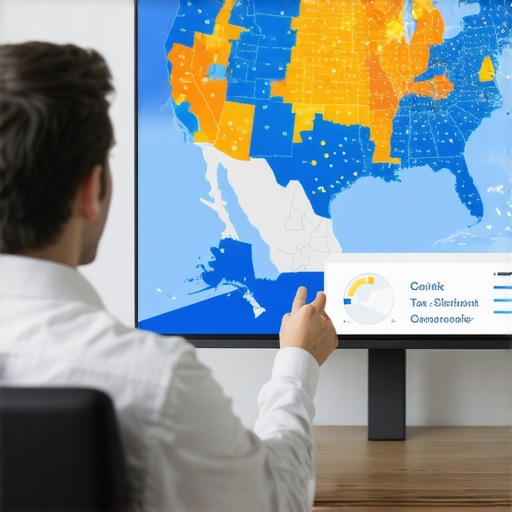 This is a major reason I believe finance authority’s guide to staying ahead of tax changes in 2025 is mandatory reading for anyone scaling a remote team. In the future, I expect we will see real-time geofencing integrated into payroll apps, where a laptop’s IP location triggers tax withholding automatically. According to a recent technical analysis in the Journal of Accountancy, firms that implement automated address verification see a 40% reduction in local tax penalties compared to those relying on manual employee self-reporting.
How do I keep my tax compliance from crumbling as I scale?
Maintenance is about building a ‘Compliance Moat.’ This means on the first of every month, we don’t just look at what we paid; we look for the gaps. We review any flags in our payroll feed and identify how to fix a discrepancy in your quarterly tax filings before the state or local municipality even notices the error. This proactive stance is what separates a stressed-out founder from a confident CEO. It’s the very essence of having CPA services demystified and your growth potential unlocked; your CPA shouldn’t just be filing forms, they should be helping you architect a system that is physically impossible to break. I challenge you to do this one thing tonight: log into your payroll dashboard, pull a report of your top five highest-paid contractors, and manually verify their physical work address against the local tax jurisdiction. If even one is off, you’ve just saved yourself thousands in future penalties. It’s time to move from reactive anxiety to proactive systems that allow you to grow without the fear of a hidden ‘love letter’ from a local collector.
The Hardest Lesson I Learned About Local Tax Filings
One of the most sobering realizations I’ve had is that ‘automated’ does not mean ‘accurate.’ I used to think that as long as my dashboard was green, my business was safe. But local occupational taxes are often the result of hyper-specific municipal codes that software developers simply haven’t hard-coded yet. I learned that why choosing the cheapest CPA usually costs the most later is because you aren’t paying for data entry; you are paying for the person who knows that a specific borough changed its filing threshold mid-year. My lightbulb moment came when I stopped viewing taxes as a math problem and started viewing them as a jurisdictional mapping challenge. If you want to protect your margins, you have to look beyond the software interface and verify the reality on the ground.
The Compliance Toolkit That Keeps Me Sane
Building a moat around your business requires more than just one app. I personally rely on a ‘triple-check’ system. First, I use the Tax Foundation’s interactive maps to stay aware of broad legislative shifts. Second, I follow the checklist for hiring your first out-of-state employee religiously to ensure we aren’t creating new nexus triggers blindly. Finally, I believe tax prep tips for freelancers and gig workers in 2025 are just as relevant for founders; keeping your records granular and decentralized from your main payroll engine allows for easier audits. I also keep a bookmark for finance authority’s guide to staying ahead of tax changes in 2025 because local rules move faster than federal ones, and missing a beat means missing a payment.
Take Back Control of Your Business Growth
Compliance shouldn’t feel like a weight dragging you down; it should be the foundation that allows you to scale with total confidence. When you invest in high-quality CPA services, you aren’t just buying peace of mind—you are buying the freedom to hire the best talent anywhere without the fear of a surprise audit knocking on your door. Don’t let the complexity of local jurisdictions stop you from building the team of your dreams. By shifting your mindset from reactive panic to proactive systems, you turn a potential liability into a professional standard. You’ve got the tools and the knowledge now—it’s time to clean up those records and lead your business into a more profitable, compliant future. Have you ever been blindsided by a local tax notice you didn’t even know existed? Let me know in the comments below!