
Why every multi-state business struggles with local sales tax

I sat at my desk three years ago, staring at a certified letter from a jurisdiction I didn’t even know existed. I had just expanded my online storefront to three neighboring states, thinking I was the next titan of industry. Instead, I was a guy who owed over four thousand dollars in back taxes to a single city because I didn’t realize they had their own separate filing requirement. It is a gut-punch that many of you probably know too well. If you have ever felt like the tax code was designed specifically to keep you from growing, you are not alone. Today, I am going to pull back the curtain on why every multi-state business hits this wall and, more importantly, how we can climb over it together. We will look at the nightmare of home-rule jurisdictions and why learning how to handle nexus for e-commerce sales tax is only the tip of the iceberg.
The Map That Does Not Make Sense
The problem is not just that there are fifty states; it is that there are over eleven thousand different taxing jurisdictions in the United States, according to the Tax Foundation. I made the classic rookie mistake of thinking a single state-level registration was enough. I was wrong. I spent weeks untangling my messy general ledger while trying to figure out why my software had not flagged these local rates. This is not just a big company problem anymore. Even if you are a small operator, the moment you hire one person in a new zip code, you have potentially walked into a compliance trap.
Is the local sales tax nightmare actually worth the hype?
You might be thinking, can I just wait until they find me? Trust me, that is a strategy that leads straight to a sales tax audit without a legal team, and nobody wants that level of stress on their plate. The penalties and interest alone can often dwarf the original tax you actually owed. Have you ever opened a tax notice and felt that immediate pit in your stomach? Tell me about it in the comments, because we have all been there. [image_placeholder] We need to talk about why your payroll provider is likely missing local tax changes and why relying solely on automated tools is a dangerous game for your cash flow. It is time to move past the panic of handling a surprise state tax inquiry and start building a proactive defense for your business.The first thing I do now, before I ever click ‘hire’ or ‘ship’ in a new territory, is perform a brutal nexus audit. Think of your business footprint like a physical weight; every time you add an employee or a warehouse, you are pressing down harder on the local infrastructure, and they want to be paid for that pressure. I remember when I brought on a single remote contractor in a ‘home-rule’ city in Alabama. I assumed my state registration covered it. Three months later, a polite but firm notice arrived regarding an ‘occupational license tax’ I’d never heard of. It felt like playing a game where the rules changed every time I crossed a street. To avoid this, you need to verify if the states you operate in are ‘state-administered’ or ‘self-administered’ at the local level.
Pinpoint Exactly Where You Owe a Piece of the Pie
You cannot fix what you haven’t measured. Start by mapping out your physical and economic presence. This is where managing a remote workforce’s state tax liability effectively becomes your primary focus. If you have a salesperson working from a coffee shop in Chicago, you might have local tax obligations that a standard state-level form won’t mention. I learned the hard way that the compliance trap of ignoring local occupational taxes can cost more in penalties than the actual tax collected. You need to pull a ‘Sales by Destination’ report and a ‘Payroll by Zip Code’ report every single quarter to see where your footprint is expanding before the state notices it for you.
The Home-Rule Minefield and How to Cross It
In states like Colorado, Louisiana, and Arizona, the ‘Home Rule’ system means cities can set their own rules and collect their own money. It is the accounting equivalent of having fifty different bosses who all speak different languages. If you rely solely on a basic plugin, you are asking for trouble. This is the moment where how CPA services can transform small business accounting moves from a luxury to a necessity. A pro doesn’t just look at the software; they verify the ‘sourcing’ rules—whether the tax is based on where the product is shipped from or where it lands.  I once spent a frantic weekend fixing a messy general ledger in three days because we miscalculated local rates in just four specific zip codes. It nearly wiped out our margin for that entire month.
Build a Defense That Actually Works
Automation is a tool, not a savior. You have to implement a ‘Trust but Verify’ system. Every month, reconcile your sales tax liability account against your actual filings. This is why your business needs a monthly closing process specifically for multi-state reporting. If you wait until the end of the year, you are just performing an autopsy on your cash flow. By staying on top of audit support key steps to ensure financial transparency, you turn a potential disaster into a routine administrative task. You want your books to be so clean that if an auditor does knock, you can hand them a folder and go back to running your company.Wait, I know what you’re thinking. “I pay for the premium tier of my accounting software; surely that handles the weird local rules.” This is the biggest myth in the industry. Everyone tells you that automation is the cure-all for compliance, but in my experience, over-reliance on software is exactly what triggers the most expensive audits. Software is reactive. It relies on databases that might be months behind the actual legislative changes in a small municipality in Colorado or Alabama. According to reports by the American Institute of CPAs (AICPA), the sheer volume of local tax law changes makes it nearly impossible for a single “plug-and-play” solution to catch every nuance without constant human oversight. This is why why your accounting software isn’t a substitute for a pro who understands the intent behind the laws, rather than just the code.
The Stealth Trap of Remote Work Compliance
There is a specific “oops” factor I see constantly: the assumption that a remote worker is just a payroll entry. If that employee is working from a home office in a state where you have no other presence, you haven’t just added a teammate; you’ve potentially created a “nexus” for sales tax, income tax, and local business licenses. I’ve seen companies get hit with five-figure bills because they didn’t realize a single developer in a specific zip code triggered a whole new filing requirement. This is the core of the tax trap of misclassifying your key contractors or remote staff. Have you ever fallen into this trap where a single hire turned into a tax nightmare? Let me know in the comments, because we need to normalize these stories so others can avoid them. 
Can you really trust your payroll provider with local nexus?
The short answer is: usually not. Most providers are great at federal and state withholding, but they often stumble on the “occupational taxes” or “local service taxes” that vary by street address rather than just zip code. This is why finance authority’s guide to staying ahead of tax changes in 2025 emphasizes a multi-layered approach. You need audit support strategies every business needs in 2025 that include a manual review of your nexus footprint twice a year. If your payroll provider isn’t asking you for the specific city and school district of your new hires, they are likely missing something critical.
Why the Lowest Quote Usually Ends Up Costing the Most
When you are looking for help, it is tempting to go with the most affordable option to keep overhead low. But why choosing the cheapest CPA usually costs the most later comes down to the depth of their investigation. A “budget” service will file what you give them without question. A high-level partner will look at your contracts, your physical leases, and even your marketing materials to see if you’re accidentally creating tax obligations you didn’t know existed. I’ve learned that paying for expertise upfront is significantly cheaper than paying for a forensic cleanup once a state agency starts asking questions. It’s about buying peace of mind, not just a filled-out form.The Specific Stack That Saves My Sanity. I’ve realized over time that I don’t need the most expensive software on the market; I need the most communicative one. My personal stack involves a core accounting platform that integrates directly with a specialized tax engine—this is the only way to avoid the manual entry errors that trigger red flags. This isn’t just about streamlining payroll processes for tech-driven businesses; it’s about ensuring every transaction has a digital fingerprint that matches the exact local laws of the buyer. I use a tool that specifically handles ‘sourcing’ logic, which is the nightmare of identifying if a sale is origin-based or destination-based automatically. But here is the kicker that most ‘tech bros’ miss: I still have my CPA perform a ‘spot check’ on the top 10% of my highest-revenue jurisdictions every single quarter. This human-software hybrid approach is why audit support key steps to ensure financial transparency actually work in the real world. Without that human eye, you’re just automating your own demise. 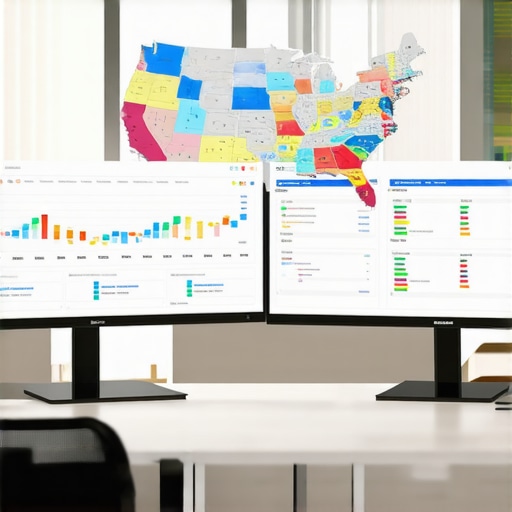
How do I maintain multi-state compliance without going broke?
It starts with a hard rule in my company: nothing moves—no new hire is made, and no new warehouse is leased—unless it is documented through a compliance checklist first. I treat my general ledger as a living organism. By implementing a strict monthly closing process, I catch what I call ‘nexus drift.’ This is the phenomenon where your business footprint slowly creeps into a new state via a remote hire or a temporary pop-up shop before it becomes a registered liability. I also rely heavily on the technical documentation from the Streamlined Sales Tax (SST) Governing Board. They provide a roadmap for which states offer free compliance software for qualifying businesses, which can save a mid-sized company thousands in annual subscription fees. Staying disciplined with mastering payroll compliance expert tips for 2025 success means I am not just reacting to notices; I’m predicting them before they are even printed.
The Day the IRS Becomes an API
Here is my prediction for the next five years: tax reporting will move from ‘periodic’ to ‘real-time’ or ‘near-real-time.’ Governments are growing tired of waiting for annual or even quarterly returns. They want data as it happens, much like how credit card processors track transactions. This shift is why finance authority’s guide to staying ahead of tax changes in 2025 is so focused on cloud integration and API-first accounting. If your systems aren’t talking to each other today, they won’t be able to talk to the government agencies of tomorrow. You need audit support strategies every business needs in 2025 that prioritize data integrity over mere data entry. If you want to jump ahead of the curve and sleep better tonight, I challenge you to perform a ‘Shadow Payroll’ audit this week. Open your payroll dashboard and verify the physical work location of your last three hires against your current state registrations. You might find a hole in your defense that could save you five figures in future penalties. It’s a small move, but it’s the difference between a scaling business and a legal case study.
What I Wish Someone Told Me Before I Crossed State Lines
One of the biggest ‘lightbulb moments’ for me was realizing that my ledger isn’t just a record; it’s a legal document. When I finally sought out CPA services demystified, I realized my errors weren’t just mathematical—they were structural. Secondly, you cannot outrun a bad system. I’ve seen peers try to hide from local jurisdictions, only to end up in a situation where they needed to learn how we fixed a three-year payroll tax backlog just to stay in business. Finally, compliance isn’t a chore; it’s a competitive advantage. If your books are clean, you can pivot faster than any competitor bogged down by debt and notices.
The Sources That Keep My Business Compliant
I don’t navigate these waters alone. I rely heavily on finance authority insights navigating financial regulations effectively to stay updated on shifting laws. For my actual filing season, I look at tax preparation secrets to save money this year to ensure I’m maximizing every possible deduction while staying within the lines. I also recommend keeping the Streamlined Sales Tax (SST) Governing Board site bookmarked; it is the definitive truth in a world of conflicting software marketing. Additionally, I always suggest a quick review of audit support key steps to ensure financial transparency whenever you enter a new market.
Take Control of Your Financial Footprint Today
Scaling a business is terrifying enough without the constant shadow of a state inquiry. You’ve worked too hard to let a local filing error dismantle your progress. By investing in proactive audit support strategies every business needs in 2025, you aren’t just preparing for a ‘what if’—you are building a foundation that can withstand the scrutiny of any jurisdiction. You’ve got this, and more importantly, you’re now armed with the knowledge to do it right. Robust audit support is the shield that lets you focus on your customers instead of your paperwork. Have you ever discovered a local tax requirement you completely missed until a letter showed up? Let me know your story in the comments below!