
Choosing a nexus-friendly tech stack for multi-state e-commerce

The cold sweat didn’t hit me until I saw the letterhead: Illinois Department of Revenue. I don’t live in Illinois. I don’t have a warehouse there. I’d never even eaten a deep-dish pizza in Chicago! But my online store had crossed a ‘nexus’ threshold I didn’t even know existed, and suddenly, I was on the hook for thousands in uncollected sales tax. It was a visceral realization that the ‘set it and forget it’ mentality of my early days was a recipe for financial disaster. If you’re selling products across state lines, you aren’t just running a shop; you’re managing a complex web of legal obligations that can feel like a maze built by someone who hates you. Today, I’m going to share exactly how I rebuilt my tech stack to stop the bleeding and why you need to do the same before the auditors find you. We are going to move past the panic and build a system that handles the heavy lifting of compliance automatically. Have you ever received one of those ‘surprise’ tax notices from a state you’ve never even visited? It’s a lonely feeling, but I promise we can fix it together.
Stop Guessing and Start Automating Your Multi-State Presence
I’ll be the first to admit that my biggest early mistake was thinking my basic Shopify settings were ‘good enough.’ I relied on a shaky connection between my store and a generic accounting tool, which is a classic example of why your accounting integration keeps deleting important receipts or failing to sync right when the quarterly deadline looms. I was flying blind. You see, the modern e-commerce landscape changed forever after the Wayfair Supreme Court decision. Now, it’s not about where you are; it’s about where your customers are. Understanding how to handle nexus for e-commerce sales tax is the difference between a thriving business and one that gets shut down by state authorities. I spent weeks cleaning up a mess that could have been avoided with the right tools from day one.
Do I Really Need to Spend This Much on Software?
It’s the question I get asked most often by neighbors and fellow entrepreneurs. They see the monthly subscription fees for tax automation tools and flinch. I get it. But consider this: according to the Tax Foundation, there are now more than 11,000 different sales tax jurisdictions in the United States, each with its own specific rules and rates. Expecting a human brain—or a simple spreadsheet—to track that is pure madness. When you realize why every multi-state business struggles with local sales tax, the cost of software starts to look like a bargain. It’s essentially insurance against the nightmare of handling a sales tax audit without a legal team. I’d rather pay a hundred bucks a month for peace of mind than lose sleep over a potential $20,000 liability. We’re going to look at the three-pillar approach I use now: real-time calculation, automated filing, and multi-state registration management.
Map Your Footprint Before the States Do it for You
The first thing I had to do was stop assuming I knew where I stood. In the e-commerce world, nexus is a moving target. You might have physical nexus because of a remote employee—which is why knowing how to manage a remote workforce’s state tax liability effectively is crucial—or economic nexus based on sales volume. I once spent three days manually calculating my sales for California, only to realize I had exceeded their $500,000 threshold months ago. I was already late, and the stress of realizing I was essentially an unregistered tax collector for the state was paralyzing. You need to pull your sales data into a heat map. Most modern tax tools will do this for you, showing you exactly how close you are to the ‘danger zone’ in all 45 states that collect sales tax. This isn’t just about sales; it’s about preparation. If you wait until you get a letter, you’re already looking for audit support strategies every business needs in 2025 rather than just setting up a simple tracker. 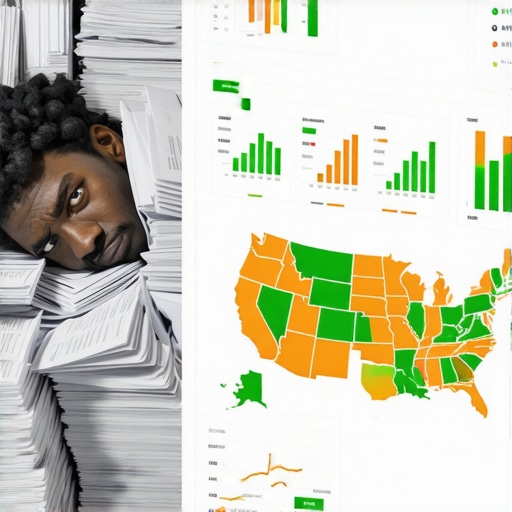
Stop Fighting Your Accounting Software
Integration is the word that broke my spirit for a solid month in 2021. I thought my ledger and my tax software were talking, but they were more like two people screaming in different languages. I’d see a tax collected in my store, but it wouldn’t show up in my liability account. This is the core reason why your accounting software isn’t a substitute for a pro. I had to manually go back and reconcile three months of transactions because a ‘helpful’ update broke the API bridge. The lesson? Check your integrations weekly. If you’re also dealing with employees, remember that why your current payroll setup is a compliance nightmare often stems from the same broken data silos. Your sales tax, payroll, and income tax data must live in a unified ecosystem, or you’ll spend your weekends chasing pennies while the big liabilities grow.
Register Once and Manage Forever
When I finally decided to get compliant in New York, I tried to DIY the registration. I spent four hours on a government website that looked like it was designed in 1994, only to have my application rejected because I didn’t have a ‘Certificate of Authority’ from a different department I’d never even heard of. It was a complete mess that cost me time and money I couldn’t afford to lose. Don’t do this. Use a registration service or consult with experts who understand how cpa services demystified unlock your business growth potential by taking these administrative hurdles off your plate. Once you’re registered, the ‘filing’ part should be the easy bit—provided your software is actually pulling the right numbers. I now use an automated filing service that submits the returns and initiates the payments from a dedicated tax-only bank account. This way, I never accidentally spend ‘the state’s money’ on inventory. It’s about building a fortress around your business that even the most aggressive auditor can’t penetrate.
Your CPA Isn’t a Mind Reader (and That’s a Problem)
Most business owners I talk to have this comforting, yet dangerous, belief: ‘My accountant handles that.’ But here is the contrarian truth I learned the hard way: most CPAs are historians, not fortune tellers. If you only talk to them once a year in April, they are just recording the wreckage of your past mistakes. This is exactly why your accountant shouldn’t just be doing your taxes but should be actively involved in your monthly operations. A standard accountant might see your sales volume, but they won’t necessarily know that your new ‘contractor’ in Austin actually triggers a physical nexus for the whole company. This disconnect is why choosing the cheapest CPA usually costs the most later when you’re hit with penalties for a state you didn’t even know you were ‘in.’
The Invisible Nexus Trap You’re Probably Ignoring
The ‘oops’ factor usually hits when you realize that sales tax and income tax nexus are not the same thing. You might hit the economic threshold for sales tax in one state, but stay under the ‘doing business’ threshold for income tax—or vice versa. It’s a sophisticated shell game. For instance, according to the National Federation of Independent Business (NFIB), the administrative cost of tax compliance for small firms is 67% higher than for larger firms. That’s because we don’t have entire departments to catch these nuances. If you are hiring remote talent to scale, you need to understand the compliance move for companies hiring remote state workers before you cut that first paycheck. Otherwise, you’re just inviting an audit. Have you ever fallen into this trap of assuming one type of compliance covered them all? Let me know in the comments because I spent six months untangling that exact knot.

What Happens When Your Software Misses a Local Law?
We love to talk about automation, but software is only as good as its last update. I’ve seen cases where a local occupational tax change wasn’t pushed to a major payroll provider for three weeks, leaving a client with a five-figure ‘correction’ notice. This is why your current payroll setup is a compliance nightmare if it doesn’t have a human oversight layer. You need audit support strategies every business needs in 2025 that include a ‘manual spot check’ protocol. Relying 100% on a dashboard is how you end up looking for how to fix a discrepancy in your quarterly tax filings while the interest is accruing. Following the finance authority’s guide to staying ahead of tax changes in 2025 isn’t just about reading news; it’s about verifying that your tech stack is actually reflecting those changes in real-time. Don’t let a coding error in a Silicon Valley office become your financial liability in a state audit room.
The cold sweat didn’t hit me until I saw the letterhead: Illinois Department of Revenue. I don’t live in Illinois. I don’t have a warehouse there. I’d never even eaten a deep-dish pizza in Chicago! But my online store had crossed a ‘nexus’ threshold I didn’t even know existed, and suddenly, I was on the hook for thousands in uncollected sales tax. It was a visceral realization that the ‘set it and forget it’ mentality of my early days was a recipe for financial disaster. If you’re selling products across state lines, you aren’t just running a shop; you’re managing a complex web of legal obligations that can feel like a maze built by someone who hates you. Today, I’m going to share exactly how I rebuilt my tech stack to stop the bleeding and why you need to do the same before the auditors find you. We are going to move past the panic and build a system that handles the heavy lifting of compliance automatically. Have you ever received one of those ‘surprise’ tax notices from a state you’ve never even visited? It’s a lonely feeling, but I promise we can fix it together.
Stop Guessing and Start Automating Your Multi-State Presence
I’ll be the first to admit that my biggest early mistake was thinking my basic Shopify settings were ‘good enough.’ I relied on a shaky connection between my store and a generic accounting tool, which is a classic example of why your accounting integration keeps deleting important receipts or failing to sync right when the quarterly deadline looms. I was flying blind. You see, the modern e-commerce landscape changed forever after the Wayfair Supreme Court decision. Now, it’s not about where you are; it’s about where your customers are. Understanding how to handle nexus for e-commerce sales tax is the difference between a thriving business and one that gets shut down by state authorities. I spent weeks cleaning up a mess that could have been avoided with the right tools from day one.
Do I Really Need to Spend This Much on Software?
It’s the question I get asked most often by neighbors and fellow entrepreneurs. They see the monthly subscription fees for tax automation tools and flinch. I get it. But consider this: according to the Tax Foundation, there are now more than 11,000 different sales tax jurisdictions in the United States, each with its own specific rules and rates. Expecting a human brain—or a simple spreadsheet—to track that is pure madness. When you realize why every multi-state business struggles with local sales tax, the cost of software starts to look like a bargain. It’s essentially insurance against the nightmare of handling a sales tax audit without a legal team. I’d rather pay a hundred bucks a month for peace of mind than lose sleep over a potential $20,000 liability. We’re going to look at the three-pillar approach I use now: real-time calculation, automated filing, and multi-state registration management.
Map Your Footprint Before the States Do it for You
The first thing I had to do was stop assuming I knew where I stood. In the e-commerce world, nexus is a moving target. You might have physical nexus because of a remote employee—which is why knowing how to manage a remote workforce’s state tax liability effectively is crucial—or economic nexus based on sales volume. I once spent three days manually calculating my sales for California, only to realize I had exceeded their $500,000 threshold months ago. I was already late, and the stress of realizing I was essentially an unregistered tax collector for the state was paralyzing. You need to pull your sales data into a heat map. Most modern tax tools will do this for you, showing you exactly how close you are to the ‘danger zone’ in all 45 states that collect sales tax. This isn’t just about sales; it’s about preparation. If you wait until you get a letter, you’re already looking for audit support strategies every business needs in 2025 rather than just setting up a simple tracker. #IMAGE_PLACE_HOLDER_B#
Stop Fighting Your Accounting Software
Integration is the word that broke my spirit for a solid month in 2021. I thought my ledger and my tax software were talking, but they were more like two people screaming in different languages. I’d see a tax collected in my store, but it wouldn’t show up in my liability account. This is the core reason why your accounting software isn’t a substitute for a pro. I had to manually go back and reconcile three months of transactions because a ‘helpful’ update broke the API bridge. The lesson? Check your integrations weekly. If you’re also dealing with employees, remember that why your current payroll setup is a compliance nightmare often stems from the same broken data silos. Your sales tax, payroll, and income tax data must live in a unified ecosystem, or you’ll spend your weekends chasing pennies while the big liabilities grow.
Register Once and Manage Forever
When I finally decided to get compliant in New York, I tried to DIY the registration. I spent four hours on a government website that looked like it was designed in 1994, only to have my application rejected because I didn’t have a ‘Certificate of Authority’ from a different department I’d never even heard of. It was a complete mess that cost me time and money I couldn’t afford to lose. Don’t do this. Use a registration service or consult with experts who understand how cpa services demystified unlock your business growth potential by taking these administrative hurdles off your plate. Once you’re registered, the ‘filing’ part should be the easy bit—provided your software is actually pulling the right numbers. I now use an automated filing service that submits the returns and initiates the payments from a dedicated tax-only bank account. This way, I never accidentally spend ‘the state’s money’ on inventory. It’s about building a fortress around your business that even the most aggressive auditor can’t penetrate.
Your CPA Isn’t a Mind Reader (and That’s a Problem)
Most business owners I talk to have this comforting, yet dangerous, belief: ‘My accountant handles that.’ But here is the contrarian truth I learned the hard way: most CPAs are historians, not fortune tellers. If you only talk to them once a year in April, they are just recording the wreckage of your past mistakes. This is exactly why your accountant shouldn’t just be doing your taxes but should be actively involved in your monthly operations. A standard accountant might see your sales volume, but they won’t necessarily know that your new ‘contractor’ in Austin actually triggers a physical nexus for the whole company. This disconnect is why choosing the cheapest CPA usually costs the most later when you’re hit with penalties for a state you didn’t even know you were ‘in.’
The Invisible Nexus Trap You’re Probably Ignoring
The ‘oops’ factor usually hits when you realize that sales tax and income tax nexus are not the same thing. You might hit the economic threshold for sales tax in one state, but stay under the ‘doing business’ threshold for income tax—or vice versa. It’s a sophisticated shell game. For instance, according to the National Federation of Independent Business (NFIB), the administrative cost of tax compliance for small firms is 67% higher than for larger firms. That’s because we don’t have entire departments to catch these nuances. If you are hiring remote talent to scale, you need to understand the compliance move for companies hiring remote state workers before you cut that first paycheck. Otherwise, you’re just inviting an audit. Have you ever fallen into this trap of assuming one type of compliance covered them all? Let me know in the comments because I spent six months untangling that exact knot.
What Happens When Your Software Misses a Local Law?
We love to talk about automation, but software is only as good as its last update. I’ve seen cases where a local occupational tax change wasn’t pushed to a major payroll provider for three weeks, leaving a client with a five-figure ‘correction’ notice. This is why your current payroll setup is a compliance nightmare if it doesn’t have a human oversight layer. You need audit support strategies every business needs in 2025 that include a ‘manual spot check’ protocol. Relying 100% on a dashboard is how you end up looking for how to fix a discrepancy in your quarterly tax filings while the interest is accruing. Following the finance authority’s guide to staying ahead of tax changes in 2025 isn’t just about reading news; it’s about verifying that your tech stack is actually reflecting those changes in real-time. Don’t let a coding error in a Silicon Valley office become your financial liability in a state audit room.
The Manual Audit Check That Saves My Sanity
I’ve learned that software is a great servant but a terrible master. I spend the last Friday of every month doing what I call a ‘Data Health Check.’ I cross-reference my sales platform’s gross revenue with my actual bank deposits. It sounds like overkill, but reconciling your bank feed without losing your mind is the only way to catch those ‘ghost transactions’—those moments where a customer returns an item and the store refunds them, but your tax ledger still shows you owe the state for the sale. If you don’t have a monthly closing process, you’re essentially just hoping for the best.
How do I maintain multi-state tax compliance over time?
The secret is a rolling compliance calendar that focuses on velocity, not just static totals. I don’t just look at the current month; I look at the states where I’m at 80% of the nexus threshold. This proactive stance is exactly how the finance authority’s guide to staying ahead of tax changes in 2025 suggests we operate. You also need to keep a close eye on your payroll, because a new hire in a new zip code can reset your entire tax profile for that region. It’s why mastering payroll compliance is just as important as the sales side. I personally use a ‘Rule of Three’—I check my state registrations, my employee addresses, and my nexus heat map every 90 days.
Don’t Let Your Ledger Become a Graveyard of Bad Data
Clean data is the only thing that will save you in a professional review. If you’ve been letting things slide, you need to know how to fix a messy general ledger in three days before the year ends. I’ve seen too many people trust their software blindly, only to find that why your accounting software keeps flagging the wrong errors is due to a simple category mismatch, like an equipment lease being tagged as a software subscription. According to technical documentation from the American Institute of CPAs (AICPA) regarding SOC 2 standards, third-party tax engines can fail to update for local-level changes, meaning the risk of a ‘logic gap’ rests entirely on the business owner. My prediction? Within five years, we will see ‘real-time audit’ capabilities where state agencies plug directly into your cloud-based ERP. To stay ready, you must ensure your audit support steps ensure financial transparency from the moment a transaction is created. My advanced tip: Dig into your tax software’s settings today and look for the ‘Transaction Mapping’ log. If you see more than 1% of transactions tagged as ‘Unmapped’ or ‘General,’ stop everything and fix those categories. It’s the first thing an auditor checks to see if you’re actually paying attention.
The Hard Lessons That Fixed My Compliance Blind Spots
The most painful realization I had wasn’t about the money I owed; it was about the time I wasted trying to be my own legal department. If I could go back, I’d tell myself that compliance is a profit center, not just an expense. When your books are clean, you can scale faster because you aren’t terrified of what a larger sales volume might trigger. I also learned that ‘doing it yourself’ is the most expensive way to run a company. You don’t just pay in taxes; you pay in the missed opportunities you couldn’t pursue because you were stuck in a spreadsheet for twelve hours. Real growth happens when you delegate the technical complexities to those who live and breathe this stuff.
My Recommended Arsenal for Multi-State Defense
I didn’t get out of the hole by working harder; I got out by working smarter with a refined tech stack. First, I stopped using a generic bookkeeper and looked for how cpa services demystified unlock your business growth potential by providing strategic guidance rather than just data entry. Second, I automated my people-ops. By streamlining payroll processes for tech-driven businesses, I ensured that local tax withholding was handled automatically every time I hired a freelancer in a new state. Finally, I invested in a dedicated sales tax engine that syncs directly with my ERP. This isn’t just about software; it’s about understanding how cpa services can transform small business accounting into a proactive shield for your assets.
Your Blueprint for an Audit-Resilient 2025
It’s easy to feel overwhelmed when you look at the 11,000 jurisdictions waiting to catch you in a mistake. But remember, the goal isn’t to be a tax scholar—it’s to build a resilient business. By following the finance authority’s guide to staying ahead of tax changes in 2025, you’re already miles ahead of the competition who are still ‘guessing’ their way through nexus. Start small: fix your ledger, audit your integration, and find a professional partner who understands your niche. Professional tax preparation doesn’t have to be a nightmare; it can be the foundation of your next big move. You’ve got the roadmap now, so don’t let the fear of a letter from a distant state keep you from building the empire you envisioned. Have you ever discovered a ‘nexus’ you didn’t know you had until it was almost too late? Let me know in the comments below!