
Fixing the ghost assets on your balance sheet before year-end
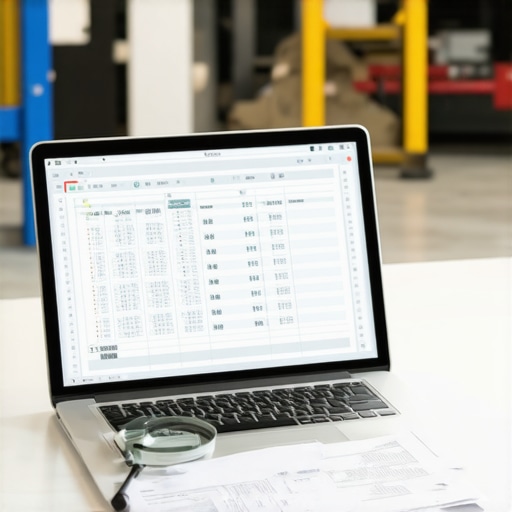
I remember sitting in my home office last November, staring at a laptop that had literally emitted a puff of blue smoke and died three months prior. According to my accounting software, that dead piece of plastic was still a $2,400 asset. It hit me like a ton of bricks: my books were lying to me. I was essentially paying insurance and potentially property taxes on a ghost. If you do not fix a messy general ledger before the calendar flips to January, you are carrying dead weight that inflates your tax bill and muddies your financial clarity. Ghost assets are those items—computers, machinery, or even furniture—that appear on your books but are no longer physically in your possession or in use. Today, I am going to show you how to hunt these phantoms down. We will clean up your records so you can finally see why your balance sheet is the most important report you ignore and how a simple year-end scrub can save you more than most complex tax preparation secrets ever could.
Stop Paying Taxes on Things You No Longer Own
The reality of running a business is that things break, get sold, or simply vanish into the abyss of a storage unit. When these items stay on your books, they distort your company’s value. Early in my journey, I made the amateur mistake of thinking these tiny discrepancies didn’t matter. I assumed my CPA services would magically handle it. They didn’t, because they weren’t in my office seeing the broken printer in the corner. This mistake led to a very awkward conversation during an internal audit review where I couldn’t account for nearly ten percent of my listed equipment. It is not just about being tidy; it is about accuracy. According to a study by the Gartner Group, as much as 15% to 30% of a company’s fixed assets are often ‘ghosts.’ That is a massive amount of phantom value that could be skewing your financial ratios and making you look less profitable than you actually are.
Does cleaning this up actually impact my bottom line?
It absolutely does. Beyond the tax implications, keeping your asset list clean is one of the best audit support strategies you can implement. Have you ever looked at your depreciation schedule and realized you are still ‘depreciating’ a coffee machine that blew up in 2021? I have been there, and let me tell you, the IRS is not a fan of that kind of sloppy record-keeping. By identifying these items now, you can take a loss on them this year, which reduces your taxable income. It is a win-win: you get a cleaner set of books and a lower tax bill. Have you ever walked through your office and realized half of your ‘assets’ are actually just junk taking up space?
Run a Physical Inventory Without Losing Your Sanity
The first step is a literal boots-on-the-ground mission. You cannot trust your screen; you have to trust your eyes. Print out your current fixed asset list—the one your tax software or accountant uses. If you do not have this readily available, you should ask for it as part of your CPA services package. This list is your map to the treasure, or in this case, the junk taking up space.
Walk the Floor and Verify Every Serial Number
I once spent a grueling Saturday afternoon at my old agency hunting for a ‘Custom Video Rendering Rig’ that was listed at a $6,000 original cost. I checked the server room, the creative suite, and even the breakroom. I eventually found it in the back of a storage closet, covered in dust, with a cracked motherboard. It had not been turned on since 2019. Because I had not formally ‘disposed’ of it, I was still carrying it as a functional asset on the ledger. This is why your depreciation schedule might be costing you money; I was effectively paying for the ghost of a computer that was now a glorified paperweight. 
Mark Items for Disposal Right Now
When you find something that is broken, sold, or missing, do not just cross it out with a pen and move on. You need to create a formal ‘disposal event.’ Whether you sold it for scrap, donated it to a charity, or tossed it in the dumpster, your books need to reflect the exit date and method. This is where audit support: key steps to ensure financial transparency becomes vital. If an auditor asks where that $5,000 lathe went, ‘I think we threw it away’ is not a valid answer. You need a documented date and a reason to prove it is no longer a business resource.
Sync Your Ledger with Reality Before Year-End
Once you have your list of phantoms, it is time to update the accounting software. This is not just about deleting rows; it is about reflecting the financial truth of your operation.
Handle the Capital Gains and Losses Correctly
If you sold an asset, even for a pittance, you might have a gain or a loss to report to the IRS. Learning how to handle capital gains on business property sales is critical here. For ghost assets—items that are simply gone or broken—you are usually looking at a ‘loss on disposal.’ This loss is a beautiful thing for your tax return because it is a non-cash expense that lowers your taxable income. It is one of those tax preparation secrets to save money this year that does not involve any sketchy loopholes; it is just honest, accurate reporting of your business state.
Structure Your Future Purchases Better
While you are cleaning up the old mess, take a look at how you are adding new items. If you are about to buy a new fleet of laptops or a major piece of machinery, make sure you know how to structure asset purchases for maximum tax benefits. This ensures that next year’s ghost hunt is much shorter because your tracking system is built into your procurement process from day one. You want your balance sheet to be a real-time reflection of your power, not a graveyard of things you used to own.
Many business owners believe that once they hand over a folder of receipts to a professional, their responsibility ends. This is a dangerous misconception. In my experience, the biggest “oops” factor isn’t just missing a receipt; it’s the disconnect between your daily operations and your year-end reporting. You might think CPA services are a “set it and forget it” solution, but if you aren’t communicating the reality of your asset lifecycle, even the best accountant will miss thousands in deductions. If you provide messy data, you get a messy tax return—period.
Are you misclassifying your tech stack as simple expenses?
A nuance that often trips up advanced entrepreneurs is the risk of misclassifying your software as office supplies. While it’s tempting to expense everything immediately to lower your current bill, you might be missing out on long-term amortization benefits that help your valuation. According to a recent study by the National Federation of Independent Business (NFIB), nearly 25% of small businesses struggle with tax compliance specifically because of misaligned asset classification. This isn’t just about being “correct”; it’s about the reason your business model needs a professional tax review to ensure your growth isn’t being stifled by yesterday’s bookkeeping habits.

Another trap is the “cheapest provider” lure. I’ve seen businesses lose $50,000 in missed credits because they wanted to save $2,000 on their annual filing. This is why choosing the cheapest CPA usually costs the most later. They often lack the niche expertise to handle things like how to manage a remote workforce’s state tax liability effectively, leaving you vulnerable to a multi-state nexus nightmare. If you’re serious about scaling, you need audit support strategies every business needs in 2025 that go beyond mere data entry.
Stop Treating Your Ledger Like a Static Document
Your ledger should be a living, breathing map of your business. If it isn’t updated monthly, you’re driving by looking in the rearview mirror. This leads to “phantom profits” where you think you’re ahead, but unrecorded liabilities are lurking in the shadows. Have you ever fallen into this trap of ignoring the books until December? Let me know in the comments. By shifting to a proactive stance, you can use tax preparation secrets to save money this year that actually align with your 2025 cash flow goals. Accuracy isn’t just about avoiding the IRS; it’s about having the confidence to make big moves because you know exactly what your business is worth. Don’t let a “ghost” on your balance sheet haunt your future growth.
The Tech Stack I Use to Kill Manual Entry
I’ve spent too many nights manually reconciling bank feeds, and the game-changer for me was finally admitting my “custom” Excel sheet was a liability. I shifted everything to a cloud-based environment to gain real-time visibility. If you’re still on a desktop-only system, the checklist for moving your accounting to the cloud isn’t just a suggestion; it’s a survival guide for your 2025 growth. I personally rely on systems that integrate fixed asset modules directly with the ledger so depreciation schedules are born at the moment of purchase, not during a frantic January audit.
One thing I see constantly is “software fatigue” where tools start throwing junk data at you. This is why your accounting software keeps flagging the wrong errors; it usually comes down to poor initial mapping. To fix this, I use a “tagging” system for every piece of hardware. A simple QR code sticker on the bottom of a laptop, linked to my asset registry, means my assistant can do a “ghost hunt” in twenty minutes instead of three days. This is part of the move to automate your accounts payable process and your overall asset lifecycle management.

How can you keep your asset list clean without a yearly panic?
Consistency beats intensity every time. I recommend a “Quarterly Purge.” Every three months, look at your top ten most expensive assets and verify they still exist and work. If you’re scaling, how CPA services can transform small business accounting becomes clear when they handle this oversight for you. They don’t just count beans; they ensure the bean-counting machine is actually plugged in. You should also look into why your business needs a monthly closing process which includes a quick review of new purchases to prevent backlog.
Looking ahead, the landscape of asset management is shifting rapidly. I predict that by 2027, “computer vision” for audits will be standard. You’ll walk through your office with your phone, and an AI will automatically reconcile your physical space with your digital ledger. According to Treasury Regulation Section 1.263(a)-1(f), maintaining a strict de minimis safe harbor threshold—typically $2,500 for businesses with an applicable financial statement—is your best defense against ledger bloat. This is one of the most effective mastering payroll compliance: expert tips for 2025 success strategies because it keeps your overhead low and your focus on high-value items.
My Advanced Tip: This week, pick five items on your asset list and physically put your hands on them. If you can’t find even one, it’s a signal that your records are drifting from reality. Call your accountant and tell them you’ve found some “ghosts” before the year ends. It’s the easiest way to lower your tax bill without spending an extra dime.
Why I No Longer Trust My Laptop Screen for Asset Management
The hardest lesson I learned wasn’t about the math; it was about the psychology of business ownership. For years, I treated my fixed asset list as a holy document that only my accountant touched. The reality is that your ledger can become a graveyard of bad decisions if you don’t physically confront it. I realized that phantom profits were making me feel richer than I was, while the literal junk in my office was draining my cash via property taxes. If you want to avoid the messy truth about DIY tax filing for small S-Corps, you have to accept that your software only knows what you tell it. Accuracy starts with a walk around the office, not just a spreadsheet refresh. I now make it a rule to touch every high-value asset once a year; it’s the only way to be 100% certain that your books aren’t telling a fairy tale.
A Few Resources to Help You Track Your Physical Assets
I don’t expect you to do this with just a pen and paper. Here is what I personally recommend to keep your records lean and mean: 1. A cloud-based accounting environment—because following the checklist for moving your accounting to the cloud changed my life by making my asset data accessible anywhere. 2. AssetTiger—a free tool for generating QR codes that links your physical gear to your digital ledger. 3. A dedicated tax strategist who understands how to fix the most common errors in small business audits before the IRS sends a notice. I rely on these tools because they remove the human error of saying, I will log that later. Spoiler alert: without a system, you never do.
Turn Your Clean Ledger into a Launchpad for 2025
Cleaning up your ghosts isn’t just a boring accounting chore; it is a strategic move that sets the tone for your entire next year. When your balance sheet is accurate, you can walk into a bank or talk to an investor with absolute certainty. You aren’t just doing tax preparation; you are performing a vital health check on your dream. Remember that every ghost you delete is a tiny win for your bottom line and a major boost for your financial clarity. By the time 2025 rolls around, you will be running a leaner, more profitable operation because you had the courage to look in the corners. Remember, why your accounting software isn’t a substitute for a pro becomes very clear when you realize a human touch is what finds the hidden savings. Have you ever discovered an asset on your books that hasn’t existed in the real world for years? Let me know what you found in the comments!