
How to Lower Your Self-Employment Tax Bill This Quarter

Last month, I sat at my desk, staring at the numbers from my latest tax deadline. My stomach sank as I realized how much of my hard-earned profit was vanishing into taxes I could have optimized better. It hit me—I’ve been leaving money on the table, and frankly, I was tired of it. That lightbulb moment sparked a mission to crack the code on lowering my self-employment tax bill this quarter, and I want to share what I discovered.
Why Saving on Self-Employment Taxes Matters More Than Ever
If you’re like most self-employed folks, you feel the pinch when tax season rolls around. It’s not just about paying what you owe; it’s about keeping more of what you earn. The truth is, self-employment taxes—covering Social Security and Medicare—can take a significant chunk out of your income if you don’t plan ahead. According to the IRS, self-employed individuals pay a combined rate of 15.3% on their net earnings, which can be a hefty burden without strategic planning.
Early in my journey, I made a costly mistake—overlooking deductible expenses that could have reduced my taxable income. It’s a common pitfall, and honestly, I felt betrayed by my own ignorance. That experience taught me that understanding the nuances of tax deductions and credits is crucial for independence and financial health.
But here’s the good news: there are concrete, actionable steps you can take this quarter to slash your tax liability significantly. No, it’s not about loopholes or dubious schemes—just solid, legitimate strategies that work. I’ll walk you through these tactics, backed by real experience and research, so that you can keep more of your income where it belongs—in your pocket.
Will These Strategies Really Make a Difference?
It’s a fair question, especially if you’ve tried to cut taxes before and felt disappointed. Trust me, I’ve been there. The methods I’m about to share are tried-and-true, and while they require some effort, the potential savings are well worth it. Imagine reducing your tax bill by hundreds or even thousands—funds you can reinvest, save, or spend on what truly matters.
If you’ve ever found yourself overwhelmed with tax planning or unsure about what deductions you’re missing, you’re not alone. My early missteps included neglecting to set up proper record-keeping systems, which cost me dearly. To see how you can avoid this trap, check out streamlining your payroll in a smarter way. The key is proactive, consistent planning—something you’ll be equipped to do with the right approach.
Now, let’s dive into the specific steps that will help you lower your self-employment tax bill this quarter and set you up for ongoing success.
Organize Your Financial Records Now
Begin with a meticulous review of your expenses and income streams. Use digital tools or dedicated spreadsheets to categorize deductible costs such as home office expenses, travel, supplies, and health insurance premiums. A well-organized record-keeping system not only simplifies tax filing but also reveals overlooked deductions. I recall a quarter when I dedicated a weekend to sorting receipts and bank statements; the process was messy but revealing, leading me to claim $2,500 in unclaimed deductions that year.
Set Up a Robust Retirement Plan
Implementing a retirement savings strategy like a Solo 401(k) or SEP IRA can substantially lower your taxable income while securing your future. These plans allow you to contribute up to 25% of your net earnings, reducing your current tax liability. I personally set up a Solo 401(k) last year and immediately saw my taxable income drop, plus I gained peace of mind knowing I was investing for tomorrow.
Leverage the Power of Accounting Software
Adopt accounting platforms such as QuickBooks or Wave to automate expense tracking and generate real-time financial reports. These tools can flag potential deductions and help you stay compliant with tax laws. During my last tax cycle, I linked my bank feed directly to my accounting software, which drastically reduced manual data entry and minimized errors. Don’t forget, for complex situations, consulting *[CPAs](https://financeauthoritys.com/how-cpa-services-can-transform-small-business-accounting)* can optimize your setup even further.
Contribute to Health Savings Accounts (HSAs)
If you’re enrolled in a high-deductible health plan, contribute to an HSA to pay for qualified medical expenses. Contributions are tax-deductible, and funds grow tax-free, providing dual benefits. I started contributing to an HSA at the start of the year, and by mid-year, I’d already reduced my taxable income by $3,600. It’s a straightforward way to handle healthcare costs and save on taxes simultaneously.
Engage a Tax Professional Before Deadlines
Hiring a CPA who understands your industry ensures you’re capturing every eligible deduction and credit. They can also advise on structuring your business entity for optimal tax benefits. I switched to a specialized CPA last tax season, and their insight helped me implement quarterly tax planning strategies—saving me from last-minute surprises and penalties. For ongoing support, consider [CPA services](https://financeauthoritys.com/why-your-business-entity-choice-is-costing-you-thousands) tailored for small businesses.
Plan Major Purchases Strategically
Timing asset purchases such as equipment or vehicles can influence your tax bill. Using IRS Section 179, you can expense up to the full cost of qualifying assets in the year of purchase. I once delayed buying a new laptop until Q4, which allowed me to claim it as a deduction before year-end, lowering my tax Liability. Be proactive: consult [how to structure asset purchases](https://financeauthoritys.com/how-to-structure-asset-purchases-for-maximum-tax-benefits) for maximum benefits.
Review Quarterly Tax Payments
Estimate your quarterly tax obligations accurately to avoid penalties and unnecessary cash flow strain. Use your previous profits as a benchmark and adjust as needed. During a lean quarter, I underestimated my quarterly payments, causing a penalty. After that, I adopted a more aggressive review process, aligning my payments with real-time income data, which prevented surprises and improved cash flow management.
Many entrepreneurs assume that hiring a CPA or using financeauthoritys services guarantees foolproof financial management. However, even experienced business owners often overlook nuanced pitfalls that can lead to costly mistakes. One common myth is that automation and generic software solutions, like standard payroll platforms, fully ensure compliance and accuracy. In reality, without expert oversight, these tools can produce errors, especially in complex scenarios like multi-state payroll or international transactions. According to a 2022 survey by the American Institute of CPAs, nearly 40% of small businesses face penalties due to misclassified workers or incorrect filings, highlighting that technology alone isn’t enough.
Why do so many overlook the complexity of audit support and compliance?
Many believe that audits are rare emergencies, dismissing the importance of proactive preparation. But in fact, a routine review of your financials, as detailed in audit support strategies, can reveal vulnerabilities before they become critical issues. Overlooking this step is a trap—failure to prepare can turn a simple inquiry into a months-long ordeal, risking penalties and reputation damage. Recognize that even seasoned professionals sometimes underestimate the complexities involved in industry-specific regulations and cross-border compliance. Always involve experts like experienced CPAs, who can navigate regulatory updates, ensuring your systems stay aligned with current laws.
Furthermore, many jump into tax preparation without understanding the subtleties of effective tax planning. They might miss opportunities for R&D credits or fall prey to the misconception that tax laws are static. Staying informed through ongoing consultation with specialized tax advisors, as suggested in tax prep tips for freelancers and gig workers, helps avoid these pitfalls. Remember, strategic planning isn’t a one-and-done task; regular review can uncover new savings and prevent penalties.
Finally, a critical overlooked aspect concerns the cross-functionality of payroll, tax prep, and audit processes. For example, improper classification of workers not only affects payroll taxes but also triggers red flags in audits. Implementing comprehensive payroll strategies that keep in mind evolving employment laws is essential. Explore streamlined payroll systems for tech-driven businesses to see how integration reduces errors. The mistake many make is assuming that one area can be optimized in isolation—your payroll inaccuracies might cascade into tax issues or audit triggers, costing you more down the line.
So, are you confident that your current approach accounts for these hidden nuances? Or could overlooked details be putting your business at risk? Staying proactive and consulting with experts is your best safeguard. Have you ever fallen into any of these traps? Let me know in the comments.
Invest in the Right Equipment and Software
My approach starts with selecting reliable, scalable tools tailored to my business size and needs. I personally use QuickBooks Online because its cloud-based platform allows seamless access from multiple devices, facilitating real-time updates and collaboration with my CPA. This transparency ensures accurate data, which is critical for making informed decisions and avoiding costly mistakes. Additionally, I invest in a high-resolution scanner to digitize receipts immediately, reducing clutter and minimizing the risk of lost documentation—simple but effective for maintaining audit readiness.
Automate Routine Tasks to Save Time
Automation is my secret weapon for maintaining consistency over time. I set up automatic bank feeds with my accounting software to reconcile transactions daily, freeing up hours during tax season. For payroll, I rely on platforms like streamlined payroll systems, which ensure compliance and reduce manual errors. Automating reminders for quarterly tax estimates keeps me proactive rather than reactive, preventing penalties and easing cash flow management.
Keep Abreast of Regulatory Changes
Tax laws and compliance requirements evolve rapidly. To stay ahead, I subscribe to expert newsletters like this comprehensive guide. Regularly reviewing updates helps me adapt my record-keeping and filing processes promptly, avoiding surprises during audits. Incorporating these updates into my workflow ensures that my business remains compliant and optimized for current laws.
How do I maintain these tools and practices over time?
The key is establishing a routine check-In, such as scheduling quarterly reviews of software performance, system backups, and compliance updates. I also invest time annually to evaluate new technologies or software upgrades, ensuring my toolkit evolves with my business. Proper training for myself and my staff ensures everyone stays proficient, reducing errors that can lead to costly audits or penalties. As technology advances, I predict integration of AI-driven analytics will further streamline financial management, offering predictive insights on cash flow and compliance risks. Implementing these proactive steps today positions your business for sustainable growth tomorrow.
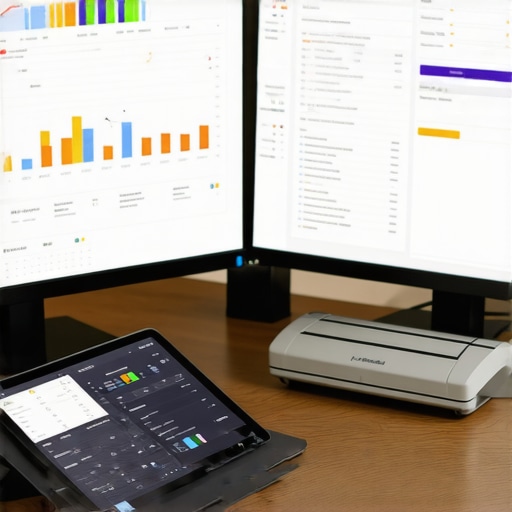
Imagine a sleek workspace with dual monitors showing financial dashboards, high-quality scanner, and a tablet displaying accounting apps—this is my setup for keeping everything running smoothly.
If you’re ready to elevate your financial management, try automating your bank feeds and schedule regular checks for your software and compliance tools. It’s a game-changer for maintaining accuracy and peace of mind.
Lessons I Wish I Learned Sooner in Tax Planning
- One of my toughest realizations was realizing how much money I could save by simply staying proactive with quarterly reviews, rather than waiting till tax season to scramble for deductions.
- I underestimated the power of integrating automation tools early on, which not only saved time but also highlighted deductions I never knew I had.
- Another insight was understanding that expert guidance isn’t just for big businesses—regular consultations with a seasoned CPA can uncover overlooked savings and prevent costly mistakes.
- Lastly, I learned that staying informed about evolving tax laws and regulations can give you an edge—what’s applicable today might be a game-changer tomorrow.
Tools and Resources That Changed My Approach
- QuickBooks Online: Its real-time financial tracking revolutionized how I manage my expenses and kept me audit-ready.
- Stay ahead with CPA insights: Subscribing to specialized newsletters helped me adapt quickly to new tax laws and compliance requirements.
- Asset purchase guides: Learning how to structure equipment investments ensured I maximized deductions legally, saving thousands each year.
- Tax preparation tips for freelancers: Applying these strategies directly addressed my unique income streams, ensuring I didn’t leave money on the table.
Fuel Your Drive to Optimize Finances
Remember, the journey to smarter tax management isn’t just about saving a few dollars—it’s about empowering yourself with knowledge and tools to secure your financial future. By embracing proactive planning, leveraging the right resources, and continuously learning, you can transform tax season from a stress point into a strategic advantage. Your efforts today lay the foundation for greater financial health tomorrow. Don’t wait—start applying these insights now and watch your business thrive with confidence.