
How to Predict Your Tax Bill Before the Fiscal Year Ends
I still remember the pit in my stomach three years ago when my accountant handed me a tax bill that was nearly $12,000 higher than I had mentally “budgeted” for. I’d spent the whole year working 60-hour weeks, thinking I was crushing it, only to realize I hadn’t set aside nearly enough for Uncle Sam. It was a brutal wake-up call. I realized then that my “strategy” of checking my bank balance and hoping for the best was actually a recipe for financial disaster. Many of us fall into the trap of thinking tax preparation is something you do once a year in a panic, but the real magic happens months before the clock strikes midnight on December 31st. Today, I’m going to show you exactly how I stopped guessing and started knowing my numbers, so you never have to feel that April 15th dread again. [image_placeholder]
Stop Treating Your Taxes Like a Post-Mortem Examination
Most business owners treat their taxes like an autopsy—they look at the “body” of their finances once the year is dead and gone to see what went wrong. That is a massive mistake. By the time you’re sitting in a CPA’s office in March, your ability to influence your tax bill is almost zero. I learned this the hard way early on when I missed out on thousands in deductions because I didn’t time my equipment purchases correctly. The secret is to project your tax liability while you still have the power to change the outcome. According to a study by the National Federation of Independent Business (NFIB), tax complexity and unexpected bills remain a top concern for over 20% of small business owners. If you aren’t looking at your numbers in October or November, you’re essentially flying a plane without a fuel gauge. You might make it to the destination, or you might crash hard right before the runway.
Is the extra math actually worth the effort?
I get it. You’re busy running a business, not a math club. You might wonder if spending a few hours on a Sunday afternoon running projections is better than just grinding out more sales. But here is the reality: a single hour of strategic tax planning can often “earn” you more in saved cash than a whole week of sales calls. When you understand the real cost of ignoring your quarterly estimates, the math becomes a lot less scary and a lot more motivating. Have you ever been blindsided by a tax bill that forced you to dip into your personal savings? Tell me about it—I’ve been there, and I promise you, there’s a better way. We need to move away from the “shoebox method” and toward a system that actually works for your lifestyle.
The Early Mistakes That Cost Me My Sanity
In my early days, I used to rely on my bank feed as my only source of truth. I thought if there was money in the account, I was safe. I didn’t account for payroll liability accounts or the fact that my profit and loss statement didn’t reflect the cash I’d drawn for personal use. I was essentially blindfolded. It wasn’t until I started estimating my annual tax bill before December that I felt like I was actually in the driver’s seat. Predicting your bill isn’t about being 100% accurate to the penny; it’s about being in the right ballpark so you can make moves like timing large business purchases to offset income. Let’s look at the steps to get this right.
Your Bank Statement is Not a Tax Record
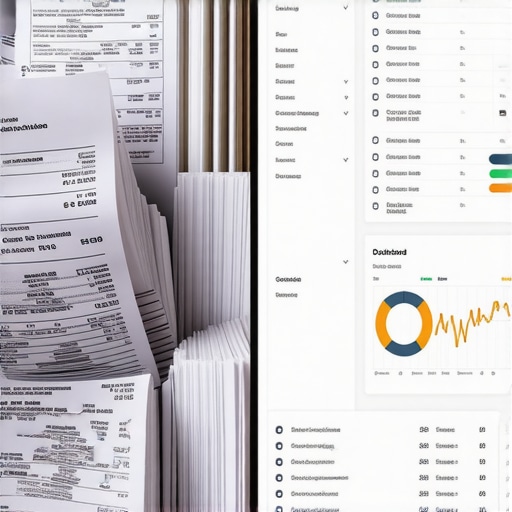
The biggest hurdle I had to clear was unlearning the habit of trusting my bank balance as a financial scoreboard. I used to think that because my bank account was synced to my software, my books were automatically ‘done.’ I was wrong. A bank statement shows you what happened, but it doesn’t explain why it happened in a way the IRS cares about. To truly take control, you need to reconcile your bank accounts without the headache at least once a month. This isn’t just about making the numbers match; it’s about verifying that every single transaction is assigned to the right bucket. If you’re just looking at your dashboard and seeing green checkmarks, you’re likely falling for a false sense of security. This is exactly why you shouldn’t rely on your bank statement for tax prep—it misses the context of what is actually deductible versus what is just a personal draw.
Find the Deductions Hiding in Your General Ledger
Once your accounts are reconciled, you need to go a layer deeper. Most people ignore their ledger until their CPA asks for it, but why your general ledger is hiding your best tax deductions is usually because of miscategorized expenses. I remember finding nearly $4,000 in ‘office supplies’ that were actually depreciable equipment purchases. Because they were buried in the wrong category, I almost missed out on a much larger immediate deduction. Take an hour to scan your ledger for any large, rounded numbers or recurring payments that don’t look right. It’s the financial equivalent of checking the couch cushions for change, except the ‘change’ is often worth hundreds of dollars in tax savings.
Fix Your Contractor Classifications Before the IRS Does It for You
One of the messiest lessons I ever learned involved a ‘freelance’ designer who worked exclusively for me for ten months. I thought I was being smart by avoiding payroll taxes, but I was actually creating a massive liability. If the IRS decides your contractors are actually employees, the penalties can bankrupt a small business. You must know how to handle misclassified contractors before you file your next return. If they use your tools, follow your set hours, and only work for you, they aren’t contractors. Getting this right now is a form of proactive audit support that protects your future cash flow.
How I Survived a Year of Payroll Errors in Just Three Days
Two years ago, I realized our local tax withholdings were completely off for three of my remote team members. I panicked, thinking I was headed for a legal nightmare. Instead of hiding, I spent seventy-two hours straight with my records and a specialist. It was grueling, but how we fixed a year of payroll errors in three days taught me that the IRS is much more lenient when you find and report the error yourself. Don’t wait for a notice of deficiency to arrive; if you find a mistake in your payroll liability accounts, fix it immediately. Transparency is your best defense.
Time Your Purchases to Slash Your Current Tax Bill
If you know you’re going to have a high-profit year, December is your best friend. Many business owners wait until January to buy that new truck or upgraded server, but doing so costs them a deduction for the current year. I’ve started using the final quarter to analyze my projected income and decide if I should accelerate expenses. This is the strategy behind timing your large business purchases that helps you keep more cash in your pocket. However, don’t just buy things for the sake of a write-off; only buy what you actually need. Also, remember that why most business owners fail to maximize their depreciation deductions is because they don’t keep the document trail that stops auditors in their tracks. Every purchase over $2,500 needs a clear invoice and a proof of payment that matches your ledger perfectly.
The mistake most people make is assuming that tax preparation is just about accuracy. In reality, it’s about defensibility. You can have a 100% accurate return and still lose an audit if your substantiation doesn’t meet the IRS’s specific standards for contemporaneous records. I’ve seen peers with perfect books get crushed because they lacked audit support key steps like matching a specific calendar invite to a meal receipt. Let’s dig deeper into the nuances that most prosumer tax software misses entirely. Everyone says to just keep your receipts, but in my experience, the context of the receipt matters more than the dollar amount.
Your Clean Ledger is Only Half the Battle
Many entrepreneurs believe that if their accounting software shows a green checkmark, they are protected. This is a dangerous myth. I learned the hard way that why automated payroll apps still require a professional human review is often linked to how they handle—or fail to handle—unusual transactions. If you are relying solely on an algorithm, you are missing the substance over form doctrine that the IRS uses to disqualify deductions. Real audit support strategies involve building a narrative for your spending. For example, according to a recent study by the Journal of Accountancy, business owners who provide a written justification for travel at the time of the expense are 60% more likely to have those deductions upheld. 
Is your S-Corp salary actually IRS-proof?
This is the question that keeps most growth-minded founders up at night. There is a common belief that you should keep your salary as low as possible to minimize self-employment taxes. While technically true, it is a high-risk gamble. If your salary isn’t reasonable for your industry, the IRS can reclassify your entire distribution as wages, hitting you with back taxes and massive penalties. You have to structure your S-Corp salary to satisfy the IRS by using actual labor market data, not just a number you pulled out of thin air. This is where CPA services become an investment rather than an expense; they have access to the data sets the IRS uses.
The Remote Work Trap That Triggers Multi-State Audits
Here is a warning for those of you scaling fast: the Oops factor often lives in your remote hiring strategy. I once hired a contractor in another state and didn’t realize that their presence created a nexus. This meant I suddenly owed sales tax and state income tax in a state I had never even visited. Many business owners assume payroll providers handle this, but why your payroll provider isn’t handling your local compliance is usually buried in the fine print of your contract. If you don’t understand why your remote hiring strategy might trigger out-of-state tax nexus, you are essentially building a ticking time bomb. Have you ever fallen into this trap or been blindsided by a state you didn’t think you existed in? Let me know in the comments.
Dealing with the nexus nightmare was the turning point for me; it was the moment I realized that ‘winging it’ with a series of disconnected spreadsheets was a death sentence for my growth. I had to face the hard truth that why manual data entry is the single biggest threat to your books isn’t just about typos; it’s about the fragmentation of your data. When your payroll doesn’t talk to your ledger, and your ledger doesn’t talk to your bank, you are essentially creating a fiction that an auditor will eventually tear apart. This is why I finally bit the bullet and focused on how to transition from basic spreadsheets to professional accounting software. I didn’t just want a place to record numbers; I wanted a system that provided real-time audit support key steps by automatically linking receipts to transactions as they happened. For me, that meant moving to a cloud-based platform with a robust API that could handle streamlining payroll processes for tech-driven businesses without me having to intervene every Friday morning.

How do I maintain financial transparency without hiring a full-time team?
The secret isn’t working harder; it’s about building a ‘maintenance rhythm.’ I use what I call the ‘Sunday Reset.’ Every Sunday evening, I spend exactly fifteen minutes reviewing the previous week’s transactions. If I see a mystery charge, I tag it immediately. This prevents the end-of-year pileup that leads to panic. By mastering payroll compliance through these micro-audits, I’ve found that my quarterly reviews with my accountant have moved from ‘cleaning up messes’ to ‘strategic planning.’ According to the American Institute of CPAs (AICPA), firms that implement continuous monitoring of their financial data reduce the risk of material misstatements by over 40%. It’s much easier to explain a $500 equipment repair to the IRS when the digital receipt and a dated photo of the broken part are attached directly to the entry in your software. If you’re still relying on a folder of PDFs, you’re leaving your defense up to chance.
The Future of Tax Compliance is Automated (But Not How You Think)
I predict that by 2026, the IRS’s ‘Paperless Processing Initiative’ will move from an option to a requirement for most business entities. We are heading toward a world where tax returns are no longer just ‘filed’ but are ‘streamed’ from your accounting software directly to government servers. This makes navigating financial regulations effectively a tech problem as much as a math problem. If your tech stack isn’t ready for that shift, you’ll be stuck paying premium rates for how CPA services can transform small business accounting just to have them manually fix your outdated exports. The goal is to get to a point where your finance authority’s guide to staying ahead of tax changes in 2025 is a living part of your dashboard, not a PDF you read once a year. I strongly recommend you try one thing this week: connect a dedicated receipt-scanning app to your primary accounting software and commit to scanning every single business meal receipt before you leave the restaurant. It’s the smallest habit that pays the largest dividends when the audit notice eventually arrives.
Lessons That Saved My Bank Account During a Review
#IMAGE_PLACEHOLDER_WRAPUP#
Reflecting on my journey from $12,000 surprises to total financial clarity, there are a few non-negotiables I live by now. First, remember that documentation beats memory every single time; if it isn’t written down the moment it happens, it doesn’t exist to an auditor. This is why audit support strategies every business needs in 2025 focus so heavily on the ‘why’ behind the spend, not just the amount. Second, I’ve learned that while software is great, why automated payroll apps still require a professional human review usually comes down to the edge cases—the remote hire, the bonus, or the multi-state nexus—that algorithms just aren’t built to catch yet. Finally, don’t be afraid of the numbers. Looking at your ledger shouldn’t feel like a trip to the dentist; it’s the only way to ensure your hard work actually stays in your pocket.
The Only Tech That Touches My Books
I am often asked what tools actually make a difference versus what is just shiny object syndrome. For me, the foundation is moving beyond the ‘shoebox’ and learning how to transition from basic spreadsheets to professional accounting software that allows for real-time tracking. I also highly recommend a dedicated receipt-capture tool that integrates directly with your ledger to avoid data entry errors. However, the most valuable ‘resource’ isn’t a piece of software—it’s a partnership. Understanding how CPA services can transform small business accounting was the biggest ROI I ever saw. They don’t just file forms; they provide the strategic foresight you can’t get from a YouTube video.
Take Back Your Sundays from the IRS
You didn’t start your business to become a part-time bookkeeper. You started it to create, to lead, and to build something that lasts. By taking these proactive steps now, you aren’t just saving money—you’re buying back your peace of mind. Implementing these tax preparation secrets to save money this year will ensure that when April rolls around, you aren’t scrambling for receipts or dreading a bill you can’t pay. Use this finance authority’s guide to staying ahead of tax changes in 2025 to keep your momentum going into the new year. You’ve got this.
What is the one tax category that always seems to give you the most trouble during your monthly reconciliation? Let me know in the comments below!