
How to Project Your Tax Liability Six Months Out

I’ll never forget the October of 2021. I was staring at a spreadsheet that told me I’d had my best quarter ever, yet my hands were shaking as I reached for my third cup of coffee. I had absolutely no clue what my tax bill was going to be. Like many of you, I had been flying blind, assuming that if the bank balance looked ‘okay,’ I was safe. I wasn’t. I ended up owing a five-figure sum I hadn’t fully set aside, a mistake that forced me to realize the real cost of ignoring your quarterly tax estimates. It was a mess, but it taught me that reacting to tax season in April—or even October—is a recipe for disaster. Today, we are going to fix that. I’m going to show you exactly how to map out your liability six months in advance so you can stop sweating over your bank balance and start focusing on your growth.
Stop Playing Guessing Games with Your Bank Account
We often treat taxes like a surprise party we weren’t invited to. But here’s the thing: the IRS isn’t mysterious; they’re mathematical. To get ahead, you have to shift your perspective from simply filing to proactive planning. This isn’t just about avoiding a penalty; it’s about protecting your cash flow. When you learn how to estimate your annual tax bill before December, you regain control over your business’s future. I found that the hidden benefit of monthly rather than yearly tax planning wasn’t just the potential tax savings—it was the incredible peace of mind that came from knowing exactly where every dollar was headed before I spent it.
Is It Even Possible to Be Accurate This Far Out?
I get it. You’re thinking, ‘My income fluctuates every month’ or ‘What if the tax laws change mid-year?’ Skepticism is healthy, but waiting for 100% certainty is expensive. According to a survey by the National Small Business Association, the majority of small business owners spend over 40 hours a year on federal taxes alone, often because they are scrambling to catch up rather than looking ahead. By projecting six months out, you aren’t looking for a perfect number to the penny; you’re looking for a solid range that keeps you out of the red. Have you ever been blindsided by a tax bill that wiped out your entire quarterly profit? It’s a gut-wrenching feeling that can stall your momentum for months. Let’s make sure that never happens to you again by building a buffer that actually works.
Build Your Tax Map from the Ground Up
To map your liability, you have to stop looking at your bank balance as your truth. Your bank balance is a lagging indicator; it tells you what happened yesterday, not what you owe tomorrow. The first move is to bridge the gap between “money in the bank” and “taxable profit.” Think of your finances like a reservoir: the water level you see is the cash, but the evaporation rate is the tax. If you don’t account for the evaporation, you’ll find yourself on a dry lakebed by the time the IRS comes knocking.
Ditch the Spreadsheet for Real-Time Clarity
If you are still manually entering numbers into an Excel sheet, you are already behind. I spent three years doing this, thinking I was saving money on software fees. In reality, I was losing thousands because I missed small deductions and made manual entry errors. You need to learn how to transition from basic spreadsheets to professional accounting software to get a live feed of your business health. Think of it like moving from a paper map to a GPS; one shows you where the roads were, the other shows you the traffic jam right ahead. 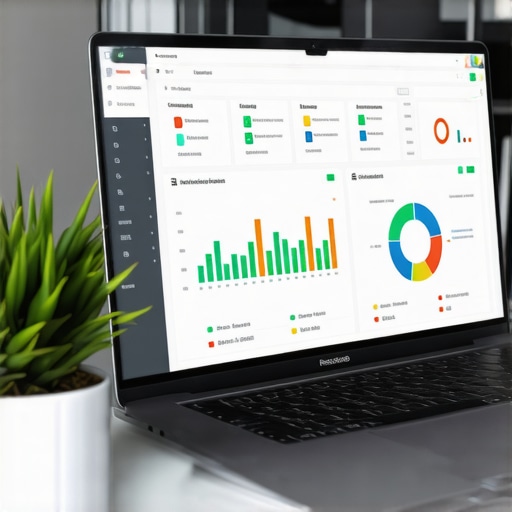
Scrub Your Ledger Until the Data Breathes
Data is only useful if it’s accurate. Last year, I nearly had a heart attack when my dashboard showed my revenue was up 40% over a single weekend. It turned out my “automatic sync” had double-counted a series of transfers from my savings account as taxable income. This is why your accounting software’s automatic sync is often wrong more often than we’d like to admit. You have to sit down and verify that every transaction is categorized correctly. Knowing how to reconcile your bank accounts without the headache is the difference between a clean audit and a tax nightmare.
Run the Numbers That Actually Matter
Once your data is clean, you can start looking forward. This is where most people get stuck, but it’s just basic arithmetic.
Create a Projection Based on Reality
Take your average monthly profit from the last six months and multiply it by the six months ahead. Adjust for seasonality—if you’re a retail business, your Q4 will look very different from Q1. This isn’t just “guessing”; it’s building a model. When you learn how to build a cash flow forecast that actually predicts the future, you can see your tax bill growing in real-time. This awareness allows for the real difference between tax filing and strategic tax planning: the ability to make moves now to lower that number later.
Apply the Effective Tax Rate Rule
Don’t just use your top tax bracket. Look at your previous year’s return and find your “effective tax rate”—the actual percentage you paid after deductions. Apply that percentage to your projected profit. For many tax-prep-tips-for-freelancers-and-gig-workers-in-2025, this simple calculation provides a safe harbor. I started setting aside 25% of every dollar of profit into a high-yield savings account the moment it hit my books. It felt painful at first, but that pain is nothing compared to the panic of an empty bank account in April. Every time I reached for that account to pay a vendor, I reminded myself that the money wasn’t mine to begin with—it was already spoken for.Let’s dig deeper into the part where most entrepreneurs actually lose their shirts: payroll and compliance. The biggest myth in the modern business world is that software has ‘solved’ payroll. It hasn’t. In fact, why automated payroll apps still require a professional human review is a lesson I learned the hard way when a software glitch failed to update a local tax rate for three months. Everyone says automation eliminates error, but in my experience, it just makes the errors happen faster and at a larger scale. If you aren’t periodically checking the math, you’re just delegating your downfall. 
Why Your Payroll App is Smarter Than You But Still Wrong
One of the most common ‘oops’ factors is assuming your provider handles every single filing obligation. I’ve seen dozens of founders get blindsided because why your payroll provider isnt handling your local compliance is often buried in the fine print of their terms of service. They might handle federal and state, but that city-level occupancy tax or local school district levy? That’s often on you. This is where cpa services demystified unlock your business growth potential because a professional looks for those hyper-local gaps that software algorithms frequently overlook.
Will Your Payroll Tax Deposits Actually Reach the IRS?
This is a sophisticated question that most beginners don’t even know to ask until they receive a terrifying notice in the mail. You see the money leave your bank account, so you assume the IRS got it. However, the American Institute of CPAs (AICPA) has noted that nearly 40% of small businesses face payroll penalties annually, often due to deposit timing errors or misdirected funds. You need to know how to verify your payroll tax deposits actually reached the IRS through the EFTPS system directly. If your provider fails to send that money, the IRS doesn’t go after the provider; they come after you personally. This ‘Trust Fund’ liability is one of the few debts that can pierce the corporate veil and hit your personal assets.
The Danger of Hiring Without a State Tax Plan
In the era of remote work, hiring a developer or assistant in a different state seems simple until you realize why your remote hiring strategy might trigger out-of-state tax nexus. Suddenly, you owe corporate income tax in a state where you don’t even have a physical office, simply because one employee works from their couch there. It’s a massive trap that can lead to multi-state audits. This is why you must have audit support strategies every business needs in 2025 ready before you post that job listing. Furthermore, why your business entity choice is likely costing you extra self-employment tax is a nuance most people overlook until their profit crosses the six-figure mark. If you’re still operating as a simple Sole Prop, you’re likely overpaying. Have you ever fallen into this trap? Let me know in the comments.
Build a Stack That Talks to Itself
It’s not enough to just ‘have’ software. You need a system that talks to itself. I eventually realized that the move that cut my monthly bookkeeping time in half wasn’t a magic button—it was syncing my payroll directly to my general ledger and automating the reconciliation. If your payroll, bank feed, and tax software aren’t sharing data, you’re just creating more work for yourself. When I started using the checklist for vetting a new accounting software integration, I stopped fighting with broken data and started seeing a clear picture of my profit. This is where how CPA services can transform small business accounting truly shines; a professional doesn’t just look at the numbers—they optimize the pipeline that delivers them.
How do I maintain my financial health without burning out?
The secret to long-term success isn’t a massive end-of-year overhaul; it’s the ‘Weekly Ten.’ I spend exactly ten minutes every Friday morning reviewing my accounts. I check for how to identify ghost employees in your payroll system and ensure my payroll tax deposits actually reached the IRS. This tiny habit prevents the ‘snowball effect’ where one small error in January becomes a catastrophic audit in December. For those scaling quickly, how to speed up your monthly close without sacrificing financial accuracy becomes the difference between making informed decisions and playing a dangerous game of ‘guess-the-budget.’ According to IRS Publication 15, also known as Circular E, the ‘Trust Fund Recovery Penalty’ can be applied to any ‘responsible person’ within the company if employment taxes aren’t paid. This means you are personally on the hook. Checking your EFTPS account directly isn’t just good business—it’s personal protection. 
What Happens When AI Meets the Auditor?
Looking ahead to 2025 and beyond, I predict we will see a massive shift in how audits are conducted. The IRS is already increasing its use of AI to spot anomalies that the human eye would miss. This is why having the document trail that stops auditors in their tracks is more critical than ever. You won’t just be fighting a human auditor; you’ll be defending against an algorithm. Start using tools that offer audit support key steps to ensure financial transparency now. If you haven’t already, transition from basic spreadsheets to professional accounting software today to ensure your data is ‘algorithm-ready.’ My advice? Log into your EFTPS account this afternoon and verify your last three payroll deposits yourself. It takes five minutes, and it’s the ultimate advanced tip for true financial peace of mind.
Automated Software Won’t Save You From the IRS
One thing I learned the hard way is that compliance is not a “set it and forget it” task. Even with the best tools, you are the final line of defense. If you ever find yourself falling behind on your obligations, you need to know the step-by-step fix for late payroll filings before the penalties start to snowball. I realized that my most expensive mistakes always happened when I was “too busy” to double-check the work of my automated apps. Don’t let the convenience of modern technology blind you to the red flags that trigger a federal employment tax audit. It is infinitely cheaper to pay for a professional review today than to pay an auditor to find the mistakes for you next year.
Tools That Keep My Ledger Clean and My Blood Pressure Low
To stay ahead of the curve, I have built a specific tactical stack. First, I moved away from generalist tools that didn’t understand my specific niche. If you run a shop online, you will quickly see why your e-commerce store needs specialized accounting tech to handle multi-state sales tax and inventory correctly. Second, I stopped trying to be my own accountant and focused on my strengths. Getting CPA services demystified unlock your business growth potential because they provide the proactive strategy that software simply cannot offer. Lastly, I keep a rigorous digital vault of every single receipt because the document trail that stops auditors in their tracks is the best insurance policy your business can have.
Stop Letting Tax Season Control Your Business Growth
You did not start your business to become an amateur tax researcher. By mapping your liability six months out, you are reclaiming your time and your mental energy for the things that actually generate revenue. When you apply tax preparation secrets to save money this year, you are not just saving cash; you are building a foundation for sustainable scaling. Remember, the IRS respects organization far more than they respect excuses. Get your systems in place today, and April will just be another normal month on the calendar instead of a season of dread.
Have you ever found a major discrepancy in your payroll tax deposits that your software completely missed? Let me know in the comments below!