
How to Verify Your Year-End Inventory Counts Without the Stress

I remember three years ago, standing in a freezing cold backroom at 11 PM on December 30th. My fingers were numb, my clipboard was damp, and the numbers just wouldn’t add up. I had missed 400 units of my best-selling SKU, and my tax preparer was already breathing down my neck. It was a visceral disaster, and honestly, it made me hate my business for a solid week. I realized then that my “good enough” counting method was a ticking time bomb for my bottom line. That night was a turning point. Today, I want to show you exactly how to move past that frantic midnight counting and get your books in order without the gray hairs. We are going to fix the way you look at your shelves so that come tax season, you aren’t just guessing—you are knowing.
Stop Treating Your Inventory Like a Guessing Game
The biggest mistake I made early on was assuming that my software was a source of truth without any physical verification. I relied entirely on the screen, only to find out that accounting integrations often delete important data or lag behind reality. It is a hard pill to swallow, but if your physical count doesn’t match your ledger, you are essentially flying blind. This isn’t just about being tidy; it is about preventing a massive headache when audit support strategies become necessary. According to the 2023 National Retail Security Survey, inventory shrinkage—which includes those pesky counting errors—accounts for over $112 billion in losses annually. That is a staggering amount of money vanishing simply because people aren’t verifying their stacks correctly. I’ve found that the secret isn’t working harder on New Year’s Eve; it’s about having a system that makes the actual count a mere formality. Have you ever spent an entire weekend counting boxes only to realize you forgot the entire pallet tucked away in the corner? I’d love to hear your warehouse horror stories in the comments so I know I’m not the only one who has suffered through this.
Is an Accurate Count Even Possible Without Losing My Mind?
You might be skeptical. I get it. You think that because you have thousands of items, a perfect count is a fantasy. But the goal isn’t perfection on day one; it’s about reducing the variance until it no longer impacts your taxes or your sanity. When you learn how to spot inconsistencies in your inventory counts before tax season, you take the power back from the chaos. I used to think I needed a team of twenty to get it right, but I actually found more success with a small, disciplined approach. This is where CPA services can be demystified to help you understand how these numbers actually hit your financial statements. By the time we’re done here, you’ll see that the stress isn’t coming from the inventory itself—it’s coming from the lack of a repeatable process.
Map Your Floor Before You Touch a Single Box
The first step to a count that actually holds up during a tax review is creating a literal map of your space. Think of your warehouse or stockroom like a grid. If you just start at the door and work your way back, you are guaranteed to double-count items that were moved or miss the small bin of high-value components hiding under the packing table. I learned this the hard way when I realized my team had counted the same pallet of electronics twice because it was moved from the receiving dock to the main shelf mid-afternoon. We ended up overstating our assets by $12,000, which made our tax preparation secrets to save money this year completely irrelevant because we were paying taxes on profit that didn’t exist.

Divide your space into ‘zones’ and label them with physical tags. No one moves an item once a zone is ‘locked’ for counting. This creates a frozen snapshot of your business. When you have a clear map, you can easily verify the specific documents you need for a clean audit review later on. If an auditor asks how you arrived at a number, you don’t just point at a screen; you show them the zone map and the corresponding count sheets.
Why Blind Counts Save Your Sanity
Never give your counting team the ‘expected’ number from your software. This is a recipe for ‘pencil whipping,’ where a tired employee sees 48 on the shelf and 50 on the paper, and just writes 50 to avoid the hassle of finding the missing two. A blind count forces the actual physical reality to speak for itself. It is much like how how CPA services can transform small business accounting by providing an objective, outside perspective on your internal biases. You want the raw data, warts and all.
I remember a specific Tuesday back in 2021 when I tried to count the warehouse alone using a tablet. I was so proud of my ‘tech-forward’ approach until the battery died at 2 AM and the app hadn’t synced to the cloud. I lost four hours of data because I didn’t have a physical backup. Now, we use paper count sheets that are later entered into the system. It feels old-school, but it prevents the data loss that occurs when accounting integrations often delete important data or crash at the worst possible moment.
Fix the Discrepancy Right Now
Once the count is done, you will find gaps. This is where the real work begins. Don’t just overwrite the numbers in your software and call it a day. You need to investigate the ‘why.’ Was it a theft issue, a shipping error, or a failure in your payroll compliance where labor hours weren’t tracked against production? Understanding these leaks is how you move from just surviving to thriving. This process is the foundation of audit support strategies every business needs in 2025. If you can explain your variances, you aren’t a target for the IRS; you are a business owner with a controlled environment. When you finally align your physical reality with your ledger, you’ll find that the reason your balance sheet doesn’t balance is usually a simple human error caught during this phase.
Most business owners think that once the physical counting is over and the numbers are entered into the system, the job is done. But that is where the most dangerous trap lies. In my experience, the biggest myth in small business finance is that software-driven accuracy equals tax compliance. You can have a perfectly ‘clean’ ledger that is still a ticking time bomb because you haven’t accounted for the nuance of valuation. Everyone tells you to just ‘sync your data,’ but I’ve found that why automated bank feeds often fail during audits is because they lack the context of physical reality. A software doesn’t know if an item is obsolete; it only knows it exists.
How do I choose an inventory valuation method that won’t kill my cash flow?
This is where things get technical. Choosing between FIFO (First-In, First-Out) and LIFO (Last-In, First-Out) isn’t just an accounting quirk; it’s a strategic move that dictates your tax liability. When prices are rising, LIFO can lower your taxable income, but it makes your balance sheet look weaker to investors. Conversely, you need to know how to value inventory when prices are fluctuating rapidly to ensure you aren’t overpaying on paper profits that haven’t hit your bank account yet. I once worked with a retailer who insisted on using average cost during a period of 15% inflation. By the time they realized their error, they owed an extra $40,000 in taxes on ‘phantom profits’ they didn’t actually have in cash. This is exactly why your business needs a real CFO, not just a bookkeeper to look ahead at the tax implications of your storage room.

The ‘oops’ factor usually hits when you realize your accounting integration is deleting important data or misclassifying cost of goods sold (COGS). A study by the Association of Certified Fraud Examiners (ACFE) highlights that organizations with fewer than 100 employees often suffer significant losses due to poor internal controls—specifically, a lack of independent review. This isn’t just about theft; it’s about the technical errors that occur when you trust a ‘black box’ software to do the thinking for you. Relying solely on automation is the fastest way to trigger a red flag. Real audit support strategies every business needs in 2025 involve a human layer of verification that no algorithm can replace.
You have to move beyond the data entry phase and start looking at the strategy behind the numbers. This is how CPA services can transform small business accounting—by turning a static inventory list into a dynamic tax-saving tool. If you are still just ‘counting boxes’ without considering how those boxes impact your year-end liabilities, you are leaving money on the table. Have you ever realized halfway through a tax season that your inventory valuation method was working against you? Let me know in the comments if you’ve had to scramble to fix your ledger before the filing deadline.
I ditched the clipboards for a pair of Zebra TC21 scanners back in 2022, and it was the single best investment I ever made for my peace of mind. While paper works as a backup, moving to a dedicated handheld system prevents the manual entry errors that plague most small businesses. When you stop typing numbers and start scanning barcodes, you close the door on the ‘typo tax’ that often leads to red flags in your financial statements. I found that using these devices, paired with a solid cloud-based ERP, meant I could verify my stock in real-time without shutting down operations for a week. This is exactly how streamlining payroll processes for tech-driven businesses works too—by removing the human element where it isn’t needed so you can focus on high-level strategy.
How do I maintain an accurate inventory count all year long?
The answer isn’t a massive year-end marathon; it’s cycle counting. I now split my warehouse into small sections and count one tiny portion every Tuesday morning. By the time the quarter ends, we’ve touched every single item at least once. This ‘rolling’ approach ensures that when you go to reconcile your payroll reports to your general ledger or check your COGS, the data is already clean. You won’t find yourself scrambling to explain a $50,000 variance to an auditor because you caught the $500 error back in February. This consistency is why you need a monthly financeauthoritys health check to catch these leaks before they turn into floods. According to the AICPA’s Statement on Auditing Standards (SAS) No. 122, if an entity uses a perpetual inventory system and performs periodic counts, the auditor may observe these counts at any time—making your year-end much smoother if you’ve been disciplined all year.
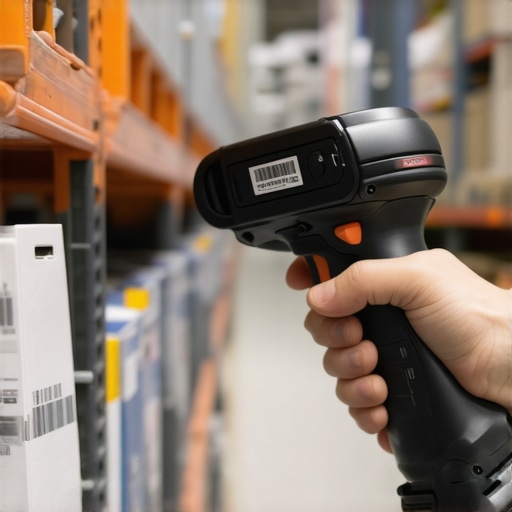
As we look toward 2025, the future of this space is undoubtedly moving toward AI-driven computer vision. I’m already seeing startups using overhead cameras to track inventory movement in real-time, effectively killing the manual count entirely. While that tech might be out of reach for a small stockroom today, the logic remains the same: automation is the only way to scale without losing your grip on mastering payroll compliance and asset tracking. If you can’t see it, you can’t manage it. By adopting these audit support strategies every business needs in 2025, you aren’t just preparing for a potential review; you are building a more profitable, lean machine that knows its own worth at any given second. This level of clarity is one of those tax preparation secrets to save money this year because it eliminates the over-estimation of assets that leads to higher tax bills.
My challenge to you is simple: pick one ‘zone’ in your storage area this Friday and perform a 100% blind count of just that section. Compare it to your software. If the numbers don’t match, don’t just change the screen—find the physical reason for the gap. Once you start hunting for the ‘why,’ you’ll find the hidden profits you didn’t even know were missing.
The Hard Truth About Those Missing Pallets
Over the years, I’ve realized that a discrepancy in the warehouse is rarely just a counting error; it’s a symptom of a process that has lost its way. One of my biggest lightbulb moments was realizing that clean records are the best defense against an intrusive audit. When you focus on audit support key steps to ensure financial transparency, you aren’t just pleasing the IRS; you are gaining total control over your cash flow. I stopped looking at my inventory as ‘stuff’ and started looking at it as a physical representation of my bank account. If I wouldn’t leave a stack of hundred-dollar bills uncounted in a corner, why would I do that with my SKU stock?
My Recommended Tools for an Accurate Ledger
To keep everything aligned, I swear by a few specific strategies. First, ensure you have the specific documents you need for a clean audit review ready before the year ends. This includes signed count sheets and variance reports. Second, I highly recommend looking into finance authority’s guide to staying ahead of tax changes in 2025 to see how new regulations might affect your asset valuation. Finally, if your operations are scaling, remember that your business needs a real CFO, not just a bookkeeper to handle the high-level strategy that a scanner simply can’t provide.
#IMAGE_PLACEHOLDER_E#
Take Control of Your Assets Today
The journey from a chaotic storage room to a streamlined, tax-ready warehouse is shorter than you think. It starts with a single shelf and the commitment to stop guessing. By implementing these tax preparation secrets to save money this year, you are protecting the future of your company. Don’t wait for a notification from the state to get your books in order. Start today, and you’ll find that CPA services can transform small business accounting into your biggest competitive advantage. You have the tools, the map, and the strategy—now it’s time to count. Have you ever found a surprising item hidden in your warehouse during a deep clean or count? Let me know in the comments below!