
Setting up a tax-efficient retirement plan for S-Corp owners

I remember the exact moment I realized I was throwing money away. It was late April, a few years back, and I was staring at a tax return that felt like a punch to the gut. Despite having a profitable year as an S-Corp, I was still writing a check to the IRS that could have bought a decent SUV. I had the S-Corp status, sure, but I was completely failing at the one thing that separates the wealthy owners from the ones who just own a job: a tax-efficient retirement plan. I had made the classic mistake of thinking my business was my retirement plan. It isn’t. Not unless you have a strategy to pull that money out without the tax man taking his 40% cut first.
Stop Letting Your Business Eat Your Future Wealth
The beauty of the S-Corp is the flexibility, but that same flexibility is what gets us into trouble. Early on, I was so focused on reducing my self-employment tax legally that I completely ignored how my payroll setup was blocking me from massive retirement deductions. I was paying myself a reasonable salary but didn’t have a vehicle to stash the surplus. If you’re feeling that same frustration—where the profit is there but the personal wealth isn’t growing—you are exactly where I was. Today, we are going to change that. I’m going to walk you through the exact blueprint I used to turn my business into a tax-saving machine, from choosing the right plan to making sure your CPA services are actually working for your future, not just your past.
Is a Solo 401k actually worth the administrative headache?
This is the question that kept me paralyzed for two years. I was terrified of the compliance rules and the potential for a messy audit. I’d heard horror stories about business owners who messed up their contribution limits and ended up in a whirlwind of audit support needs. But here is the surprising reality: for a solo S-Corp owner, a Solo 401(k) is arguably the single most powerful wealth-building tool available. According to the Internal Revenue Service, you can potentially contribute up to $69,000 as of 2024 as both the employer and employee. That is a massive chunk of change that stays in your pocket rather than being sent to Washington. My biggest regret wasn’t the paperwork; it was the years I spent not doing it because I was overthinking the complexity. Have you ever felt like you’re working for your business rather than it working for you?
Before we dive into the technicalities, it’s vital to understand that your current entity choice only works if you use it to its full potential. You’ve done the hard work of setting up the S-Corp. Now, we need to make sure you know how to set up a compliant retirement plan that doesn’t just save you taxes today but secures your life ten years from now. Let’s get into the how of making your money work as hard as you do.
Dial in Your Salary to Open the Contribution Gate
Think of your S-Corp salary like the diameter of a garden hose. The wider the hose (your W-2 income), the more water you can push through it in the form of retirement contributions. If you set your salary too low to dodge payroll taxes, you inadvertently choke off your ability to stash money in a Solo 401(k). I learned this the hard way during my second year when I tried to keep my salary at a rock-bottom level to save on self-employment taxes. When I went to contribute to my plan, I realized I was capped at a fraction of what I actually wanted to save. It was a classic case of tripping over dollars to pick up pennies. You need a reasonable compensation figure that satisfies the IRS while giving you enough runway for your employee deferral. This is where tax preparation secrets to save money this year truly come into play—finding that Goldilocks zone for your W-2 income.
The Invisible Link Between Payroll and Compliance
Your 401(k) isn’t just a bank account; it’s an extension of your payroll system. If these two aren’t in sync, you’re inviting a disaster. One year, I manually calculated my contributions and forgot to update my payroll software correctly. By December, my internal books showed I’d contributed $20,000, but my official W-2 only reflected $15,000. It took months and specialized CPA services to untangle the mess before tax season. This is exactly why your 401k contributions arent matching your payroll data in many cases. You must ensure that every dollar you intend to defer is withheld through your payroll system in real-time, rather than trying to fix it with a lump sum after the year ends.

Double Your Savings with Employer Profit Sharing
The Solo in Solo 401(k) is a bit of a misnomer because it allows you to wear two hats: the employee and the employer. After you’ve maxed out your personal contribution, your S-Corp can contribute up to another 25% of your W-2 salary as a profit-sharing contribution. However, this is where many owners stumble into a compliance nightmare. This 25% is based strictly on your W-2 wages, not your total distributions or business profit. If your accounting is sloppy, you might over-contribute, leading to excise taxes that eat your gains. I highly recommend a mid-year tax planning session to verify your projected income and adjust these percentages before the ball drops on New Year’s Eve.
Keep Your Ledger Clean to Avoid Audit Triggers
The IRS loves to look at S-Corps that claim massive retirement deductions while showing thin profit margins. To protect yourself, your general ledger must be spotless. I’ve seen owners get flagged because their retirement transfers were categorized as owner draws instead of benefit expenses. If you don’t fix a messy general ledger immediately, those errors compound. I once spent an entire weekend reconciling bank statements because a helpful automation tool categorized my 401(k) funding as a personal expense. Using audit support strategies proactively means documenting the board minutes that authorize your plan’s profit-sharing percentage every single year to ensure full transparency.
That level of transparency is your first line of defense, but most owners treat it like an optional homework assignment. They assume their tax professional will just handle it at year-end, leading to a dangerous misconception: the belief that a CPA is there to fix your past mistakes. The reality is that how CPA services can transform small business accounting relies on forward-looking advice. If you’re just handing over a shoe box of receipts in February, you’ve already lost the game.
Stop Paying for a Historian and Start Hiring a Strategist
Everyone says you need a professional for tax season, but in my experience, if that’s the only time you see them, you’re doing it wrong. A historian CPA simply records what happened; a strategist tells you why your accountant shouldnt just be doing your taxes and looks at your current entity structure to see if it still fits. A study by the Journal of Accountancy found that nearly 60% of small business tax errors are caused by poor documentation rather than actual mathematical mistakes. This administrative burden is often what keeps owners from scaling. Are you getting advice on staying ahead of tax changes in 2025, or are you just getting a bill for last year’s filings?
Can your accounting software actually trigger an IRS notice?
There is a dangerous myth that modern cloud accounting is set it and forget it. I’ve seen countless S-Corp owners rely on automated feeds, only to realize that why auto-categorization is ruining your financial reports is a fast track to an audit. If your software mislabels a personal draw as a business expense, it doesn’t just mess up your books; it signals to the IRS that your business isn’t a separate entity. This is often the reason your software based tax estimate is usually wrong because it cannot distinguish between a tax-deductible retirement contribution and a simple bank transfer.#IMAGE_PLACE_HOLDER_C#
Why Your Grocery Bill Could Kill Your 401k Tax Break
The oops factor that sinks most Solo 401(k) plans isn’t a complex math error; it’s the corporate veil. I once worked with an owner who lost a massive deduction because they routinely used their business account for personal errands. While it seems harmless, why you should never use your business account for personal groceries is about protecting your entity’s legal standing. If you treat the business like a personal ATM, the IRS can argue the S-Corp doesn’t truly exist, potentially disqualifying your employer-side contributions. You need to ensure your audit support strategies include a strict separation of business and personal life. Have you ever fallen into this trap? Let me know in the comments.
The Software I Actually Trust with My Bank Account
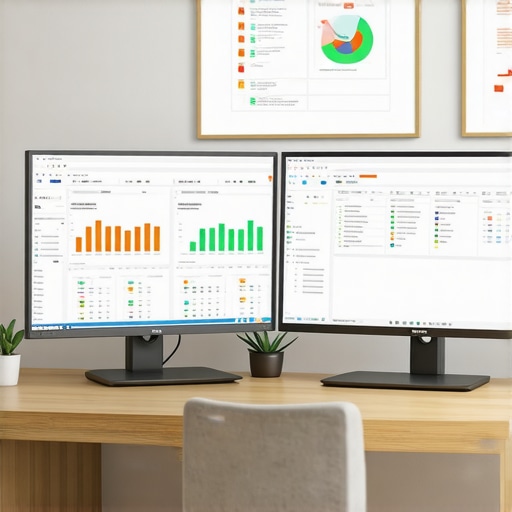
I didn’t realize how much of my mental bandwidth was being consumed by manual calculations until I switched to a fully integrated stack. I personally use Gusto paired with QuickBooks Online, but it’s the integration that matters, not just the names. When you sync these, your retirement deferrals are automatically categorized, which is the only way to avoid the headache of why your 401k contributions arent matching your payroll data. If your payroll isn’t talking to your ledger, you’re essentially guessing your way through an audit. This setup allows me to spend less than thirty minutes a month on administrative tasks while streamlining payroll processes to a point where error is nearly impossible. I recommend these tools because they don’t just record data; they enforce the rules you’ve set for your S-Corp’s compliance.
How do I keep this tax machine running on autopilot?
The secret isn’t just the tools; it’s the routine. Every third Friday of the month, I spend twenty minutes verifying that my owner’s draw doesn’t exceed my reasonable salary and that my retirement contributions have cleared. This is part of mastering payroll compliance for the long term. If you wait until December to look at these numbers, you’ve lost the ability to pivot. I’ve found that using a specialized dashboard to track my 401(k) limits keeps me from accidentally over-contributing, which would otherwise require expensive CPA services to correct after the fact. Maintenance is about small, consistent checks, not one massive year-end panic session.
The Future of S-Corp Taxes Isn’t on a Spreadsheet
As we look forward, the trend is moving toward aggressive automation and real-time IRS data matching. According to the technical guidelines in IRS Revenue Procedure 2023-34, we are seeing significant adjustments in contribution limits and tax brackets that require immediate recalibration of your payroll settings. I predict that within the next two years, the IRS will transition to a more real-time reporting model for small businesses. This means you need to be staying ahead of tax changes in 2025 by ensuring your digital trail is flawless today. The days of ‘fixing it in February’ are coming to an end as the agency’s tech stack finally catches up to the 21st century.
Stop Guessing and Start Predicting Your Liability
One of the most powerful moves I made was shifting my focus toward maximizing your QBI deduction legally through better timing of my expenses. By using software that provides a real-time tax estimate, I can see exactly how a mid-year equipment purchase or an extra 401(k) contribution affects my bottom line. This is one of the many tax preparation secrets to save money this year: don’t just track what you spent; track what you owe in real-time. If you haven’t yet, I challenge you to log into your payroll provider right now and double-check your total projected W-2 earnings against your 401(k) contribution settings to ensure you aren’t leaving a massive deduction on the table.
Lessons from My Most Expensive Tax Mistake
The biggest shock I had wasn’t the complexity of the law, but how much my own fear cost me. I spent years avoiding the Solo 401(k) because I thought I wasn’t “big enough” yet. The truth is, the moment you have consistent profit, you are big enough. I also learned that tax preparation secrets to save money this year often hide in the mundane details of your payroll schedule. If you don’t treat your S-Corp like a separate entity, the IRS won’t either. I had to learn to stop viewing my business bank account as a personal safety net and start seeing it as a strictly regulated wealth-generation machine. This shift in mindset, backed by professional CPA services, was what finally allowed me to sleep at night without fearing an audit letter.
The Daily Tools That Protect My Retirement
#IMAGE_PLACEHOLDER_E# I don’t believe in manual spreadsheets for retirement tracking. I trust integrated payroll solutions because they handle the specific nuances of S-Corp owner-employees without me having to double-check every decimal. For my books, I rely on a clean accounting setup to avoid the nightmare of fixing a messy general ledger during tax season. I also recommend keeping a digital folder of every “Board Minute” where you authorize your retirement contributions; it’s a simple habit that makes audit support strategies much easier to execute. Finally, I regularly check for updated contribution limits to ensure I’m staying ahead of tax changes in 2025 and beyond.
Your Future Self Will Thank You for Starting Now
The window for optimizing your current tax year is always closing faster than you think. You’ve worked too hard to build your business to let a lack of strategy siphon off your wealth. Take the first step today by auditing your own payroll and making that first contribution. When you look back in a decade, the amount of tax you *didn’t* pay will be the best investment you ever made. Let’s make sure your business is the engine that drives your freedom, not the anchor that holds you back. Have you ever felt that your current payroll setup is actually blocking you from saving more? I’d love to hear your experiences in the comments below.