
The Reason Your Bookkeeper Can’t Help with Tax Strategy

I’ll never forget the cold sweat I felt back in 2018. It was a Tuesday afternoon, the air in my office smelled like stale coffee and old printer ink. I had just finished what I thought was a banner year for my small business. My bank account looked healthy, and my bookkeeper had every receipt neatly filed away in digital folders. I walked into that tax meeting expecting a pat on the back and maybe a small refund for all my hard work. Instead, I got hit with a $22,000 tax bill that felt like a punch to the gut. When I turned to my bookkeeper for an explanation or a way to lower it, she gave me a polite, apologetic shrug. “The numbers are what they are,” she said. That was my lightbulb moment. I realized I was paying someone to look in the rearview mirror while I was driving toward a cliff. [IMAGE_PLACEHOLDER] It’s a mistake I see entrepreneurs make every single day, and it’s likely costing you more than you realize.
Your Bookkeeper Records History while You Need to Plan the Future
Most business owners make the same mistake I did: assuming that because someone is “good with numbers,” they’re also a tax strategist. It’s like expecting your historian to predict the stock market. Your bookkeeper is there to ensure your accounting software’s automatic sync isn’t creating a mess and that every dollar is accounted for. They are the guardians of accuracy, not the architects of wealth. I spent years overpaying because I didn’t understand the real difference between tax filing and strategic tax planning. Today, I’m going to show you why that gap exists and how you can bridge it before you write another unnecessary check to the IRS. We are going to move beyond simple record-keeping and into the realm of proactive growth. Have you ever felt that sinking feeling when your tax bill arrives, even though your books were “perfect”?
Does a Clean Set of Books Actually Save You Money?
This is the big skepticism I hear. “But I pay for the best software and a great bookkeeper!” While that ensures you won’t fail an audit, it doesn’t mean you’re saving money. A bookkeeper’s job is compliance—making sure the IRS doesn’t come knocking. But a strategist’s job is optimization. According to a report by the U.S. Small Business Administration, tax compliance costs for small businesses are significantly higher than for larger firms, often because owners lack proactive advice. I learned the hard way that your generalist bookkeeper is often costing you thousands because they simply aren’t trained to spot high-level moves. They make sure your general ledger isn’t hiding your best tax deductions by accident, but they aren’t looking at the tax code to find new ways to save you money. They might not know how CPA services can transform your accounting from a chore into a growth engine or how to implement tax preparation secrets to save money throughout the year. The reality is that bookkeeping is about what happened. Strategy is about what will happen. If you want to keep more of what you earn, you need to stop asking your historian to be your fortune teller. Let’s dive into why this disconnect happens and what you can do about it right now.
I remember trying to justify a $5,000 equipment purchase to an auditor back in my second year. I had the bank statement, but I’d lost the actual invoice in a move. The auditor looked at me like I was trying to sell him a bridge. That’s when I realized that relying on your bank statement for tax prep is a recipe for disaster. You need the underlying data to tell the full story. To bridge the gap between “just tracking” and “actually saving,” you have to shift your perspective on data entry. Your bookkeeper might be recording entries, but you need to ensure they are capturing the intent of the spend. This starts with how you organize your digital receipts for a stress-free audit defense. If you wait until April, you’ve already lost the battle.
Stop Guessing and Start Predicting Your Tax Liability
Think of your business like a ship. If you only look at the wake behind you, you’ll never see the iceberg ahead. You need to project your tax liability six months out rather than waiting for your CPA to give you the bad news next year.  This proactive approach allows you to make moves while the clock is still ticking, giving you room to invest in equipment or adjust your payroll before the fiscal year slams shut.
Ditch the Shoebox and Embrace Real Automation
I used to spend my Sundays scanning crumpled papers. It was a waste of my time and my energy. You need to transition from basic spreadsheets to professional accounting software that talks to your bank in real-time. But don’t just set it and forget it. You must understand why your accounting software’s automatic sync is often wrong. I once found $12,000 in double-counted revenue because the software synced both the invoice payment and the actual bank deposit as separate income events. Without a human eye, I would have paid taxes on money that didn’t exist.
Audit-Proof Your Deductions Every Single Week
One of the biggest leaks in a small business budget is rejected deductions. If you don’t document business meals properly, the IRS will gleefully strike them out during a review. I make it a rule: if the receipt doesn’t have a name and a business purpose written on it within 48 hours, it doesn’t count. This level of discipline creates the document trail that stops auditors in their tracks. It’s not about being obsessive; it’s about being bulletproof.
The Financial Risk of Misclassified Workers
If you’re hiring freelancers, you are sitting on a potential legal nightmare if you haven’t done your homework. You need to avoid penalties on misclassified contractors by being ruthless about their status. I once hired a “contractor” who worked fixed hours and used my equipment; a quick review from a professional revealed I was months away from a massive employment tax penalty. Catching that early and shifting to payroll compliance saved me from a five-figure fine and a lot of sleepless nights.
I frequently hear entrepreneurs say that if their bank balance matches their software, they’re audit-proof. This is a dangerous half-truth. In my experience, the IRS rarely audits you because your math is off by five cents; they audit you because your classification logic is aggressive or your entity structure is outdated. According to a study by the National Federation of Independent Business (NFIB), tax complexity remains a top-tier burden because regulations change faster than software updates can keep up. If you’re relying solely on an algorithm, you’re essentially letting a calculator decide your legal defense strategy. Most founders believe that as long as their software dashboard shows green, they are safe, but the hidden risks of using generic DIY tax software are often buried in the fine print. 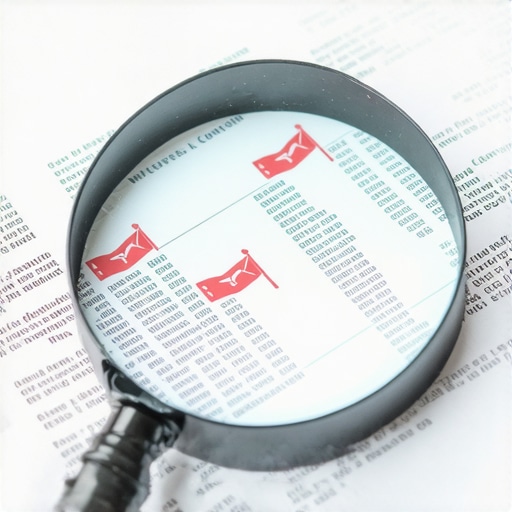 Have you ever fallen into this trap? Let me know in the comments.
The Great Software Delusion and the Remote Nexus Trap
One ‘oops’ factor that almost cost a client of mine six figures was the ‘remote nexus’ trap. They hired a brilliant developer in another state, thinking it was just a simple payroll tweak. They didn’t realize the reason most multi-state businesses fail their audits is failing to register for sales tax and income tax in every jurisdiction where they have ‘boots on the ground.’ Suddenly, you’re not just dealing with one tax authority; you’re dealing with three. This is where why automated payroll apps still require a professional human review becomes painfully clear—software doesn’t always know when your employee moves from a tax-free state to a high-tax one. I’ve seen why your last tax return might be a ticking time bomb for an audit simply because a founder didn’t account for these invisible state borders.
Can Your Entity Structure Handle an IRS Deep Dive?
Many founders stick with their initial LLC setup long after it has ceased to be beneficial. I’ve found that why your business entity choice is likely costing you extra self-employment tax is one of the most overlooked growth killers in the mid-market space. A tax strategist looks at whether an S-Corp election or a different structure could save you $10k a year in taxes, whereas a standard bookkeeper just records the draws you take. Beyond taxes, you must also look at internal security. You need to know how to identify ghost employees in your payroll system—a sophisticated form of fraud that basic automated tools rarely flag. This is why CPA services demystified reveals that true value lies in the defense strategy and proactive structural adjustments, not just the data entry. Moving from basic record-keeping to professional-grade oversight means moving from ‘I hope this is right’ to ‘I know this is defensible.’ If you’re still guessing about your liability, contact us today to start building a bulletproof financial strategy.
Maintaining your financial edge is where most entrepreneurs eventually lose the race. It’s one thing to get your books clean for a single filing, but keeping them that way while your revenue doubles is a completely different beast. I personally swear by automated receipt fetching tools like Dext or Hubdoc connected directly to my accounting suite. I use these because they eliminate the human element of ‘forgetting’ to save a PDF. This is the only way I have found to ensure financial transparency remains a reality rather than a goal you never quite reach. If you aren’t automating the intake of every single invoice, manual data entry is the single biggest threat to your books and your sanity.
How do I keep my tax strategy from falling apart as I grow?
The secret isn’t a better spreadsheet; it’s a better rhythm. I set a ‘Financial Date’ on the 15th of every month where I step away from the daily operations to look at the big picture. This is when I compare my cash flow forecast against my actual bank balance. I also use this time to review audit support strategies every business needs in 2025 to ensure my documentation is keeping pace with evolving IRS guidelines. If you wait until December to see if your strategy worked, you’ve already lost the ability to pivot.
Scaling Your Payroll to 50 States Without a Meltdown
As you expand, the ‘remote nexus’ issues I mentioned earlier become a logistics nightmare. You have to learn how to scale your payroll processes for a 50-state workforce before you make that first out-of-state hire, not after. The American Institute of Certified Public Accountants (AICPA) recently highlighted that the shift toward ‘continuous accounting’ is no longer optional for growing firms. This means your data must be audit-ready every day, not just at year-end. I predict that by 2027, the traditional ‘tax season’ will be obsolete, replaced by AI-driven systems that reconcile your liability in real-time every 24 hours. 
To stay ahead of the curve, you must be proactive. I highly recommend checking out the guide to staying ahead of tax changes in 2025 so you aren’t blindsided by new regulations. My advanced tip for you today: Don’t just look at your profit; look at your structure. If you haven’t recently audited your deductions, you might be missing out on the strategy for maximizing your QBI deduction while you still can. Go into your settings today and ensure your payroll is correctly categorizing your owner’s draw—it’s a small tweak that saves thousands.
Hard-Won Lessons from the Tax Trenches
Looking back at my $22,000 mistake, I’ve realized that the most expensive advice is the advice you never received. First, your bank balance is a liar; it doesn’t show your future liabilities, which is why you need a cash flow forecast. Second, I learned that audit support isn’t something you buy after the notice arrives—it’s something you build into your daily workflow by ensuring financial transparency at every level. Finally, never assume your software is doing the thinking for you. I’ve seen the most common errors in small business tax filings happen simply because an owner clicked ‘approve’ on an automatic categorization they didn’t understand.
My Essential Toolkit for Financial Peace
To keep your sanity while scaling, you need tools that act as a force multiplier. I recommend moving to professional systems rather than DIY hacks. Start by seeing how CPA services can transform your business from a guessing game into a strategy. I also suggest bookmarking the guide to staying ahead of tax changes in 2025 to keep your strategy relevant. For those managing a team, mastering payroll compliance is non-negotiable—it’s the foundation of your operational security. If you ever hit a snag, knowing how to fix payroll errors before they become legal nightmares can save your reputation and your wallet.
Take the Reins of Your Wealth
You didn’t start your business to become a full-time accountant, but you did start it to build wealth. Don’t let poor tax preparation or messy payroll systems steal the fruit of your labor. By moving from a reactive “history” mindset to a proactive “strategy” mindset, you’re not just saving money—you’re buying back your peace of mind. [IMAGE_PLACEHOLDER_E] Have you ever been surprised by a tax bill even though your books seemed perfect? Let me know your experience in the comments below.