
Why You Need an Internal Audit Before Seeking VC Funding

I sat in the waiting room of a prestigious Sand Hill Road firm, clutching a tablet that I thought held the keys to the kingdom. My pitch was polished, my metrics were “hockey-sticking,” and I felt absolutely invincible. Then came the due diligence request. I will be honest with you: I had spent the last eighteen months focused entirely on growth, leaving my back-office operations as a total afterthought. When the VCs started digging, I realized my books were a chaotic mess of two years of messy accounting data that even I could not fully explain. That deal fell through not because of the product, but because I lacked the financial maturity to back up my claims. It was a painful, expensive lesson that I do not want you to repeat. Today, we are going to walk through why an internal audit is the only way to ensure your startup survives the scrutiny of a venture capitalist and why being prepared is better than being lucky.
Your Financial Integrity Is Your Most Important Pitch Deck Slide
[image_placeholder_1]Look, I get it. You have a million things to do, and auditing yourself feels like choosing to go to the dentist. But think of an internal audit as a “stress test.” You want to find the leaks in your basement before the home inspector—the VC—walks in with a flashlight. When I finally swallowed my pride and did a deep dive into our ledgers, I found thousands of dollars in misclassified expenses and contractor errors that would have been a massive red flag. By fixing it early, I was not just checking a box; I was building a foundation. When you are in growth mode, “compliance” sounds like a boring word for people who do not want to build things. But let me tell you, VCs are not just betting on your app; they are betting on your ability to manage their millions. I once made the mistake of relying on the hidden risks of using generic tax software to track complex R&D credits, and it nearly cost me a Series A. If you can not show the specific documents you need for a clean audit review, you are signaling that you are a high-risk liability.
Is an audit really worth the time and money right now?
In my experience, the cost of an audit is a fraction of the capital you lose when a deal falls apart at the term sheet stage. Often, your current CPA might be too slow for your startup and is not proactively checking for the red flags in your financial statements that attract IRS attention—the exact same red flags that sharp-eyed VCs use to negotiate your valuation down. According to a study by the Harvard Business Review, financial mismanagement is one of the top reasons why even promising startups fail to secure follow-on funding. It is not about being perfect; it is about being prepared. Have you ever felt that sinking feeling when an investor asks a question about your balance sheet that you can not answer? It is time to stop crossing your fingers and start cleaning your house. Let us look at how to get your books “VC-ready” without losing your mind.
Clean the Basement Before the Party Starts
The first thing I learned the hard way is that your accounting software is not a magical fix-it button. I used to think that as long as my bank feeds were syncing, I was golden. I was wrong. The reality is that why manual ledger entries are the biggest risk to your data integrity often comes down to human error hiding behind automation. You need to start by looking at every single transaction from the last twelve months. It is tedious, but this is how you spot that $5,000 office supply purchase that was actually a down payment on a server that should have been capitalized. If you cannot explain every outflow to a stranger, you are not ready for a check. 
Why Your Bank Feed Is a Liar
Most founders rely on automated syncs, but why automated bank feeds often fail during audits is because they frequently miss timing differences or double-count transfers between accounts. If you wrote a check on December 31st but it did not clear until January 3rd, your books are already out of sync with reality. This is why your monthly bank reconciliation is non-negotiable. I remember sitting across from an auditor who found a $12,000 discrepancy simply because I had not reconciled my primary payment gateway account for six months. I looked like an amateur. To fix this, you must match your general ledger to your actual bank statements line-by-line every single month. If you find a gap, do not just make a journal entry to ‘adjust’ it away; find the specific source of the error.
Identify the Contractor Landmines
During my second attempt at a Series A, the due diligence team spent three days just looking at my 1099s. I had been hiring developers through various platforms and just hitting pay without thinking about the tax documentation. I did not realize that why your 1099-NEC filings might be incomplete could lead to massive IRS penalties that a VC would eventually have to assume. You need to verify that every person working for you has a W-9 on file before you send a single dollar. If you have been paying people through Venmo or personal apps, you are walking into a buzzsaw. Learn how to avoid penalties on misclassified contractors now, because trying to fix this while an investor is waiting for a signature is a nightmare that creates unnecessary friction.
Stop Treating Your Business Card Like a Personal ATM
We have all done it—grabbed the wrong card at a team dinner or used the company account for a quick personal expense when the other card was out of reach. But the danger of mixing personal and business credit card charges is that it shatters your corporate veil. If you cannot separate your personal life from your business, why should an investor trust you with their capital? When I finally sat down for my own financial health check, I found dozens of small personal charges that made my profit and loss statement look unprofessional. The costly mistake of mixing personal and business bank ledgers isn’t just about the tax impact; it is about the narrative of discipline. You want to show that every dollar spent was a strategic investment in growth, not a lifestyle subsidy.
Get Your Payroll Trail Under Control
Finally, you have to look at how people get paid. If you are growing fast, streamlining payroll processes for tech-driven businesses is the only way to keep your head above water. In one of my early ventures, we had a mix of hourly and salaried staff across four different states, and our withholding was a total disaster because we had not registered for local payroll taxes. I had to learn how to reconcile your payroll reports to your general ledger the hard way—after getting a scary notice from a state agency. Ensure your retirement contributions, health insurance premiums, and net pay all tie back to your total cash outflows. If they do not match perfectly, your books are not yet professional-grade.
I have seen so many founders treat their CPA like a fire extinguisher—something you only grab when there is a literal blaze. But here is the contrarian truth: if you are only calling your accountant in March, you are missing out on the most valuable part of the relationship. Most founders think they just need help with filing, but there is a massive gap between the difference between strategic advisory and basic tax filing. In my own experience, I realized too late that why your current CPA might be too slow for your startup because they were focused on looking backward while I was trying to project my runway eighteen months into the future. You need someone who proactively uses finance authority insights navigating financial regulations effectively to shield your profits before they ever hit the ledger.
The Depreciation Trap That Catches Founders Every Year
One of the biggest ‘oops’ factors that trips up even seasoned entrepreneurs is the danger of misclassifying equipment purchases as repairs. When I was trying to lower my taxable income, I lazily threw a bunch of new hardware into the ‘maintenance’ category. It felt like a quick win until a state audit turned into a three-month nightmare because I had not followed the strategic way to handle accelerated depreciation. Correcting these entries during audit support strategies every business needs in 2025 is ten times more expensive than doing it right the first time. 
Why does your balance sheet still look wrong after tax season?
Most founders get their tax returns back, look at their books, and realize the numbers do not match. This is not usually an error in the software; it is the reason your balance sheet doesn’t balance after your tax return due to timing differences and standard accounting adjustments that your bookkeeper did not record. If you are not doing a post-filing reconciliation, you are making decisions based on ghost data. According to the Journal of Accountancy, small businesses that maintain a continuous audit-ready stance increase their likelihood of securing favorable loan terms by nearly 40% compared to those who only clean up their books once a year. Have you ever fallen into this trap of ignoring the ‘adjusting entries’ after tax time? Let me know in the comments below.
Put Your Financial Fortress on Autopilot
I have lived through the ‘Excel hell’ of trying to track burn rates manually, and let me tell you, it is a recipe for a panic attack. To truly scale, you need to transition from reactive bookkeeping to proactive systems. I shifted my focus toward streamlining payroll processes for tech-driven businesses because the moment you hire in a second state, your complexity does not double—it quadruples. I personally rely on a ‘tech stack’ that forces every dollar to have a digital receipt attached before the transaction even clears. This is how to successfully manage a high-volume audit trail without hiring a full-time clerk. If you are still chasing employees for PDFs, you are wasting the mental energy you should be using to close your next round.
Why I Swapped My Spreadsheets for Real-Time Dashboards
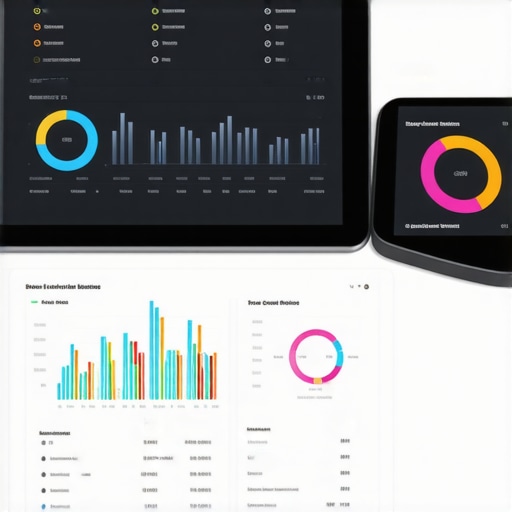
One specific tool choice changed everything for me: moving to a system that handles how to handle multi-state sales tax for e-commerce growth automatically. I once spent a weekend manually calculating fractional rates for a New York nexus only to realize I was still wrong. Now, I use API-driven integrations that check for how to correct your sales tax settings in popular software in real-time. According to the AICPA’s SOC 1 Type 2 reporting standards, maintaining this level of data integrity is not just about taxes—it is about proving to your investors that your internal controls are actually functioning as described.
How do I keep my books audit-ready every single month?
The secret is not a massive end-of-year clean-up; it is the 15-minute weekly ‘scrub.’ Every Friday, I look for the fast way to fix duplicate transactions in your ledger before they get buried under a month’s worth of data. This keeps my cash flow view accurate and ensures I am mastering payroll compliance expert tips for 2025 success without a headache. By the time my monthly call with my advisor comes around, we are not talking about missing receipts; we are talking about the difference between strategic advisory and basic tax filing and how to lower my effective rate.
Looking ahead, I see the industry moving toward autonomous accounting where AI flags why most small business audits start with a single typo before the transaction is even finalized. You will soon be able to see how to project your tax liability six months out with nearly perfect accuracy. For now, your best move is to implement why you need a monthly financeauthoritys health check. My advanced tip for you this week? Go into your accounting software and run a ‘Vendor Spend’ report. If you see more than three vendors you do not recognize or have not used in 90 days, cancel those subscriptions immediately. You would be surprised how much ‘vampire burn’ is draining your runway.
The Brutal Truth About Financial Maturity I Had to Learn Twice
The biggest realization I had after my first failed round was that financial transparency isn’t a defensive move—it’s an offensive one. When you walk into a room with audit support key steps to ensure financial transparency already implemented, you project an aura of competence that signals your business is ready for scale. I learned that how CPA services can transform small business accounting isn’t just about outsourcing data entry; it’s about gaining a strategic partner who understands your unit economics better than you do. Remember, a VC is looking for reasons to say ‘no.’ Don’t give them a missing receipt or a messy ledger as an excuse to walk away.
My Go-To Arsenal for Bulletproof Books
I didn’t get my books in order by working harder; I did it by using better frameworks. First, I highly recommend setting up a system for tax prep tips for freelancers and gig workers in 2025 even if you have a full-time team, because it keeps your contractor compliance mindset sharp. Second, you absolutely need why you need a monthly P&L review with your CPA to catch anomalies before they become multi-thousand-dollar trends. Finally, keep a copy of the Finance Authority’s guide to staying ahead of tax changes in 2025 bookmarked. These tools move you from guessing your runway to knowing your trajectory with absolute certainty.
Your Path to a Stress-Free Series A
You have built something incredible, and the last thing you want is for a technicality in your ledger to stall your dream. Taking the time to understand CPA services demystified unlock your business growth potential is an investment in your sanity and your company’s valuation. Start by applying tax preparation secrets to save money this year to boost your bottom line immediately. If you feel overwhelmed by the technicalities, don’t hesitate to reach out and contact us for guidance. Your future self—the one signing that term sheet—will thank you for the work you are doing right now. Mastering mastering payroll compliance expert tips for 2025 success is just the beginning of your growth story. Have you ever discovered a major error in your books just before a big investor meeting? Let me know in the comments below!