
Why your accountant shouldn’t just be doing your taxes

I remember sitting at my desk three years ago, staring at a finalized tax return that said I’d had a ‘banner year.’ On paper, I was rich. In my actual bank account? I couldn’t even afford a new office chair. I called my accountant, hoping for some insight, and he just said, ‘The math is right; you owe the IRS $12,000.’ That was my lightbulb moment. I realized I was paying for a historian—someone to tell me exactly how I had messed up in the past—when what I actually needed was a navigator. If you are only talking to your CPA in April, you aren’t getting financial advice; you’re just buying a very expensive data entry service. Today, we are going to fix that by looking at how the right CPA services can actually help you scale instead of just staying compliant.
Your Accountant Should Be a Pilot, Not Just a Recording Clerk
Most small business owners treat tax season like a trip to the dentist—something painful to get over with once a year. I made the massive mistake early on of thinking that as long as my ‘taxes were done,’ my business was healthy. I completely ignored the fact that why your profitability doesn’t match your cash flow is the real metric that keeps you in business. A good accountant shouldn’t just be filling out forms; they should be looking at your lease agreements, your hiring plans, and your margins every single quarter. When I finally made the move from simple bookkeeping to strategic CFO services, my entire perspective changed. I stopped reacting to financial disasters and started preventing them. Have you ever felt like you’re flying blind despite having ‘clean’ books?
Isn’t it more expensive to ask for more than just taxes?
It sounds counterintuitive, but paying for year-round strategy actually saves you more than the ‘cheap’ once-a-year tax prep ever will. When I was doing it the old way, I missed out on R&D credits and made a mess of my equipment depreciation because nobody was watching the shop. According to a study by U.S. Bank, 82% of small businesses fail due to poor cash flow management. That is a staggering number. Most of those businesses likely had ‘done’ their taxes, but they didn’t have a partner helping them see the red flags in your financial statements before they became terminal. I once had a situation where my balance sheet was showing phantom profits simply because I was recording income at the wrong time. If I hadn’t stepped up my accounting game, I would have hired two new employees I couldn’t actually afford. We need to move beyond the mindset of compliance and start talking about real strategy.
Stop Waiting for April to Talk Strategy
Quarterly reviews are like checking the oil in your car. If you wait until the engine seizes, the mechanic can only tell you it’s dead. I started scheduling 45-minute pulse checks with my CPA every March, June, and September. During one of these, we realized I was overpaying on quarterly estimates because of a drop in a specific service line. If I’d waited until April, I would have essentially given the IRS an interest-free loan of $8,000 that I desperately needed for marketing. This is why your business needs a mid-year tax review—it turns taxes from a surprise bill into a manageable expense. Stop viewing these meetings as an extra cost and start seeing them as an insurance policy for your cash flow.
Your Personal Life and Business Ledger Should Never Meet
It’s tempting to use the business card for a quick grocery run or a new personal gadget, but you are creating a nightmare for your future self. I once spent a grueling weekend highlighting personal versus business expenses on a six-month credit card statement because I had been lazy. My accountant almost fired me, and for good reason. You have to understand that why you should never use your business account for personal groceries isn’t just about clean math; it’s about avoiding the risk of piercing the corporate veil. If the IRS sees you treating your business account like a personal piggy bank, they can potentially go after your personal assets during a tax dispute. Beyond the legal risks, the danger of mixing personal and business credit card charges is that it obscures your actual margins. You can’t tell if your business is truly profitable if your personal subscriptions are buried in your software expense category.
Fix the Payroll Leak Before It Sinks You
Managing a team is hard enough without the Department of Labor breathing down your neck. Most owners think their software handles everything automatically, but why your current payroll setup is a compliance nightmare usually comes down to state-to-state withholding and misclassification. I once hired a contractor in another state who did the work of a full-time employee. My CPA caught it before the year-end filings, saving me thousands in potential back taxes and penalties. Mastering payroll compliance involves more than just clicking submit on a dashboard; it’s about verifying that your 401k contributions and tax withholdings actually match your general ledger records. If these numbers are off by even a few pennies, it creates a ripple effect that can ruin your year-end reconciliation.
The Paper Trail That Saves Your Business in an Audit
If you get that dreaded letter from the IRS, you don’t want to be scrambling through shoe boxes. Effective audit support strategies every business needs in 2025 center on digital documentation and proactive organization. Every receipt, every contract, and every board meeting minute should be attached directly to the transaction in your accounting software. Stop relying on your memory or a generic software estimate. In fact, the reason your software-based tax estimate is usually wrong is that it doesn’t account for the nuance of your specific industry-specific deductions or the timing of your income. Real audit defense is built in the day-to-day boring stuff. When you have a clear, documented history, you aren’t just filing taxes; you are building a fortress around your financial future.
Stop Blindly Trusting Your Automation
Everyone tells you that the beauty of modern accounting is the ‘set it and forget it’ nature of cloud software. In my experience, that’s exactly how you end up in a room with an auditor wondering where your life went wrong. We’ve been conditioned to think that if the bank feed matches the ledger, the books are perfect. But here is the contrarian truth: why automated bank feeds often fail during audits is usually due to the lack of context. An algorithm doesn’t know if that $500 Amazon charge was for office monitors or a new gaming setup for your kid. Without the ‘why’ behind the transaction, your automation is just a fast lane to a compliance nightmare. This is where audit support key steps to ensure financial transparency become vital. You need a human eye to bridge the gap between the raw data and the business intent.
Why Does Your Balance Sheet Refuse to Match Your Tax Return?
It’s one of the most frustrating phone calls I get from clients. They’ve spent all year looking at their internal dashboards, only to find that the reason your balance sheet doesn’t balance after your tax return is a fundamental misunderstanding of book-to-tax adjustments. This is an ‘oops’ factor that can cost you thousands in overpaid taxes or, worse, trigger a flag for inconsistency. According to research published in the Journal of Accountancy, nearly 30% of accounting errors in small businesses stem from misconfigured automated syncs that owners never double-check. If you aren’t performing why your business needs a forensic review of last years ledger, you are likely carrying over errors from 2023 that will haunt you well into 2026. Have you ever fallen into this trap where you thought the software had it handled, only to find a mess later? Let me know in the comments.

The Hidden Trap in Your ‘All-in-One’ Payroll
We often treat payroll as a secondary concern, but it’s the quickest way to lose your business. Many tech-driven companies assume that a slick UI means their taxes are being paid correctly. However, why your accounting software keeps flagging the wrong errors often points back to the payroll-ledger connection. If you have employees in multiple states, you aren’t just dealing with federal law; you’re dealing with a web of local nexus rules. I’ve seen cases where why your overtime calculations might be violating labor laws goes unnoticed for years because the owner trusted a default setting. A strategic partner won’t just run the numbers; they will verify the underlying logic. If you find yourself needing to how to fix a discrepancy in your quarterly tax filings, it’s a sign that your system is reactive rather than proactive. Real financial health isn’t about the absence of errors; it’s about having the professional oversight to catch them before they reach the government’s desk.
Toss the Shoebox and Embrace Digital Guardrails
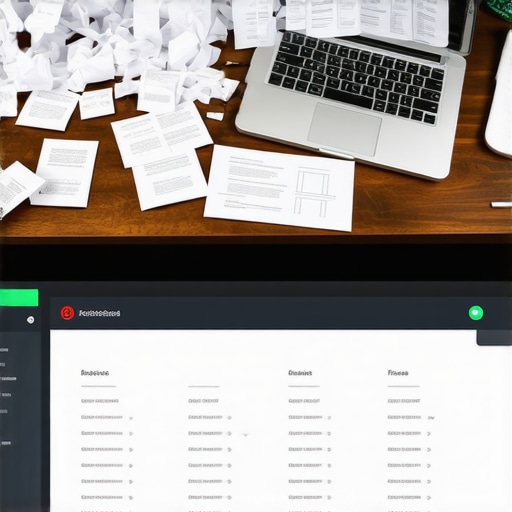
Once you’ve moved past the initial chaos of tax season, the real work begins: staying organized so you never have to do a ‘deep clean’ of your books again. I personally rely on a tech stack that centers on data extraction rather than manual entry. I use tools like Dext or Hubdoc to snap photos of every single receipt the moment I get it. Why? Because why manual ledger entries are the biggest risk to your data integrity is a lesson I learned the hard way when I lost a $4,000 deduction for a specialized piece of hardware simply because the thermal paper faded to white. If you aren’t digital yet, you aren’t just behind the times; you are actively losing money. This isn’t just about storage; it’s about the move to automate your accounts payable process so your human brain can focus on strategy instead of typing in dates and amounts.
How do I maintain my financial health as my revenue scales?
Maintenance isn’t a monthly event; it’s a weekly ritual. Every Friday, I spend 20 minutes doing a ‘sanity check’ on my automated feeds. I look for those pesky auto-categorization errors that plague most small businesses. I’ve found that why your current bookkeeping process is too slow usually isn’t a software issue, but a lack of consistent habits. By checking weekly, I ensure that my how to reconcile your payroll reports to your general ledger process is a five-minute task at month-end rather than a three-day nightmare. According to the specific record-keeping guidelines in IRS Publication 583, you must maintain a system that clearly reflects your income and expenses. If you can’t pull a report in sixty seconds that explains a specific expenditure, your maintenance system is broken. This is where the benefits of outsourcing your entire accounting department or at least hiring a fractional specialist become incredibly clear—they handle the hygiene while you handle the growth.

My Secret Weapon for Document Integrity
Beyond receipts, I’ve started keeping a ‘Tax Memo’ folder. Every time I make a major decision—like a new equipment lease or a change in my contractor agreements—I write a three-sentence note explaining the business logic and save it as a PDF. This is the ultimate form of proactive audit support key steps to ensure financial transparency. When an auditor asks why you treated a certain expense the way you did three years later, you won’t have to guess. You’ll have the ‘past version’ of you explaining it in real-time. This level of detail is essential for mastering payroll compliance and ensuring you’re ready for any inquiry. I recommend you try this for your next major purchase: document the ‘why’ alongside the invoice and see how much more confident you feel about your filings.
Real-Time Oversight is the Next Industry Standard
I predict that by 2026, the idea of ‘filing a tax return’ once a year will feel as outdated as using a fax machine. We are moving toward a world of real-time reporting where the IRS and state agencies have more direct visibility into your transactions. This is why finance-authoritys-guide-to-staying-ahead-of-tax-changes-in-2025 emphasizes the need for continuous monitoring. If your systems aren’t talking to each other now, you are going to struggle when ‘instant’ audits become the norm. The technology is already here; we just need to adopt the discipline to use it. Don’t wait until you’re forced to change. Take my advice: go into your accounting software today, find one transaction from last month that lacks a digital receipt, and upload it. Start that habit right now.
The Pivot That Actually Saved My Sanity
Looking back, the biggest shift wasn’t just downloading a new app; it was changing my relationship with my numbers. I realized that my accountant shouldn’t be a once-a-year expense but a monthly investment in my business logic. Here are a few hard-won truths: first, perfection is a myth, but consistency is a non-negotiable requirement. If you’re a solo operator, these tax prep tips for freelancers and gig workers in 2025 will help you treat your side-hustle like the corporation it needs to become. Second, if you aren’t happy with the insights you’re getting, don’t stay stuck; knowing how to handle a disagreement with your current tax preparer is a vital skill for any founder. Finally, remember that your ledger is the living story of your business—don’t let someone else write a work of fiction. If you’ve inherited a mess, you need to learn how to clean up your general ledger after a bad bookkeeper before you can even think about scaling. #IMAGE_PLACEHOLDER_E#
My Financial Survival Kit
I don’t believe in over-complicating things. To stay on top of navigating financial regulations effectively, I stick to a few core resources. I highly recommend IRS Publication 583 as a foundational read—it sounds dry, but it’s the actual rulebook we are all playing by. For software, I lean on tools that emphasize data extraction like Dext or Hubdoc to eliminate the manual errors that haunt most audits. I also suggest following the Journal of Accountancy for high-level trends that affect small business owners. These aren’t just tools; they are the guardrails that prevent you from driving off the financial cliff when things get busy.
Stop Reacting and Start Leading
You didn’t start your business to become a part-time bookkeeper, but you also cannot afford to be financially illiterate. The peace of mind that comes with professional CPA services is worth every penny because it buys you the freedom to focus on your vision instead of your liabilities. You’ve now got the roadmap to move from a place of tax-season dread to year-round strategic confidence. Don’t let another quarter slip by with ‘good enough’ books. Take control of your data, verify your compliance, and build something that stands the test of time. Have you ever discovered a major error in your books months after it happened? Let me know in the comments below.