
Why Your S-Corp Needs a Formal Reasonable Compensation Study

I’ll never forget the cold sweat that broke out when I realized my ‘creative’ accounting was actually just a giant target on my back. Back when I first transitioned my business to an S-Corp, I thought I was the smartest person in the room. I set my salary to a nice, round number—low enough to save a fortune on self-employment taxes, but high enough to cover my mortgage. I didn’t have a spreadsheet, a data-backed study, or even CPA services to back me up. I just had a ‘feeling.’ That feeling evaporated the moment I heard about a colleague getting hit with a reclassification audit that wiped out three years of his profit. It turns out, the IRS isn’t interested in your ‘feelings’ about what you’re worth; they want cold, hard data. Today, I’m going to show you why skipping this step is the fastest way to invite an auditor to dinner.
The Day My ‘Gut Feeling’ Payroll Met the IRS Reality
Setting your own pay as an S-Corp owner feels like a superpower until you realize the IRS is watching your every move. If you’re like I was, you’re probably mastering payroll compliance in every area except your own paycheck. The danger of why your entity choice is killing your profit margins often comes down to this single, messy detail: Reasonable Compensation. If you underpay yourself to avoid taxes, the IRS can recharacterize your distributions as wages, hit you with back taxes, and stack penalties until your head spins. I learned the hard way that audit support strategies every business needs start long before the auditor knocks. You need a formal study because ‘because I said so’ isn’t a valid defense in tax court. Have you ever felt that nagging doubt when you transfer your owner draw, wondering if it’s actually ‘reasonable’ in the eyes of the law?
Is a Formal Compensation Study Actually Worth the Hassle?
You might be thinking, ‘Can’t I just look at a few job boards and call it a day?’ I thought so too. But a generic search doesn’t account for your specific mix of duties—you aren’t just a CEO; you’re the janitor, the lead salesperson, and the HR manager. According to a report by the U.S. Government Accountability Office (GAO), the IRS has found that S-corporations often fail to pay adequate wages to shareholders for the services they provide, making this a perennial focus for enforcement. A formal study provides a defensible methodology that survives scrutiny. It’s the difference between a stress-free audit defense and a financial nightmare. We’re moving past the guesswork and into the strategy of navigating financial regulations effectively.
Determine What Your Replacement Would Cost the Business
To get your salary right, you have to treat your role like a high-stakes puzzle. The IRS often relies on what is known as the ‘Cost Approach.’ Think of it like this: if you were to walk away from your business tomorrow, you wouldn’t just hire one person to replace you; you’d likely need a small army. You are the CEO, but you’re also likely the person wondering how to properly manage tips and gratuities in payroll or troubleshooting the website at 2 AM. To find your number, you must break your work into these specific functional roles. If a local office manager makes $60,000 and a specialized bookkeeper makes $45,000, and you spend your time doing both, your salary should reflect a weighted average of those actual market rates.
Break Your Day Into Billable Buckets
I remember one Tuesday where I spent three hours fixing a printer, four hours closing a $10k deal, and one hour screaming at my screen because why manual data entry is the single biggest threat to your books became a reality when a typo deleted a whole day of ledger entries. If I had just picked a random salary, I wouldn’t have accounted for the high-value sales work versus the low-value tech support. Use a simple log for one week. Write down every task. It sounds tedious, but this is how you prove your worth. When you see that 30% of your time is spent on administrative tasks, you realize that your ‘reasonable’ wage shouldn’t be based solely on a high-end executive’s salary.
The Replacement Value Reality Check
 A common mistake is thinking your salary should be a flat percentage of your profit. It isn’t. It is about the market value of the services provided to the corporation. If your business only made $50,000 this year, but the market rate for your actual job duties is $70,000, you have a mismatch that requires careful handling. You can’t pay yourself more than the business makes, but you also can’t pay yourself a tiny fraction just to keep the tax bill low. This is exactly why your business needs a real CFO, not just a bookkeeper to help you navigate these specific ratios. You need to look at salary surveys for your specific geographic area because a consultant in Manhattan costs significantly more than one in rural Ohio.
Build a Paper Trail That Stops an Auditor Cold
Once you have your number, don’t just type it into your payroll software and forget it. You need a formal ‘Reasonable Compensation Report.’ I keep mine in a digital folder alongside the document trail that stops auditors in their tracks. This report should detail the sources you used, the job descriptions you matched yourself to, and the math you used to get to the final number. If you have a board—even if it’s just you and your spouse—document the salary approval in your meeting minutes. Avoiding the audit risk of not keeping proper board meeting minutes is the simplest way to show the IRS that your salary wasn’t a whim, but a calculated business decision. If you’re hiring others, you also need to know how to avoid penalties on misclassified contractors, because how you pay yourself sets the tone for your entire payroll culture. Stop guessing and start documenting; your why your general ledger is hiding your best tax deductions won’t matter if the IRS claws back your distributions in a payroll audit.Many “gurus” tell you to stick to the 60/40 split—60% salary, 40% distributions—and call it a day. In my experience, that’s lazy advice that ignores the complexity of current tax laws. For example, if your business qualifies for the Section 199A Qualified Business Income (QBI) deduction, paying yourself a higher salary might actually reduce your overall tax burden because the deduction is sometimes limited by the amount of W-2 wages the business pays. This is exactly the truth about passive income tax breaks for s-corps that most people miss. You’re so focused on saving 15.3% on payroll taxes that you might be walking away from a 20% deduction on your total business income. The “Oops” factor I see most often involves “Distributions in Excess of Basis.” If you take out more money than the company has in “basis” (roughly, what you’ve put in plus what it has earned), that distribution isn’t tax-free; it’s a taxable capital gain. If you aren’t doing a monthly financeauthoritys health check, you won’t catch this until your tax preparer delivers the bad news in April. Many business owners also fail to account for health insurance premiums correctly on their W-2s, a common error that can lead to audit support strategies every business needs to be implemented retroactively.
What Happens When Your S-Corp Generates More Cash Than Profit?
This is a sophisticated trap. Many owners think that as long as they have cash in the bank, they can pay themselves a “bonus.” But cash flow and taxable profit are two different beasts. A study by the National Association of Tax Professionals (NATP) highlights that mischaracterizing these funds is a leading cause of IRS adjustments. If you aren’t utilizing how cpa services can transform small business accounting, you might be accidentally triggering a reclassification that turns your low-tax distributions into high-tax wages. It’s not just about what you pay yourself, but how you justify the delta between your salary and your dividends. For high-earning S-Corps, the IRS often applies the “independent investor test,” asking if an outside investor would be satisfied with the corporate return after paying you that specific salary. If you’re paying yourself $50,000 while the business clears $1 million, no investor would believe you’re that cheap to replace. 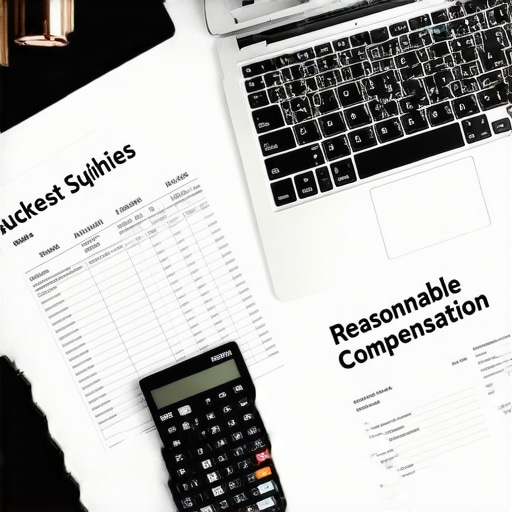 One of the most effective tax preparation secrets to save money this year is understanding that “reasonable” is a range, not a single point. If you stay at the bottom of the range, you need massive documentation and a rock-solid document trail that stops auditors in their tracks. If your current CPA might be too slow for your startup, they probably aren’t helping you find that sweet spot between tax savings and audit protection. They might be missing the nuances of state-specific rules too, such as how to survive a state-level employment audit notice if you have employees in multiple jurisdictions. Have you ever fallen into the “60/40” trap or had a distribution surprise? Let me know in the comments—I’m curious to see how many of us were taught the same outdated “rules.” By realizing the hidden benefit of monthly rather than yearly tax planning, you can pivot your strategy before the year-end deadline makes it permanent. This isn’t just about compliance; it’s about navigating financial regulations effectively to protect your hard-earned wealth.
Stop Using Spreadsheets for Your Most Risky Calculation
I learned early on that a DIY Excel sheet is the fastest way to fail an audit. When I finally got serious about my business, I switched to a combination of specialized reporting tools and streamlining payroll processes for tech-driven businesses. I personally use platforms that generate specific Reasonable Compensation Reports because they don’t just give you a number—they provide a defensible methodology. For example, the Tax Court case of McAlary v. Commissioner (T.C. Summary Opinion 2013-62) proved that the IRS is obsessed with the ‘cost approach’ to labor. If you can’t show the market data for every hat you wear, you’re a sitting duck. This is exactly why I stopped guessing and started using software that pulls real-time Bureau of Labor Statistics data. It’s about more than just numbers; it’s about having a packet ready to hand over if an investigator ever emails you. 
How can I stay compliant as my revenue scales?
Maintaining that ‘reasonable’ sweet spot isn’t a one-and-done task. As your revenue grows, your duties often shift from technical work to high-level strategy, which carries a higher market value. I make it a habit to perform a monthly P&L review with your CPA to ensure my salary still reflects the actual work I’m doing. If you hire a manager to take over 40% of your tasks, your reasonable compensation might actually decrease, even if your profits are soaring. This is the nuance that keeps your distributions high and your tax bill low. I also recommend a quarterly ‘reality check’ on your quarterly tax estimates to ensure your withholding is keeping pace with your salary adjustments. This prevents the end-of-year cash crunch that ruins so many holidays.
Real-Time Reporting is the Next Big Tax Shift
I predict that within the next five years, the IRS will move toward real-time payroll data matching. We are already seeing this in Europe, and the U.S. isn’t far behind. The days of ‘cleaning up the books’ in March for the previous year are numbered. If you aren’t already navigating financial regulations effectively by keeping monthly records, you will be caught in the dragnet of automated audits. This shift is why I am so aggressive about how to predict your tax bill before the fiscal year ends. The goal is to move from reactive accounting to a proactive strategy where your financial move that lowers your self-employment tax is documented the moment it happens, not months later. If you want to sleep better, take thirty minutes this week to find one job posting that matches your primary role and save it as a PDF in your permanent tax file. It’s a small action, but it’s the cornerstone of audit support strategies every business needs in 2025. Don’t wait for the notice—build the defense today.I’ll never forget the cold sweat that broke out when I realized my ‘creative’ accounting was actually just a giant target on my back. Back when I first transitioned my business to an S-Corp, I thought I was the smartest person in the room. I set my salary to a nice, round number—low enough to save a fortune on self-employment taxes, but high enough to cover my mortgage. I didn’t have a spreadsheet, a data-backed study, or even CPA services to back me up. I just had a ‘feeling.’ That feeling evaporated the moment I heard about a colleague getting hit with a reclassification audit that wiped out three years of his profit. It turns out, the IRS isn’t interested in your ‘feelings’ about what you’re worth; they want cold, hard data. Today, I’m going to show you why skipping this step is the fastest way to invite an auditor to dinner.
The Day My ‘Gut Feeling’ Payroll Met the IRS Reality
Setting your own pay as an S-Corp owner feels like a superpower until you realize the IRS is watching your every move. If you’re like I was, you’re probably mastering payroll compliance in every area except your own paycheck. The danger of why your entity choice is killing your profit margins often comes down to this single, messy detail: Reasonable Compensation. If you underpay yourself to avoid taxes, the IRS can recharacterize your distributions as wages, hit you with back taxes, and stack penalties until your head spins. I learned the hard way that audit support strategies every business needs start long before the auditor knocks. You need a formal study because ‘because I said so’ isn’t a valid defense in tax court. Have you ever felt that nagging doubt when you transfer your owner draw, wondering if it’s actually ‘reasonable’ in the eyes of the law?
Is a Formal Compensation Study Actually Worth the Hassle?
You might be thinking, ‘Can’t I just look at a few job boards and call it a day?’ I thought so too. But a generic search doesn’t account for your specific mix of duties—you aren’t just a CEO; you’re the janitor, the lead salesperson, and the HR manager. According to a report by the U.S. Government Accountability Office (GAO), the IRS has found that S-corporations often fail to pay adequate wages to shareholders for the services they provide, making this a perennial focus for enforcement. A formal study provides a defensible methodology that survives scrutiny. It’s the difference between a stress-free audit defense and a financial nightmare. We’re moving past the guesswork and into the strategy of navigating financial regulations effectively.
Determine What Your Replacement Would Cost the Business
To get your salary right, you have to treat your role like a high-stakes puzzle. The IRS often relies on what is known as the ‘Cost Approach.’ Think of it like this: if you were to walk away from your business tomorrow, you wouldn’t just hire one person to replace you; you’d likely need a small army. You are the CEO, but you’re also likely the person wondering how to properly manage tips and gratuities in payroll or troubleshooting the website at 2 AM. To find your number, you must break your work into these specific functional roles. If a local office manager makes $60,000 and a specialized bookkeeper makes $45,000, and you spend your time doing both, your salary should reflect a weighted average of those actual market rates.
Break Your Day Into Billable Buckets
I remember one Tuesday where I spent three hours fixing a printer, four hours closing a $10k deal, and one hour screaming at my screen because why manual data entry is the single biggest threat to your books became a reality when a typo deleted a whole day of ledger entries. If I had just picked a random salary, I wouldn’t have accounted for the high-value sales work versus the low-value tech support. Use a simple log for one week. Write down every task. It sounds tedious, but this is how you prove your worth. When you see that 30% of your time is spent on administrative tasks, you realize that your ‘reasonable’ wage shouldn’t be based solely on a high-end executive’s salary.
The Replacement Value Reality Check
A common mistake is thinking your salary should be a flat percentage of your profit. It isn’t. It is about the market value of the services provided to the corporation. If your business only made $50,000 this year, but the market rate for your actual job duties is $70,000, you have a mismatch that requires careful handling. You can’t pay yourself more than the business makes, but you also can’t pay yourself a tiny fraction just to keep the tax bill low. This is exactly why your business needs a real CFO, not just a bookkeeper to help you navigate these specific ratios. You need to look at salary surveys for your specific geographic area because a consultant in Manhattan costs significantly more than one in rural Ohio.
Build a Paper Trail That Stops an Auditor Cold
Once you have your number, don’t just type it into your payroll software and forget it. You need a formal ‘Reasonable Compensation Report.’ I keep mine in a digital folder alongside the document trail that stops auditors in their tracks. This report should detail the sources you used, the job descriptions you matched yourself to, and the math you used to get to the final number. If you have a board—even if it’s just you and your spouse—document the salary approval in your meeting minutes. Avoiding the audit risk of not keeping proper board meeting minutes is the simplest way to show the IRS that your salary wasn’t a whim, but a calculated business decision. If you’re hiring others, you also need to know how to avoid penalties on misclassified contractors, because how you pay yourself sets the tone for your entire payroll culture. Stop guessing and start documenting; your why your general ledger is hiding your best tax deductions won’t matter if the IRS claws back your distributions in a payroll audit.Many “gurus” tell you to stick to the 60/40 split—60% salary, 40% distributions—and call it a day. In my experience, that’s lazy advice that ignores the complexity of current tax laws. For example, if your business qualifies for the Section 199A Qualified Business Income (QBI) deduction, paying yourself a higher salary might actually reduce your overall tax burden because the deduction is sometimes limited by the amount of W-2 wages the business pays. This is exactly the truth about passive income tax breaks for s-corps that most people miss. You’re so focused on saving 15.3% on payroll taxes that you might be walking away from a 20% deduction on your total business income. The “Oops” factor I see most often involves “Distributions in Excess of Basis.” If you take out more money than the company has in “basis” (roughly, what you’ve put in plus what it has earned), that distribution isn’t tax-free; it’s a taxable capital gain. If you aren’t doing a monthly financeauthoritys health check, you won’t catch this until your tax preparer delivers the bad news in April. Many business owners also fail to account for health insurance premiums correctly on their W-2s, a common error that can lead to audit support strategies every business needs to be implemented retroactively.
What Happens When Your S-Corp Generates More Cash Than Profit?
This is a sophisticated trap. Many owners think that as long as they have cash in the bank, they can pay themselves a “bonus.” But cash flow and taxable profit are two different beasts. A study by the National Association of Tax Professionals (NATP) highlights that mischaracterizing these funds is a leading cause of IRS adjustments. If you aren’t utilizing how cpa services can transform small business accounting, you might be accidentally triggering a reclassification that turns your low-tax distributions into high-tax wages. It’s not just about what you pay yourself, but how you justify the delta between your salary and your dividends. For high-earning S-Corps, the IRS often applies the “independent investor test,” asking if an outside investor would be satisfied with the corporate return after paying you that specific salary. If you’re paying yourself $50,000 while the business clears $1 million, no investor would believe you’re that cheap to replace. One of the most effective tax preparation secrets to save money this year is understanding that “reasonable” is a range, not a single point. If you stay at the bottom of the range, you need massive documentation and a rock-solid document trail that stops auditors in their tracks. If your current CPA might be too slow for your startup, they probably aren’t helping you find that sweet spot between tax savings and audit protection. They might be missing the nuances of state-specific rules too, such as how to survive a state-level employment audit notice if you have employees in multiple jurisdictions. Have you ever fallen into the “60/40” trap or had a distribution surprise? Let me know in the comments—I’m curious to see how many of us were taught the same outdated “rules.” By realizing the hidden benefit of monthly rather than yearly tax planning, you can pivot your strategy before the year-end deadline makes it permanent. This isn’t just about compliance; it’s about navigating financial regulations effectively to protect your hard-earned wealth.
Stop Using Spreadsheets for Your Most Risky Calculation
I learned early on that a DIY Excel sheet is the fastest way to fail an audit. When I finally got serious about my business, I switched to a combination of specialized reporting tools and streamlining payroll processes for tech-driven businesses. I personally use platforms that generate specific Reasonable Compensation Reports because they don’t just give you a number—they provide a defensible methodology. For example, the Tax Court case of McAlary v. Commissioner (T.C. Summary Opinion 2013-62) proved that the IRS is obsessed with the ‘cost approach’ to labor. If you can’t show the market data for every hat you wear, you’re a sitting duck. This is exactly why I stopped guessing and started using software that pulls real-time Bureau of Labor Statistics data. It’s about more than just numbers; it’s about having a packet ready to hand over if an investigator ever emails you.
How can I stay compliant as my revenue scales?
Maintaining that ‘reasonable’ sweet spot isn’t a one-and-done task. As your revenue grows, your duties often shift from technical work to high-level strategy, which carries a higher market value. I make it a habit to perform a monthly P&L review with your CPA to ensure my salary still reflects the actual work I’m doing. If you hire a manager to take over 40% of your tasks, your reasonable compensation might actually decrease, even if your profits are soaring. This is the nuance that keeps your distributions high and your tax bill low. I also recommend a quarterly ‘reality check’ on your quarterly tax estimates to ensure your withholding is keeping pace with your salary adjustments. This prevents the end-of-year cash crunch that ruins so many holidays.
Real-Time Reporting is the Next Big Tax Shift
I predict that within the next five years, the IRS will move toward real-time payroll data matching. We are already seeing this in Europe, and the U.S. isn’t far behind. The days of ‘cleaning up the books’ in March for the previous year are numbered. If you aren’t already navigating financial regulations effectively by keeping monthly records, you will be caught in the dragnet of automated audits. This shift is why I am so aggressive about how to predict your tax bill before the fiscal year ends. The goal is to move from reactive accounting to a proactive strategy where your financial move that lowers your self-employment tax is documented the moment it happens, not months later. If you want to sleep better, take thirty minutes this week to find one job posting that matches your primary role and save it as a PDF in your permanent tax file. It’s a small action, but it’s the cornerstone of audit support strategies every business needs in 2025. Don’t wait for the notice—build the defense today.
Lessons from the Audit Trenches That Changed My Strategy
One thing I realized late in the game is that transparency is your best defense. An auditor isn’t just looking for a number; they are looking for the logic behind it. When you focus on ensuring financial transparency, you remove the ‘guesswork’ that triggers red flags. I also learned that perfection isn’t the goal—consistency is. If you change your salary every single month based on whim, you look suspicious. Small errors are the gateway to big problems. I used to think a minor mistake in a ledger was no big deal until I realized why most small business audits start with a single typo. That one mistake can pull the thread on your entire S-Corp structure.
The Tools That Keep My Stress Levels at Zero
If you want to stay sane, you need to stop doing this manually. My toolkit starts with the Bureau of Labor Statistics (BLS) database. It is the gold standard for wage data and the same source the IRS often uses. Second, I highly recommend specialized salary reporting software that generates a formal study for you. Finally, nothing beats cpa services that transform your accounting from a chore into a strategic advantage. A good CPA helps you implement streamlined payroll processes that grow with your company.
Build a Fortress Around Your Financial Future
Taking control of your S-Corp salary isn’t about being afraid of the IRS; it’s about being confident in your business’s foundation. When you master payroll compliance, you free up mental energy to actually grow your revenue instead of worrying about ‘what if.’ You’ve worked too hard to let a payroll technicality put your assets at risk. When was the last time you actually updated your ‘reasonable’ salary math? Drop a comment below and let’s talk numbers.