
The Fast Way to Fix Duplicate Transactions in Your Ledger

It was 11 PM on a Tuesday, and I was staring at a Profit & Loss statement that made me look like a millionaire. For a split second, I felt a rush of joy. Then reality hit. I knew my bank balance didn’t have that many zeros. I had fallen into the classic trap of a ghost ledger where every swipe of a customer’s card was being recorded twice. Once by the bank feed and once by my point-of-sale integration. This wasn’t just a typo; it was a systemic failure that could have led to a massive overpayment in taxes or, worse, a failed audit. I spent the next forty-eight hours manually deleting entries, fueled by cold coffee and regret. I promise you that we can clear this mess up faster than I did back then, saving you from the same headache I endured.
Why Your Ledger is Suddenly Playing Tricks on You
Most business owners think that moving to the cloud solves everything, but I learned the hard way that why your accounting software’s automatic sync is often wrong usually comes down to having too many digital bridges active at once. When you connect your bank, your Stripe account, and your invoicing software all at once, they start talking over each other. It’s like having three people try to tell you the same story at the same time—you end up with three versions of the truth in your records. I once let this go for a full quarter, and let me tell you, how to clean up messy accounting data becomes a much steeper mountain to climb the longer you wait.
Can you really trust these automated tools anymore?
You might be wondering if it’s safer to just go back to a physical checkbook. I get it. The skepticism is real when you see your automated books looking like a jigsaw puzzle with extra pieces. But here is the thing: the tools aren’t usually broken; the configuration is. Early in my journey, I made the mistake of not setting up matching rules, which led to months of the costly mistake of mixing personal and business bank ledgers because I wasn’t verifying the source of each entry. According to a report by the Journal of Accountancy, nearly 90% of spreadsheets contain errors, and that inaccuracy rate often carries over into improperly managed digital ledgers. The why behind fixing this immediately isn’t just about being a perfectionist. It’s about survival. If your ledger is bloated with duplicates, you are making business decisions based on fake money. You might hire someone you can’t afford or buy equipment that drains your actual cash reserves because you thought you had a cushion that doesn’t exist. Have you ever looked at your dashboard and realized your profit was actually just a double-recorded deposit?
Stop the Data Overlap Immediately
To fix a ghost ledger, you first have to turn off the extra faucets. I tell my clients to think of their accounting software as a high-speed blender. If you throw in too many ingredients—bank feeds, payment processors, and manual entries—the whole thing turns into a mess you can’t recognize. I remember helping a fellow consultant, Sarah, who thought her business was ready for a second location because her dashboard showed a massive cash surplus. In reality, her ‘profit’ was inflated by $15,000 because every transaction was being sucked in by her bank feed and then again by her invoice app. The first thing we did was disable the automatic sync on her invoicing software. We needed to see what the bank was actually doing first. You see, the reasons your bank feeds are hurting your accuracy often stem from the fact that they are logically blind; they don’t know that a deposit and an invoice payment are often the same event described twice.
Choose Your Primary Witness
In any audit-proof system, you need one source of truth. Usually, this is your bank account statement. If your bank says the money landed on the 12th, that’s the date that matters. When you have two apps reporting the same event, you are essentially asking two witnesses to describe a car crash; they will give you slightly different times and details, causing the software to think they are two separate accidents. I learned that why your accounting integration is deleting important data or doubling it is almost always a failure in mapping. Decide now: will your bank feed create the transaction, or will your invoicing software create it and ‘match’ it to the bank? Picking one and sticking to it is the only way to avoid the headache of manual reconciliation later.
Scrub the Ledger Without Panic
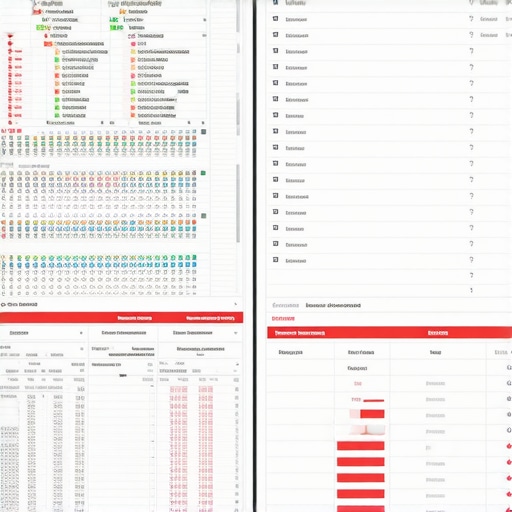
Once the duplicate flow has stopped, you have to clean the existing mess. Don’t just start deleting everything; you’ll break the reconciliation and make your next tax filing a disaster. When I was fixing Sarah’s books, I once tried to ‘bulk delete’ what I thought were duplicates and accidentally wiped out a month of legitimate expenses. The better way is to use the ‘Find and Recode’ or ‘Bulk Match’ features within your software. This is where how to reconcile your bank accounts without the headache comes into play. You look for the duplicates in the bank reconciliation tab and ‘ignore’ or ‘exclude’ the entries that don’t have a physical match in your bank statement. If you’ve been letting this slide for months, you might need a more intensive approach to how to clean up two years of messy accounting data by exporting the ledger to a spreadsheet first to spot the patterns before hitting the delete button.
The One Habit That Keeps You From Relapsing
You can’t just fix this once and walk away. Systems degrade, apps update, and settings reset. I have a ‘First Friday’ rule: every first Friday of the month, I spend twenty minutes specifically looking for duplicates. This isn’t a full reconciliation; it’s a quick spot check for doubles. This is why you need a monthly financeauthoritys health check to catch the glitches before they become a tax-season nightmare. If I had done this back when I was starting out, I wouldn’t have spent those forty-eight hours on that cold-coffee-fueled cleanup. You want your ledger to be a mirror of your actual bank account, not a funhouse mirror that makes your profits look twice as big as they really are.
Let’s dig deeper into the nuances that your software’s glossy marketing materials tend to gloss over. Most business owners believe that as long as they pay for a top-tier payroll subscription, they are fully shielded from liability. This is perhaps the biggest myth in modern business finance. While software is excellent at basic arithmetic, it is often blind to the jurisdictional complexities that trigger a state-level investigation. I’ve worked with dozens of startups that thought they were mastering payroll compliance only to realize their ‘automated’ system wasn’t filing local occupational taxes correctly because it was never configured for that specific zip code.
The Automation Trap Nobody Tells You About
Everyone tells you that ‘set it and forget it’ is the gold standard for your books, but I’ve found that the more you automate without oversight, the more likely you are to drift away from reality. For instance, the most common errors in small business tax filings don’t usually come from bad intentions; they come from a blind trust in ‘auto-categorization’ features. If your software sees a recurring $500 payment and starts labeling it as ‘Supplies’ when it’s actually a loan repayment, your P&L is suddenly a work of fiction. This is the reason your bookkeeper can’t help with tax strategy—if the data they are working with is fundamentally flawed by automation, they can’t see the opportunities for real savings.
Why is your worker classification actually a ticking time bomb?
Have you ever wondered why some companies seem to skate by while others get hit with massive back-tax bills for their contractors? It’s rarely about the total dollar amount and almost always about the trail of control you leave behind. The ‘oops’ factor here is treating a 1099 contractor like a W-2 employee—providing them with equipment, setting their specific hours, and then assuming a generic software flag will catch it. It won’t. I’ve seen this lead directly to a need for intensive audit support strategies that could have been avoided with a simple classification check. According to a report by the Department of Labor, nearly 30% of audited employers had misclassified at least one worker, leading to millions in collective penalties. If you aren’t proactively learning how to survive a worker classification review, you are essentially gambling with your cash flow. 
Why your payroll provider isn’t actually a safety net
You might feel secure with a big-name provider, but why your payroll provider isn’t handling your local compliance is a hard truth many learn too late. They provide the platform; you provide the data. If you don’t tell them you have a remote worker in a new state, they won’t automatically start paying that state’s unemployment insurance for you. This oversight is exactly how to avoid penalties on misclassified contractors and employees alike: by realizing that human expertise is still the final filter. I’ve spent years helping people untangle these exact knots, and the pattern is always the same—relying on a tool to do a professional’s job. Have you ever fallen into this trap where you trusted the software more than your gut? Let me know in the comments.
When I finally got tired of the ‘oops’ moments and the midnight coffee runs to fix broken spreadsheets, I built what I call the ‘Fortress Ledger.’ I stopped treating my accounting software as a magic box and started treating it as a database that needs a gatekeeper. I personally rely on a ‘hard-close’ method at the end of every month. This means once the books are reconciled, I lock the period so no accidental sync or stray click can alter the past. If you don’t have this level of discipline, you’ll find that how to clean up messy accounting data becomes a permanent item on your to-do list rather than a one-time project.
Stop Running the Monthly Marathon
Most people wait until the 30th to look at their numbers, but I’ve found that high-growth requires a weekly cadence. Every Tuesday morning, I spend fifteen minutes reviewing my ‘Uncategorized’ feed. This small habit is the cornerstone of tax preparation secrets to save money this year because it ensures every deduction is captured while the memory is fresh. I use a tool called Hubdoc to fetch my recurring bills automatically, but I never let it push to the ledger without a manual ‘OK.’ This human-in-the-loop system is exactly streamlining payroll processes for tech-driven businesses without losing the oversight that keeps you out of trouble.
How do I keep these records clean as I scale?
Scaling creates a ‘data noise’ problem. As you hire more people and take on more vendors, the number of digital ‘handshakes’ increases. I recommend adopting a ‘One-Card Policy.’ I only use one specific credit card for all SaaS subscriptions and another for physical goods. This makes spotting a duplicate transaction almost instantaneous. When you reach this level of complexity, CPA services demystified reveals that their real value isn’t just filing forms; it’s helping you design these workflows. According to the IRS Audit Technique Guide (ATG) for small businesses, the absence of a formal internal control system—like a written record of who approves what—is the primary reason for expanded audits. That’s why your business needs a written accounting policy manual before you hit your next $100k in revenue.

The Specific Tech Stack I Use Every Day
I don’t believe in using twenty different apps. I use three: a robust core ledger, an automated receipt fetcher, and a dedicated payroll engine. The key is how they talk. I’ve learned to disable any ‘auto-matching’ features that the software tries to force on me. I want the software to suggest a match, but I want to be the one to click the button. This prevents the nightmare of the fix for messy payroll reconciliation for remote teams from becoming a monthly recurring headache. If you are dealing with sales tax, I highly suggest you look into why you need a separate bank account for sales tax collections. It keeps the ‘government’s money’ out of your operating cash, making your real profit clear at a glance.
Why the Future of Compliance is Hybrid
Looking ahead to 2025 and beyond, I predict that ‘Automated Audit Defense’ will become the norm. We are already seeing AI tools that can scan a ledger and predict audit risks before the IRS even sees the data. However, the more high-tech the IRS gets, the more you will need high-touch audit support strategies. Machines can find patterns, but they can’t explain the *intent* behind a complex business pivot. My advanced tip for you today: Create a ‘Tax Evidence’ folder in your cloud drive for every transaction over $2,500. Don’t just save the receipt; save a screenshot of the email or the project brief that justifies the expense. This simple move is audit support in its most proactive form. If you start doing this today, you’ll never fear an inquiry again. I’ve seen this save clients tens of thousands simply because they had the ‘why’ documented alongside the ‘how much.’ If you’re feeling overwhelmed by the technical side, why your business needs a real CFO not just a bookkeeper becomes very apparent as you try to bridge the gap between simple data entry and high-level strategy.
The Reality Check Most Software Companies Won’t Give You
After years of untangling these knots, I’ve realized that the ‘automation’ dream is often a half-truth. First, a ‘clean’ sync doesn’t mean your data is actually correct; I’ve seen perfect reconciliations that were secretly hiding systemic payroll errors. Second, your ledger is a living diagnostic tool, not just a tax requirement. If you aren’t checking it weekly, you’re flying blind. This is exactly how CPA services can transform small business accounting—by turning that raw data into a roadmap rather than a rearview mirror. Finally, remember that software can’t defend you in a room with an auditor; only a well-documented ‘why’ can do that.
Where I Turn When the Numbers Stop Making Sense
I don’t expect you to memorize the tax code, but I do recommend having a few ‘North Star’ resources in your pocket. I personally rely on the IRS Audit Technique Guides because they show you exactly how the government thinks. I also suggest keeping staying ahead of tax changes in 2025 on your radar so you aren’t caught off guard by shifting regulations. If you find yourself in the middle of a specific state inquiry, having the checklist for every business facing a sales tax review can be the difference between a quick resolution and a month-long headache. These tools aren’t just for ‘tax season’; they are for every day you want to stay profitable.
#IMAGE_PLACEHOLDER_E#
Take Control Before Your Ledger Takes Control of You
Cleaning up a ghost ledger is more than just a bookkeeping task; it’s an act of reclaiming your business’s future. By narrowing your data sources and verifying your payroll compliance, you build a foundation that can actually support your growth. You deserve to look at your dashboard and feel confidence, not confusion. If you ever feel like the mess is getting too big to handle alone, don’t hesitate to reach out to us at our contact page for professional guidance. We can help you implement the high-level audit support and strategy you need to move forward with total financial transparency. Have you ever discovered a duplicate transaction that completely changed how your profit looked? Let me know your story in the comments below!