
Why Manual Ledger Entries Are the Biggest Risk to Your Data Integrity

I remember a Tuesday evening, about three years ago, staring at a spreadsheet that didn’t balance by exactly $4,102.14. My eyes were blurring. I’d been typing in vendor names and amounts manually for hours, convinced that my ‘meticulous nature’ was a superpower. It wasn’t. It was a liability. That $4,000 discrepancy wasn’t a bank error; it was a simple transposition error I’d made while distracted by a podcast. I had entered $4,561 as $456.10, and because I was doing it all by hand, there was no software to flag the absurdity of a four-dollar software subscription suddenly costing four hundred. This is a trap many of us fall into, thinking we don’t need professional CPA services because we can handle the basics. Today, I’m going to pull back the curtain on why manual ledger entries are the fastest way to compromise your data and how you can reclaim your time and accuracy. We are going to dive into the psychological toll of manual entry and the concrete steps you can take to automate your workflow without losing control.
Can a Simple Typo Really Tank My Business?
You might feel like a minor slip-up isn’t a big deal—maybe just a few bucks here and there—but I learned the hard way why most small business audits start with a single typo. It’s like a loose thread on a sweater; once the IRS or an auditor pulls it, your entire financial history starts to unspool. When your ledger is full of manual entries, you aren’t just recording data; you are creating a map full of wrong turns. The sheer volume of human error in manual processes is staggering. Research from the University of Hawaii suggests that nearly 88% of spreadsheets contain errors. When those errors live in your general ledger, they don’t just stay there—they multiply, affecting your tax liability, your profit margins, and eventually, your peace of mind.
Your Typing Fingers Are Your Worst Enemy
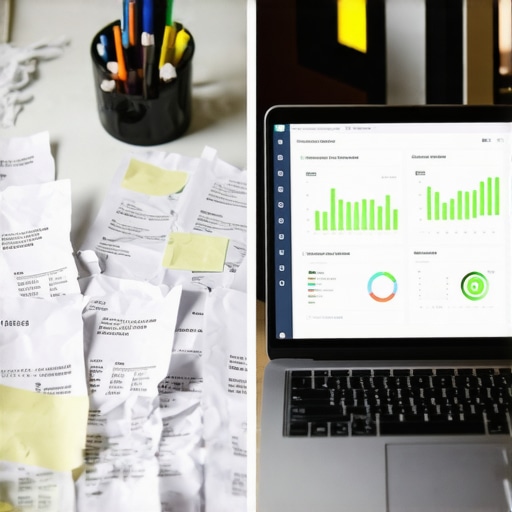
Early on, I made the classic mistake of thinking I could ‘catch up’ on my bookkeeping at the end of the month. I’d sit down with a pile of faded receipts, a stale cup of coffee, and a fading memory of what I actually bought. This led to a mess of duplicate transactions in my ledger that took me weeks to untangle. I’d enter a lunch meeting twice—once from the receipt and once from the bank statement—not realizing they were the same event. If you aren’t using automated systems or audit support strategies to keep your records straight, you’re basically playing a high-stakes game of telephone with your own bank account. The truth is that manual data entry is the single biggest threat to your books because it bypasses the digital guardrails meant to keep your data honest. Have you ever spent a whole Sunday afternoon hunting for a two-dollar error that just wouldn’t show itself? Let me know in the comments, because I’ve certainly been in that lonely trench, and I want to help you climb out.
Stop Mixing Your Grocery Money with Your Payroll
The first step to escaping the manual entry trap is brutal separation. If you are still using one bank account for your Netflix subscription and your client deposits, you are essentially asking for a headache. I learned this the hard way during my second year in business. I once accidentally categorized a $200 trip to a hardware store for home repairs as a business expense because it was on the same statement as my office supplies. When my CPA looked at it, they had to spend three hours untangling my personal life from my professional one. This is why the costly mistake of mixing personal and business bank ledgers is the number one reason small businesses fail their first internal review. You need a dedicated account for every business function—period. It creates a digital ‘paper trail’ that doesn’t rely on your memory three months later.
Let the Machines Talk to Each Other
Once your accounts are separate, you have to connect them. Most modern accounting software offers direct bank feeds, but you can’t just ‘set it and forget it.’ You need to establish rules that categorize recurring expenses automatically. Think of it like a digital sorting machine; it takes the raw data and puts it in the right bucket before you even see it. However, be careful—sometimes why your accounting softwares automatic sync is often wrong can lead to phantom entries if you don’t oversee the initial setup. When I first synced my accounts, the software saw a ‘refund’ as ‘income,’ which would have artificially inflated my tax bill. By taking ten minutes a week to verify these automated links, you ensure that 90% of the work is done without you lifting a finger, leaving you only to handle the exceptions.
The Monthly Ritual That Saves Your Sanity
Consistency is the only thing that beats chaos. You need to perform a reconciliation every single month—no excuses. This isn’t just about making sure the numbers match; it’s about spotting the small leaks before they become floods. If you wait until December to look at your June statements, you’ve already lost the battle. This is why your monthly bank reconciliation is non-negotiable. During my ‘Tuesday evening disaster,’ if I had been reconciling monthly, I would have caught that $4,000 error within thirty days rather than four months later. It’s the difference between a quick fix and a forensic investigation. Use this time to verify your payroll figures as well, especially if you have had to deal with the step-by-step fix for late payroll filings in the past.
When You Need an Expert Eye on Your Ledger
Finally, understand that automation has its limits. High-level strategy requires human intuition. While software can track a transaction, it can’t tell you if your entity structure is draining your cash flow or if your depreciation schedule is outdated. This is where audit support strategies every business needs in 2025 come into play. A professional review acts as a safety net. I now have my CPA do a quarterly ‘health check’ on my books. This isn’t just about taxes; it’s about having a second pair of eyes to spot the trends I’m too close to see. They often find deductions I missed because I was too focused on just getting the data entered. By moving from a ‘data entry clerk’ mindset to a ‘financial manager’ mindset, you stop working for your books and start making your books work for you.
Let’s dig deeper into the metrics that actually matter. Everyone tells you to watch your net income, but in my experience, a profitable year on paper can still result in a business going bankrupt. The hard truth is that why your profit and loss statement is lying to you often comes down to timing and cash flow reality. You might show a $50,000 profit for the quarter, but if $40,000 of that is trapped in unpaid invoices while your payroll tax is due tomorrow, you are effectively insolvent. This is where most people get it wrong: they confuse accounting profit with actual liquidity. Beyond the numbers, there is a dangerous psychological trap in thinking your software is smarter than it actually is. I have seen countless cases where why your accounting integration is deleting important data becomes a nightmare during an audit because the user didn’t realize the auto-sync was skipping specific transaction categories. Have you ever fallen into this trap? Let me know in the comments. It is a gut-wrenching feeling to realize your digital safety net has holes in it.
Why Does a Remote Team Make Your Tax Filing Ten Times Harder?
The shift to remote work has introduced a level of complexity that most basic tax prep packages simply cannot handle. If you have employees living in different states, you are not just dealing with federal law; you are navigating a labyrinth of local nexus rules. The tax consequences of hiring your first out-of-state worker go far beyond a simple withholding form. You might unknowingly trigger physical or economic nexus in a state like California or New York, requiring you to file corporate income tax returns there as well. A study by the National Small Business Association (NSBA) revealed that the administrative burden of tax compliance is one of the top reasons small businesses struggle to scale. This is exactly why managing payroll for a 50-state workforce is not something you should attempt without professional oversight. 
Your Bookkeeper Is Not Your Strategic Planner
Another critical nuance people miss is the massive gap between data entry and data strategy. I used to think my bookkeeper was handling my taxes, but they were actually just recording what had already happened. This is the reason your bookkeeper cant help with tax strategy—their role is historical, not predictive. To actually lower your tax liability, you need to understand the difference between strategic advisory and basic tax filing. If you are not having a conversation about entity structure or accelerated depreciation six months before the year ends, you are just paying for a report of your own past mistakes. This is why your business needs a real CFO or a high-level CPA who understands how to use your general ledger as a tool for aggressive growth, not just a compliance checklist for the IRS. Moving beyond the basics means realizing that the cheapest accounting option often becomes the most expensive one when the audit notice finally arrives.To keep the engine running, you need more than just software; you need a workflow that protects your sanity. Personally, I’m a huge fan of using OCR (Optical Character Recognition) tools like Dext or Hubdoc paired with my primary accounting platform. Why? Because it kills the ‘shoebox’ problem before it starts. By the time you’re scaling, why fixed asset tracking is essential for growing businesses becomes a daily reality, not a yearly chore. I’ve seen businesses double in size and immediately crumble because they didn’t have a tech stack that could talk to their bank in real-time. If you’re still entering data manually, you’re basically trying to win a Formula 1 race in a horse and buggy.
Build a Financial Tech Stack That Does Not Break
One of the best moves I ever made was integrating my point-of-sale system directly with my general ledger. This isn’t just about saving time; it’s about eliminating the opportunity for theft and error. When you are streamlining payroll processes for tech-driven businesses, every manual touchpoint is a potential point of failure. The IRS actually outlines the standards for electronic record-keeping in Revenue Procedure 97-22, which dictates that your electronic records must be just as reliable, searchable, and readable as paper ones. If your ‘cloud’ setup is just a messy folder of blurry screenshots, you are not just disorganized—you are non-compliant. I recommend a ‘receipts-first’ workflow where no money leaves the account unless a digital scan is already attached to the transaction. 
How can I keep my records clean as my business grows?
Consistency is your only defense against a growing pile of financial chaos. I set a recurring calendar invite for 9:00 AM every Friday. That is my ‘Financial Hour.’ I don’t take calls, I don’t answer emails; I simply review the week’s transactions and flag anything that looks ‘off.’ This becomes especially critical when you are figuring out how to transition from cash basis to accrual accounting. Scaling requires a shift in how you view your money. You move from ‘what is in the bank’ to ‘what is owed to me versus what I owe.’ This is why why your business needs a written accounting policy manual even if you are a team of two. It sets the rules of the game so that when you hire your tenth employee, the system doesn’t shatter.
Look Forward Instead of Staring at the Past
I predict that by 2026, the traditional ‘tax season’ will effectively disappear for smart businesses. We are moving toward a world of real-time reporting where the IRS has much more visibility into your bank feeds. The future of tax prep tips for freelancers and gig workers in 2025 is all about predictive AI that flags potential audit risks before you even hit ‘submit.’ If you aren’t using tools that offer some level of predictive analytics now, you’re going to be left behind. My challenge to you today: Open your Chart of Accounts and look for any category labeled ‘Miscellaneous’ or ‘Other.’ If there is more than $500 in there, find out exactly what it is and re-categorize it. Accuracy starts with getting rid of the catch-all buckets that hide your waste.
Why My DIY Mindset Cost Me More Than a CPA Ever Could
Reflecting on my journey, the biggest shift wasn’t just downloading software; it was a psychological change. I finally accepted that being ‘busy’ with spreadsheets wasn’t the same as being ‘productive.’ Here are a few lightbulb moments that changed everything for me when I stopped trying to do it all myself:
- The hidden cost of ‘free’ labor: If you value your time at $100 per hour, that five-hour manual reconciliation just cost you $500. This is why CPA services demystified reveals that experts actually pay for themselves by freeing you up to generate revenue.
- Data integrity is binary: Your books are either right or they are wrong. There is no ‘mostly correct’ when you are facing an IRS agent. Accuracy is a requirement, not a goal.
- Systems beat willpower: You will eventually get tired, bored, or distracted. An automated workflow doesn’t have bad days or ‘fat-finger’ mistakes.
Tools That Keep My Business From Drowning
I don’t believe in over-complicating things, but these are the non-negotiables in my current tech stack. I trust these because they have saved my skin during rapid growth spurts:
- OCR Receipt Capture: Stop hoarding paper. Tools like Dext ensure you never lose a deduction again by scanning receipts the moment they are printed.
- Strategic Advisory: I stopped looking for a tax filer and started looking for a partner. Learning tax preparation secrets to save money isn’t about shady tricks; it’s about having a pro who knows how the law applies to your specific niche.
- The Sales Tax Vault: I always recommend why you need a separate bank account for sales tax collections. It removes the temptation to spend money that actually belongs to the state.
- The Monthly Health Check: Even with automation, why you need a monthly health check is vital to catch those weird software sync errors before they snowball into a year-end disaster.
Stop Playing Defense with Your Data
It is time to stop fearing your bank balance and start using it as a roadmap for your future. Transitioning away from manual entry isn’t just about avoiding the hidden risks of using generic tax software; it’s about reclaiming your mental energy to actually lead your team. You didn’t start your company to be a data entry clerk. You started it to make an impact and build something lasting. By utilizing professional CPA services, you build a financial foundation that won’t crack under the pressure of an audit or a sudden scale-up. Have you ever found a massive error in your books months after it happened? Let me know in the comments below!