
The Hidden Burden of Local Occupational Privilege Taxes

I remember staring at a manila envelope from my local township three years ago, my coffee going cold as I realized I had missed a simple filing for a single employee. It was for something called an Occupational Privilege Tax—a measly ten-dollar fee that had spiraled into hundreds of dollars in penalties and interest. I felt like a total amateur. Here I was, running a business, and I had been tripped up by a local ordinance I did not even know existed. It is visceral, that feeling of being penalized for a rule you were not told about. Today, I am going to help you pull back the curtain on these hidden local burdens so you can protect your cash flow and keep your sanity intact.
Your Payroll Software Isn’t a Safety Net
Most of us trust our tech to do the heavy lifting, but relying on automation is exactly where I went wrong. I assumed that because I was using a major platform, all my payroll compliance was handled. Wrong. These systems are great at federal and state levels, but your payroll provider isn’t handling your local compliance with the precision you need. They often miss the hyper-local taxes like the OPT or Local Services Tax that vary from one street corner to the next. I once spent an entire weekend fixing a year of payroll errors because I did not verify a new hire’s local tax district. It was a nightmare that could have been avoided with a little neighborly advice.
Is Local Tax Compliance Really That Big of a Deal?
You might be thinking that a few small taxes won’t sink your ship. But the reality is that the cumulative effect and the aggressive penalties are what hurt. According to the Tax Foundation, local governments in the U.S. collect over $30 billion annually in ‘other’ taxes, which often includes these occupational licenses and privilege fees. It isn’t just about the ten dollars; it is about the hidden costs of late payroll tax deposits and the administrative burden of staying legal in every jurisdiction where you have an employee. If you are not careful, these small leaks become a flood. Have you ever received a surprise tax bill that made you want to pull your hair out? Share your story with me, because we have all been there. By looking at these as part of your overall tax preparation secrets, you can stay ahead of the game.To stop these leaks, you need to treat your local tax map like a minefield—do not take a single step until you know exactly where the lines are drawn. Most business owners think in terms of zip codes, but tax collectors think in terms of political boundaries and school districts. It is like trying to use a global GPS to find a specific mailbox in a blizzard; the resolution just isn’t high enough.
Pinpoint Every Local Tax Agency That Wants Your Money
The first step is to perform a jurisdictional audit of every location where you have a physical presence or an employee working. This is especially critical for remote setups. I learned this the hard way when I hired a designer who lived exactly two blocks outside the city limits. My software defaulted to the city rate, but her actual township required a specific Local Services Tax that I did not even have an account for. By the time I caught it six months later, the interest alone cost more than the tax itself. If I had implemented the step-by-step fix for late payroll filings sooner, I would have saved myself a week of stress. You must manually verify the ‘Work Site’ and ‘Resident’ tax codes for every person on your books. Do not trust the software to auto-populate this based on a zip code alone. Use state-specific ‘address look-up’ tools which are often provided by the Department of Community and Economic Development or similar state agencies.
Verify Resident Tax Districts Before the First Paycheck
Once you have the locations, you need a residency certification form for every employee. This document is your shield. It forces the employee to verify their municipality and school district, which shifts the burden of geographic accuracy. When I started doing this, I found that the fix for messy payroll reconciliation for remote teams usually starts with this one piece of paper. 
Build a Defensive Audit Shield
Documentation is not just about filing; it is about survival. If a local collector comes knocking, they do not care about your ‘intent’ to pay. They care about the ledger. You should maintain a dedicated folder for local tax correspondence, separate from your state and federal files. This organization is a core part of the audit support strategies every business needs in 2025. In my case, having a digital scan of Sarah’s signed residency form saved me from a massive ‘failure to withhold’ penalty because I could prove I acted on the information provided. You also need to be wary of how you categorize the people working for you. If you are using freelancers to dodge these local burdens, you are playing a dangerous game. Knowing how to avoid penalties on misclassified contractors is vital because local agencies are increasingly aggressive about finding ‘hidden’ employees to bolster their local coffers. If you have someone working 40 hours a week from their home office in a high-tax borough, that borough wants its cut, and they will look at your 1099s to find it. Stay proactive, verify the lines on the map, and get the signatures before the money moves.I hear it every time I consult with a new founder: My software handles that. It is perhaps the most expensive sentence in modern business. We have been sold this dream that automation is a set-it-and-forget-it solution, but in my experience, blind trust in tech is a risk multiplier. The reality is that why your accounting software’s automatic sync is often wrong usually comes down to a lack of contextual oversight. Software follows rules, but it doesn’t understand intent or the subtle shifts in local legislation that happen mid-quarter.
Stop assuming your software is smarter than you
Most business owners believe that as long as the data is flowing from their bank to their ledger, they are compliant. This is a massive misconception. Automation can perfectly categorize a transaction into the wrong bucket for twelve months straight without ever raising a red flag. I recently worked with a startup that realized their ‘automated’ system had been miscalculating local earned income tax for three different boroughs because the software couldn’t distinguish between a mailing address and a physical work site. This is where the difference between strategic advisory and basic tax filing becomes life-saving. One is about filling boxes; the other is about ensuring the boxes are actually relevant to your specific footprint.
How does tax nexus change the game for remote teams?
For the advanced reader, the real ‘Oops’ factor is the concept of Nexus. You might think you only owe taxes where your headquarters is located, but the moment you hire a remote worker in another state, you have likely created a taxable presence there. This creates a cascade of obligations, from unemployment insurance to local business privilege licenses. A common mistake is thinking a standard bookkeeper can navigate this. However, the reason your bookkeeper cant help with tax strategy is that they are looking at the past, while nexus requires you to look at future liabilities. Have you ever fallen into this trap of assuming your footprint was smaller than the IRS says it is? Let me know in the comments. 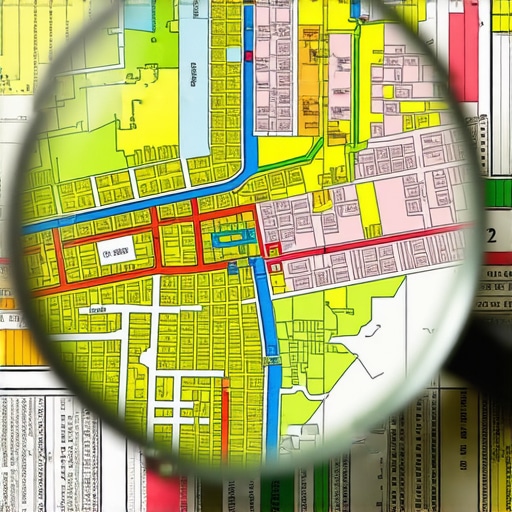
Why your current CPA might be too slow for your startup
In the fast-paced world of 2025, waiting until April to discuss your local tax exposure is a recipe for disaster. According to a recent study by the AICPA, state and local tax (SALT) complexities remain the top concern for small to mid-sized firms, primarily due to the rapid shift toward decentralized workforces. If your tax pro is only talking to you once a year, they are not protecting you from these shifts. You need to understand the tax consequences of hiring your first out-of-state worker long before the offer letter is signed. Sometimes, why your current CPA might be too slow for your startup is simply because they are operating on an outdated compliance model. You need a partner who views local tax as a dynamic hurdle, not a static line item. True expertise isn’t just about knowing the rules; it’s about knowing when the rules are about to change and moving your pieces on the board before the tax collector does it for you.So, how do you actually maintain this level of precision as you scale without spending forty hours a week on paperwork? I stopped using physical folders years ago and moved to a cloud-based ‘source of truth.’ I personally use a combination of automated document fetchers and a strictly enforced naming convention for every local notice. Why? Because the hidden costs of managing payroll internally often hide in the dozens of hours spent looking for a single lost receipt when an auditor calls. For my tech-heavy clients, I always suggest streamlining payroll processes for tech-driven businesses by integrating their ledger directly with a compliance-first platform that offers hyper-local tax support.
Build a Digital Vault for Your Financial Sanity
Maintaining your records is not just about staying organized; it is about building a defense. I recommend using a system like Hubdoc or Dext to pull invoices and tax notices automatically. This prevents the ‘I forgot to download that’ panic. The 2024 State Business Tax Climate Index by the Tax Foundation highlights that state-level tax competition is fiercer than ever, meaning local jurisdictions are digging deeper into administrative audits to shore up their budgets. If you are not centralizing your data, you are leaving your business exposed. Beyond simple storage, you need a rhythm. Every single month, I run a monthly finance check-up to ensure the software hasn’t glitched and my nexus hasn’t expanded unexpectedly. 
How do I keep this tax engine running without losing my mind?
The secret is the ‘Compliance Calendar.’ This isn’t just a calendar with due dates; it is a live document that tracks the specific local agency, the login credentials for their often-clunky portals, and the date the last filing was confirmed. This level of detail is exactly how CPA services can transform small business accounting from a reactive headache into a proactive asset. When you have this infrastructure, you can stop worrying about the ‘what ifs’ and start focusing on growth. As your team grows, you will realize that unlocking your business growth potential through CPA services isn’t just about taxes—it’s about having the bandwidth to lead.
The Future Moves Toward Real Time Audits
I predict that within the next five years, we will see a shift away from quarterly filings toward real-time, transaction-level reporting. Local governments want their money faster, and digital APIs are making it possible. This means the margin for error is shrinking to zero. If you don’t have a pro in your corner, you might miss the moment why your business needs a real CFO to handle the high-level strategy while your tools handle the data. Stay ahead by following the guide to staying ahead of tax changes in 2025. Try this: Spend 15 minutes today setting up a ‘Local Tax’ folder in your cloud drive and move every local notice you have received this year into it. You will be shocked at how much easier your next tax season becomes.After years of trial and error, I have realized that mastering payroll compliance is not about being perfect; it is about being prepared for the imperfections of the system. One of my biggest lightbulb moments was realizing that local tax collectors are often more persistent than the IRS because their budgets depend on every single dollar from local businesses. I also learned that how CPA services can transform small business accounting is not just a marketing slogan—it is the difference between a reactive crisis and a proactive strategy.
Hard Truths About Local Tax the Tech Salesman Won’t Mention
Looking back, I see three major lessons that saved my business from further penalties. First, silence from a local agency does not mean you are compliant; it usually means they just haven’t audited you yet. Second, your employee’s mailing address and their actual tax jurisdiction can be two different things, and it is your job to know the difference. Finally, software automation is a tool for efficiency, but it is never a substitute for professional oversight.
The Compliance Toolkit I Swear By
To keep your sanity, I recommend a few specific staples. First, always utilize your state’s official ‘Address-to-Jurisdiction’ lookup tool rather than relying on a simple search engine. Second, keep a ‘Local Tax Ledger’ that tracks payment receipts specifically for municipal fees. Third, consider unlocking your business growth potential through CPA services that specialize in multi-state Nexus issues. Finally, use a cloud-based storage tool to ensure your audit support strategies every business needs in 2025 are backed by digital proof that can be accessed anywhere. #IMAGE_PLACEHOLDER_E#
Stop Letting Local Taxes Steal Your Sleep
You started your business to build something great, not to become a full-time tax researcher. By putting these systems in place, you can return your focus to your team and your customers. Remember, staying current with your tax preparation secrets and following the guide to staying ahead of tax changes in 2025 is the only way to ensure your hard-earned revenue stays in your bank account where it belongs. Have you ever been hit with a local tax penalty that felt completely unfair? Let me know in the comments below!