
How to Handle Fractional Sales Tax Rates for Online Sellers

I will never forget the rainy Tuesday in 2018 when I opened a letter from the Colorado Department of Revenue. I thought I was doing everything right—my Shopify store was humming, and I was diligently collecting tax. But I had made a rookie mistake. I had been rounding my sales tax rates to the nearest whole number because, honestly, who has time for three decimal places? That ‘small’ rounding error on a few hundred transactions turned into a three-year headache of back taxes and penalties. It was my first real brush with the brutal reality of fractional rates, and it is why I am so obsessed with getting the math right for you today. If you have been eyeing your latest report and wondering why the numbers do not quite add up, you are not alone. Today, we are going to stop the bleeding and ensure your shop stays compliant without losing your mind.
Why Those Tiny Decimals Are Creating a Massive Accounting Mess
The problem is not just the math; it is the sheer volume of jurisdictions. Most people do not realize that in states like California or Texas, you are not just dealing with a state rate—you are layering on county, city, and even special district taxes. When you start adding those up, you get rates like 8.875% or 7.375%. If your system is not set up to handle these fractions, you are essentially under-collecting every single time a customer clicks ‘buy.’ Early in my career, I ignored the importance of why you need a separate bank account for sales tax collections, and it made the eventual reconciliation a total nightmare. According to a report by the Tax Foundation, there are over 11,000 taxing jurisdictions in the U.S., many with these precise fractional requirements. This is why learning how to handle multi-state sales tax for e-commerce growth becomes the most critical skill for a scaling seller. Have you ever felt that sinking feeling when you realize your tax settings have been wrong for months?
Is it really worth the effort to track every tiny fraction?
I get the skepticism. You are trying to build a brand, not become a part-time actuary. It feels like busywork until you realize that the checklist for every business facing a sales tax review almost always starts with these minor discrepancies. Auditors love fractional errors because they are easy to find—systemic mistakes that suggest you have not been paying attention to the details. My biggest mistake was assuming my basic software would just ‘figure it out’ on its own. It did not. You need a strategy that bridges the gap between your sales platform and your actual tax liability, often starting with cpa services demystified to ensure your setup is bulletproof. Let’s look at how we can actually fix this before the state sends you a letter like they sent me.
Stop Trusting Your Software to Do the Heavy Lifting
Software is like a high-end GPS; it can tell you where to go, but it won’t yank the steering wheel if you are headed toward a cliff. Many sellers assume that turning on a tax ‘engine’ is the end of the job. In reality, why your accounting integration is deleting important data is often the first thing you need to investigate. I once worked with a client who relied solely on a ‘set it and forget it’ plug-in for two years. They were collecting a flat 7% across the board because they missed the ‘special district’ toggle in their settings. By the time we reviewed the books, they were $14,000 short in uncollected taxes. We spent weeks on how to clean up two years of messy accounting data just to keep the state from freezing their accounts. You must verify your mappings at least once a quarter to ensure that 8.875% isn’t being rounded down to 8.8% or up to 9% by a lazy algorithm.
Verify Your Rates Against Nexus Reality
You cannot solve a math problem if you are using the wrong numbers. Use a nexus tracker to identify where your sales volume has triggered a physical or economic presence. Once you know where you owe, you need to map those specific jurisdictional rates—including those pesky third-decimal fractions—directly into your SKU-level tax overrides. If this sounds like a headache, how cpa services can transform small business accounting becomes clear when they handle the technical mapping for you. 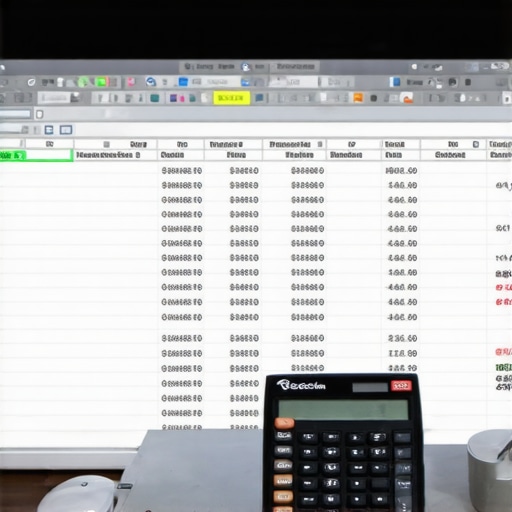
Bridge the Gap Between Your Ledger and the State
Think of your sales tax collections as a ‘trust fund.’ This is not your money; you are merely a temporary custodian for the government. If you treat tax revenue like operating cash, you are setting yourself up for a liquidity crisis. This is why you need a separate bank account for sales tax collections—to create a physical barrier between what you can spend and what you owe.
Audit-Proof Your Fractional Calculations
When the state eventually sends an inquiry, they aren’t looking for a ‘rough estimate.’ They want to see exactly how you arrived at that 0.375% local transit tax. This is where the specific documents you need for a clean audit review come into play. You should be exporting monthly reports that break down gross sales, exempt sales, and the exact fractional rate applied to every zip code.
Master Your Monthly Reconciliations
You cannot wait until April to see if your books balance. Why your monthly bank reconciliation is non-negotiable is especially true for sales tax. You need to compare the ‘Tax Collected’ report from your storefront against the ‘Tax Liability’ account in your general ledger. If they don’t match to the penny, you likely have a rounding error in your software that needs a manual adjustment entry. For those scaling quickly, how to successfully manage a high-volume audit trail involves automating this reconciliation so you can spot discrepancies in real-time rather than months later.
Most entrepreneurs believe that if they pay for high-end software, they’ve bought an insurance policy against errors. I’m here to tell you that’s a dangerous delusion. In my years of consulting, I’ve seen more ‘automated’ disasters than manual ones. Why? Because when a human makes a mistake, it’s usually a one-off; when software is misconfigured, it scales that mistake across thousands of transactions before you even notice.
Why Your Software Is Secretly Sabotaging Your Audit Readiness
The biggest myth in our industry is that ‘integration’ equals ‘accuracy.’ I often see sellers who think why automated bank feeds often fail during audits is just a technical glitch. It’s not. It’s a systemic risk. If your sales platform doesn’t communicate the exact ‘tax-inclusive’ vs ‘tax-exclusive’ data points to your ledger, you’re reporting garbage. According to a report by the Journal of Accountancy, discrepancies in automated reporting are among the leading triggers for federal and state inquiries. This is why audit support key steps to ensure financial transparency must include a manual verification of your data pipes at least twice a year.
The Hidden Trap of Multi-State Payroll
If you think sales tax is the only ‘fractional’ nightmare, wait until you hire a remote assistant in a different state. Many owners assume payroll software handles every local nuance, but the tax consequences of hiring your first out-of-state worker involve local occupational taxes that software often misses. If you don’t have a handle on mastering payroll compliance expert tips for 2025 success, you’re not just looking at a fine—you’re looking at a state-level employment audit that could trigger a review of your entire business nexus.
Can Your Current Bookkeeper Actually Defend You in a Full Audit?
This is the question that keeps many founders up at night. There is a massive, often ignored, reason your bookkeeper cant help with tax strategy: they are historians, not architects. A bookkeeper records what happened; a CPA or a strategic partner plans what should happen. If you’re relying on a data-entry specialist to handle audit support strategies every business needs in 2025, you’re essentially bringing a knife to a gunfight when the Department of Revenue knocks.
#IMAGE_PLACE_HOLDER_C#
Stop Treating Capital Assets Like General Expenses
Here is a mistake I see every single quarter: the danger of misclassifying equipment purchases as repairs. It seems like a quick way to lower your taxable income today, but it’s a giant red flag for the IRS. When you mix this with the most common errors in small business tax filings, you aren’t just saving pennies; you’re inviting a forensic review of your entire operation. You need to understand how cpa services can transform small business accounting by shifting from reactive ‘tax prep’ to proactive ‘tax engineering.’ Have you ever fallen into this trap of over-relying on your software settings without a human second opinion? Let me know in the comments.
I used to think that scaling a business was just about finding more customers and shipping more boxes. I was wrong. Scaling is actually about building a structure that doesn’t collapse under the weight of its own data. Once you move past those initial fractional errors I mentioned earlier, you have to face the ‘maintenance’ phase of business growth. This is where the real winners are separated from those who get crushed by a surprise tax bill in year four. To stay ahead, you need a workflow that treats compliance as a daily habit rather than an annual panic.
Build a Bulletproof Workflow That Does Not Rely on Luck
The secret to staying compliant isn’t a secret at all—it is a written document. I cannot stress enough why your business needs a written accounting policy manual. When I finally sat down and wrote out exactly how we process a refund, how we categorize software subscriptions, and who is responsible for verifying the state-to-ledger match, my stress levels plummeted. It stopped being a guessing game and started being a process. This documentation is your first line of defense during an inquiry. If an auditor sees that you have a consistent, documented method for how to reconcile your payroll reports to your general ledger, they are much more likely to trust your numbers.
As noted in the Tax Policy Center’s recent analysis of state tax trends, the complexity of digital nexus is only increasing as more states adopt market-based sourcing rules. This means the rules you learned last year might already be obsolete. You have to stop being reactive. I started implementing a ‘pre-audit’ check every quarter. It sounds like extra work, but implementing audit support strategies every business needs in 2025 while you are in a ‘calm’ period is much easier than doing it while the IRS is breathing down your neck. You should also look into tax preparation secrets to save money this year that focus on long-term structural changes rather than just one-off deductions.
How do I maintain my tax and payroll compliance over time?
Maintenance is about rhythm. Every Friday, I spend thirty minutes reviewing my ‘suspended’ transactions. Once a month, I perform a deep dive into my cash flow. If you aren’t sure where to start, I highly recommend why you need a monthly financeauthoritys health check to catch small leaks before they become floods. For those of you handling a team, streamlining payroll processes for tech-driven businesses is the only way to keep your sanity while scaling. I personally use a ‘locked-down’ document vault for all my 1099s and W-9s. If you wait until January to ask a contractor for their tax ID, you’ve already lost the battle.
#IMAGE_PLACE_HOLDER_D#
The Tools That Actually Saved My Sanity
I get asked all the time which software I recommend. While I love tools like Karbon for workflow management and Keeper for 1099 tracking, the best ‘tool’ I ever invested in was professional oversight. We often talk about how cpa services can transform small business accounting, but it is specifically the transition from a preparer to an advisor that matters. Looking forward, I predict that AI will soon be able to predict audit risks before you even file your return, essentially ‘stress-testing’ your books in real-time. Until then, you need a human eye on your the specific documents you need for a clean audit review. Try this: Pick one random month from last year and run a manual reconciliation against your bank statement. If you find even a ten-dollar discrepancy, it’s time to tighten your systems.
I wish I could tell you that my story from 2018 was a rare occurrence, but the truth is that fractional errors are the silent killer of small business margins. Most founders are so focused on the next sale that they forget the government is a silent partner in every transaction—one that expects its share calculated to the third decimal point. As we wrap up this deep dive, I want to leave you with some hard-earned wisdom that goes beyond the basic spreadsheets.
The Compliance Secrets I Learned After Paying the State Five Figures
If there is one thing I want you to take away from my headache, it is that compliance is a human problem, not a software one. Here are the lightbulb moments that changed how I run my operations:
- The 0.001% Rule: A tiny rounding error on a single sale is a nuisance; that same error on ten thousand sales is a systematic liability that triggers a manual review.
- Software is a Tool, Not a Shield: Just because a box is checked in your settings doesn’t mean the data is flowing correctly. You have to understand the difference between strategic advisory and basic tax filing to know where the automated gaps live.
- Documentation is Defense: In an audit, the person with the best records wins, not the person with the best intentions. Knowing how to transition from cash-basis to accrual accounting properly can also help you see these liabilities more clearly on your balance sheet.
Where I Go to Keep My Books Bulletproof
I don’t expect you to memorize the tax code for every state. Instead, I recommend building a library of resources that you actually trust. I personally keep the Tax Policy Center bookmarked for high-level trends, but for day-to-day sanity, I rely on a structured check-in process. This is exactly why you need a monthly financeauthoritys health check to catch these fractional drifts before they turn into major audit flags. I also suggest keeping a physical copy of your state’s latest nexus thresholds; things change fast, and being ‘grandfathered in’ is rarely a valid legal defense.
Turn Your Tax Anxiety Into a Growth Strategy
It is easy to view tax and payroll as a burden, but I want you to view them as the guardrails that allow you to drive faster. When your systems are tight and your fractional rates are accurate, you can scale into new markets with absolute confidence. You stop playing defense and start looking for tax preparation secrets to save money this year rather than just hoping you don’t owe extra. You have the tools, the knowledge, and now the strategy to ensure your business stays on the right side of the Department of Revenue. If you are feeling overwhelmed, do not hesitate to contact us to get a second pair of eyes on your setup. Have you ever caught a software rounding error that would have cost you thousands? Let me know in the comments below!