
Why You Should Separate Your Personal and Business Travel Logs

I spent three hours on a Tuesday night trying to figure out if a $42.15 charge at a Tex-Mex joint in Phoenix was a legitimate client lunch or just me being hungry on a Saturday. I was failing at being a business owner, and it felt terrible. That was the moment I realized my system—or lack thereof—was a ticking time bomb. When I first started out, I thought I could just eye-ball my travel expenses. I figured as long as I had the receipts, I was golden. But I quickly learned that why most small business audits start with a single typo or a vague entry is because the person behind the desk can’t tell where the work ended and the fun began. I was sitting on my living room floor, surrounded by three different credit card statements and a stack of coffee-stained receipts, when I realized I was in deep trouble. My first year as a consultant was a whirlwind of flights and client dinners, but I had made a rookie mistake. I didn’t separate my personal and business travel logs. I just assumed I’d remember the difference between the flight to visit my sister in Austin and the flight to see a prospective lead in Dallas. Spoiler alert: I didn’t. When my accountant looked at my records, he sighed the kind of heavy, soul-weary sigh that only financial professionals can produce when they see the danger of mixing personal and business expenses again. It was messy, it was stressful, and it almost cost me thousands in unclaimed deductions. Today, I want to show you exactly why keeping these logs separate isn’t just about being organized—it’s about protecting your business from the IRS spotlight. We’re going to walk through the system I use now to ensure my tax preparation secrets to save money this year actually work. Have you ever found yourself staring at a pile of crumpled gas station receipts, trying to remember if that trip to Denver was for a conference or a cousin’s wedding?
Stop treating your travel diary like a kitchen junk drawer
I made the mistake of thinking my memory was a reliable database. It wasn’t. By the time April rolled around, my memory of that Phoenix trip was about as clear as a foggy morning in Seattle. I remember looking at my bank statement and seeing three different charges from the same hotel chain. One was for a conference in Orlando, one was for a weekend getaway with my spouse, and one was a deposit for a future business event. Without a separate log, those three entries looked identical. It was a mess that took me four hours to untangle. That was my lightbulb moment: if I can’t explain this to myself now, I definitely can’t explain it to an auditor in three years. My CPA at the time had to explain that the danger of mixing personal and business expenses again wasn’t just about the dollar amount; it was about the integrity of my entire accounting system. If I couldn’t prove where I was and why I was there for a $40 lunch, how could they trust a $4,000 equipment deduction?
Is the extra record-keeping actually worth your time?
You might be thinking that you barely have time to sleep, let alone maintain two separate travel logs. I hear you. I used to say the same thing until I read a report from the IRS stating that inadequate records are one of the primary reasons business travel deductions are disallowed during audits. One simple mistake in how you categorize a flight can lead to a domino effect of scrutiny. When you learn why you shouldn’t deduct your family vacation as a business trip, you realize that the line is thinner than you think. By keeping separate logs, you aren’t just doing more work; you’re creating a clean trail that makes your tax strategy actually effective. It transforms your bookkeeping from a guessing game into a strategic asset.
Build a wall between your bank accounts
The most effective way to keep your logs clean is to never let the money touch in the first place. Think of your business account as a high-security vault and your personal account as your wallet. When I first started, I used my personal credit card for everything because the rewards points were better. Big mistake. Six months later, I spent an entire weekend highlighting Amazon charges—one was a toner cartridge, the other was a giant inflatable pool for my daughter’s birthday. By avoiding the danger of mixing personal and business credit card charges, you save yourself the mental gymnastics of reconstruction later. If you use a dedicated card, your bank statement becomes a secondary log that reinforces your manual records. If you are struggling with this, looking into CPA services demystified unlock your business growth potential can help you set up these boundaries properly from the start.
Capture the data before the ink fades
Thermal paper is the enemy of the IRS. If you wait until tax season, those gas station receipts from your summer work trips will be blank white squares. I now use a simple snap and tag system. Every time I pay for a business meal or a taxi, I take a photo and immediately tag it with the project name or client ID. This is crucial because why automated bank feeds often fail during audits is that they lack the context of the why. A fifty dollar charge at a restaurant doesn’t tell an auditor it was a discovery meeting with a prospective client. You need that digital paper trail to provide the audit support strategies every business needs in 2025. 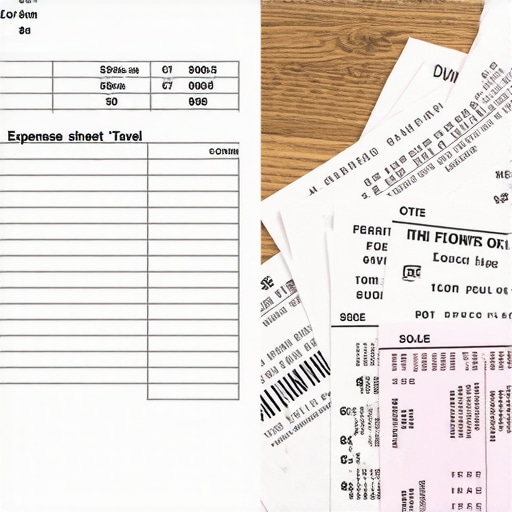
Run a monthly health check to catch the strays
Once a month, I sit down for twenty minutes to reconcile my travel log against my bank statements. I call this my financial scrub. Last July, I caught a two hundred dollar flight upgrade I had accidentally paid for with my personal debit card during a rushed airport check-in. If I hadn’t looked until April, I would have lost that deduction entirely. This is why you need a monthly financeauthoritys health check to ensure no business expense is left behind. It is much easier to remember what happened three weeks ago than three quarters ago. If your books are already a disaster, you might need to learn how to clean up two years of messy accounting data, but the goal is to never get to that point again.
Document the primary purpose of every trip
The IRS focuses heavily on the primary purpose of travel. If you spend four days at a trade show and one day at the beach, the flight is generally deductible. However, if the ratio is flipped, you are in a danger zone. I use a calendar-based log to show exactly how many hours were dedicated to work versus personal time. This documentation helps you avoid why your business deductions might be getting rejected during a review. When you have a clear timeline of your meetings and site visits, you can confidently defend your claims without breaking a sweat.Many gurus will tell you that as long as you have a receipt, you are bulletproof. In my experience, that is a dangerous half-truth. The reality is that the IRS cares more about the why and the when than the how much. A receipt is just a piece of paper; a contemporaneous log is a legal document. According to a study by the National Association of Tax Professionals, documentation created at the time of the event is significantly more defensible during an audit than reconstruction done months later. If you are just scanning receipts into a folder without context, you are leaving your business vulnerable. This is the reason your bookkeeper cant help with tax strategy—they are processing history, not building a defense.
Your accounting software is probably lying to you
I know, we all love the ‘auto-sync’ feature. But why automated bank feeds often fail during audits is that they lack intentionality. If you buy a coffee at an airport, your software might tag it as ‘Meals,’ but if that coffee was for a personal layover during a business trip, it’s a non-deductible personal expense. Blindly clicking ‘approve’ on bank feeds creates a false sense of security. You need to verify every entry against your calendar to avoid the most common errors in small business tax filings. #IMAGE_PLACE_HOLDER_C#
How do you handle the ‘extra day’ trap when traveling?
A sophisticated question I often get is: ‘If I stay an extra day to get a cheaper flight, is that extra day deductible?’ The answer is usually no. Even if you saved the company money on airfare, the IRS generally views the lodging for that extra day as a personal expense. This is where how to lower your effective tax rate this quarter gets tricky. You have to be surgical. If you don’t document the specific business purpose for every single day you are on the road, you are practically inviting an auditor to disqualify the entire trip. This nuance is why tax prep tips for freelancers and gig workers in 2025 emphasize log integrity over sheer volume of data. Have you ever fallen into this trap? Let me know in the comments. By the way, if you’re finding this cleanup impossible, you might want to look into CPA services demystified unlock your business growth potential to get your system back on track.
The hidden risk of ’rounding up’ your miles
We’ve all done it—estimated that a trip was ‘about 40 miles.’ But the IRS hates round numbers. It signals that you didn’t actually check your odometer or use a GPS tracker. This is a massive ‘oops’ factor that triggers the red flags in your financial statements that attract IRS attention. Use a dedicated app or at least log the exact address. It’s a small step that provides massive audit support strategies every business needs in 2025. In the end, the difference between a deduction and a disaster is the quality of the story your records tell.If you are still using a spreadsheet to track your miles, you are basically bringing a knife to a gunfight. I eventually graduated to dedicated apps like MileIQ because it catches the drives I would otherwise forget while I am caffeinating between client meetings. I use it because it runs in the background, but the real secret is my weekend ‘swipe-left’ ritual where I categorize everything while the memory is fresh. By automating the capture, I ensure that why manual ledger entries are the biggest risk to your data integrity no longer applies to my workflow. This isn’t just about saving fifteen minutes; it is about creating accuracy that actually holds up under a magnifying glass.
How do I keep these records pristine as the business grows?
Maintenance is where most entrepreneurs fall off the wagon. I treat my books like a garden—if I do not weed them every thirty days, the chaos takes over. Every first Monday of the month, I sit down with a high-octane coffee and run through a strict checklist. I cross-reference my digital calendar with my credit card statements and my mileage log to ensure they tell the same story. If you are not doing this, you are missing why you need a monthly financeauthoritys health check to keep the IRS at bay. As you scale, this gets significantly harder. When I hired my first employee, travel logs were just the tip of the iceberg—suddenly I had to worry about mastering payroll compliance expert tips for 2025 success. That was the moment I realized my DIY days were numbered. If your business is moving faster than your current pro can handle, you might find why your current CPA might be too slow for your startup is the real reason you are feeling the friction. 
Scale your defense before the audit hits
The Journal of Accountancy recently emphasized that the burden of proof is always on the taxpayer to provide contemporaneous evidence for deductions. I predict that in the next few years, we will see ‘real-time’ auditing where the IRS uses AI to flag discrepancies the very moment you file. This means the old way of ‘fixing it later’ is functionally dead. You need to be able to how to successfully manage a high volume audit trail without breaking a sweat. I have shifted to a model where I handle the daily snapshots, but I lean heavily on the benefits of outsourcing your entire accounting department for the high-level strategy and technical defense. My best advice? Pick one advanced tool—whether it is a mileage tracker or an automated receipt scanner—and use it religiously for thirty days. Once that habit is locked in, move to the next layer of your financial defense. Do not wait for a formal letter in the mail to start taking your logs seriously.
The Hardest Lesson I Learned About Proving My Presence
Looking back at my first audit scare, the biggest realization wasn’t that I was missing receipts; it was that I was missing a narrative. I learned that an auditor is essentially a professional skeptic who wants to see a clear boundary between your professional ambition and your personal leisure. If your logs are a blur of both, you’ve already lost the argument. One major lightbulb moment for me was realizing that contemporaneous records carry ten times the weight of reconstructed ones. When you log it in the moment, it’s a fact; when you log it six months later, it’s a guess. I also realized that the difference between strategic advisory and basic tax filing is having a pro who tells you how to document, not just where to put the numbers. Lastly, I stopped trying to be perfect and started being consistent. A messy but consistent log is always better than a perfect log that only exists for half the year.
The Three Systems I Use to Sleep Better at Night
If you want to stop the late-night panic over missing gas receipts, you need a stack that works without you thinking about it. First, I swear by a dedicated mileage app that uses GPS to categorize trips with a single swipe; this provides audit support key steps to ensure financial transparency that manual spreadsheets just can’t match. Second, I keep a digital ‘Trip Folder’ for every major conference where I store the itinerary, the badge, and even a photo of the keynote—this is the ultimate proof of business intent. Finally, I rely on the finance authoritys guide to staying ahead of tax changes in 2025 to make sure my categorization habits aren’t outdated by new IRS standards. These aren’t just chores; they are the armor for your bank account.
#IMAGE_PLACEHOLDER_E#
Your Future Self Will Thank You for This Discipline
Transitioning to separate travel logs might feel like an administrative headache today, but it is the single best gift you can give your business. When you have a clean, undeniable trail of your movements, you aren’t just saving money on taxes—you are building a business with integrity that can withstand any level of scrutiny. You deserve to focus on growth and client success, not on defending a three-year-old dinner receipt. By taking these small steps now, you ensure that your tax preparation secrets to save money this year actually result in long-term wealth rather than short-term stress. Have you ever had a business deduction questioned because your records were a bit too ‘vague’? Let me know your experience in the comments below.