
Why Your Depreciation Schedule Doesn’t Match Your Equipment Use

I’ll never forget the cold sweat I felt three years ago while reviewing my fixed asset ledger. My accounting software—the one I’d trusted blindly—was telling me my primary production line was still worth sixty grand. In reality, that machine was currently held together by duct tape and a prayer, and it was barely hitting half its original output. I was paying taxes and making business decisions based on a fantasy version of my own workshop. It was my first major wake-up call: a depreciation schedule is often just a polite fiction unless you take charge of it. Today, I’m going to show you how to close that gap so your books actually tell the truth about what you own.
Your Books Should Reflect the Grease on Your Hands
If you’ve ever felt like your financial statements were written in a language you didn’t speak, you aren’t alone. I made the classic rookie mistake of assuming that the standard “straight-line” depreciation was the only way to go because it was easy. But “easy” usually means you’re leaving money on the table. When you realize why your current depreciation schedule is costing you money, you start looking at every tractor, laptop, and CNC machine differently. The IRS allows for various methods of recovery, but most of us just stick to the defaults. According to IRS Publication 946, depreciation is specifically meant to account for the wear and tear or obsolescence of property, yet so many owners let their schedules sit gathering dust while their actual equipment is being pushed to the limit. If your gear is depreciating faster in the real world than on your tax return, you’re essentially overstating your profit and overpaying the government. This is where CPA services demystified can help, as they align your tax strategy with your actual operations. I remember thinking that as long as my bank balance was positive, the tax forms didn’t matter. But then I realized my ledger was full of “phantom assets”—things I no longer owned or that no longer worked. I needed a monthly financeauthoritys health check to ensure my records weren’t hallucinating.
Is all this tax tracking actually worth the effort?
I get the skepticism. You’ve got a business to run, and the last thing you want to do is spend your Sunday night auditing the lifespan of a delivery van. You might wonder if the tax savings are just pennies in the grand scheme of things. But trust me, when you look at how to record vehicle purchases for maximum first-year savings, those “pennies” turn into thousands of dollars in retained capital that you can reinvest. I once lost out on a significant deduction because I didn’t understand the strategic way to handle accelerated depreciation during a high-growth year. I don’t want you to make that same mistake. Have you ever looked at your balance sheet and realized that the ‘value’ listed for your equipment is a total work of fiction? If so, you’re exactly where I was before I fixed my process. Now, let’s look at why that gap happens and how to close it for good.
Walk Your Floor and Count Every Nut and Bolt
The absolute first step to cleaning up your books is getting out of your chair. You can’t audit a fixed asset ledger from a spreadsheet alone. I learned this the hard way when I realized I was still paying insurance and property taxes on a forklift I’d traded in eighteen months prior. The paperwork had vanished in a stack of “to-do” items, and the asset was still haunting my balance sheet like a ghost. This is why you must perform a physical inventory of your equipment at least once a year. Grab a clipboard, print out your current list, and physically touch every item. If it isn’t there, it needs to be “disposed of” on the books. This isn’t just about tidiness; it’s about providing the specific documents you need for a clean audit review when the IRS eventually comes knocking.

Stop the Ghost Gear from Haunting Your Profits
When you find an item that’s broken beyond repair or was sold off, you have to record the disposition immediately. Don’t wait until the end of the year. I once let three “zombie” computers sit on my books for two years because I didn’t know how to document complex asset dispositions correctly. The result? I was overstating my business’s net worth, which sounds great until you realize it was inflating my tax bill. You need a paper trail—a bill of sale, a scrap receipt, or a donation letter. This trail is your shield against being over-taxed on equipment that is already in a landfill.
Don’t Let Your Software Guess the Lifespan
Most off-the-shelf accounting software defaults to a five or seven-year lifespan for everything. But a delivery van used for city stop-and-go driving dies much faster than a van used for long-haul highway trips. You have the right to adjust these estimates if you can prove the “useful life” is different. However, be careful not to fall into the danger of misclassifying equipment purchases as repairs. If you fix a machine and it significantly extends its life, that’s a capital improvement, not a simple expense. I remember a messy situation where we replaced a whole engine and called it “maintenance.” My tax preparer nearly had a heart attack because that “repair” actually needed to be depreciated over time. Getting this wrong is one of the easiest ways to trigger an IRS inquiry.
Kill the Manual Entry Habit Before It Kills Your Accuracy
If you are still typing asset serial numbers and purchase prices into a spreadsheet manually, you’re playing with fire. I’ve seen a single transposed digit turn a $1,200 laptop into a $21,000 “server” on the books. When you realize why manual ledger entries are the biggest risk to your data integrity, you’ll start looking for ways to automate the feed from your bank to your fixed asset module. It’s also vital to know how to reconcile your ledger after a software migration. I once moved from one platform to another and lost the depreciation history for half my assets. It took forty hours of forensic accounting to find where those numbers went. Don’t trust the “import” button blindly—always verify the opening balances item by item to ensure your financial health remains intact.
Most entrepreneurs treat tax season like a post-mortem examination, a necessary evil to be endured every April. I used to think the same until I realized that tax preparation secrets to save money this year aren’t found in the filing itself, but in the eleven months leading up to it. The biggest myth in small business is that a CPA’s primary value is their ability to fill out forms correctly. In reality, that’s just basic clerical work. The real gold lies in the difference between strategic advisory and basic tax filing. If you only talk to your accountant when you’re already in the red or when the deadline is looming, you’ve already lost the game. According to the American Institute of CPAs (AICPA), proactive tax planning is one of the most underutilized tools for improving small business liquidity. This disconnect is where the ‘wealth leak’ happens. Have you ever fallen into this trap? Let me know in the comments.
Why Your Payroll App is a Compliance Time Bomb
We’ve been sold this idea that a $50-a-month software subscription replaces a payroll department. It doesn’t. While these apps are great for cutting checks, they are notoriously bad at catching the ‘oops’ factors that trigger state audits. I once assumed my software handled everything until I got hit with a massive bill for the hidden burden of local occupational privilege taxes that the app simply ignored because it wasn’t configured for my specific municipality. Automation is a tool, not a fail-safe. If you aren’t mastering payroll compliance expert tips for 2025 success, you’re likely missing things like why your payroll service is failing your 401k compliance check. It’s the subtle stuff—like timing your deductions or ensuring why your S-Corp needs a formal reasonable compensation study—that separates the survivors from the statistics. 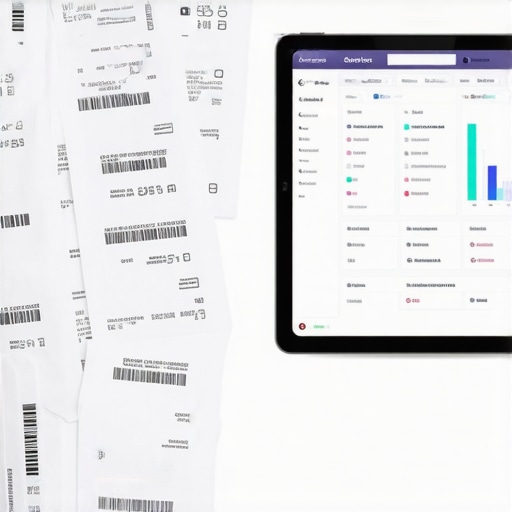
The Filing Season Myth That Keeps You Broke
I’ve seen business owners walk into their CPA’s office with a shoebox of receipts and expect a miracle. The reality is that by the time you’re looking at last year’s numbers, the opportunity to change them has passed. True audit support strategies every business needs in 2025 start with real-time documentation. If you wait until a notice arrives to justify your equipment’s accelerated depreciation, you’re already on the defensive. You need a paper trail that demonstrates the intent and the operational reality of your assets. This is why I advocate for why you need a monthly P&L review with your CPA. It keeps you from making impulsive purchases that don’t actually align with your long-term tax strategy.
Does Your Current Accountant Understand Your Ten-Year Plan?
As your business scales, your needs shift from simple record-keeping to aggressive growth protection. This leads to a hard truth: the person who helped you launch might not be the person who can help you exit or handle complex multi-state issues. You have to ask yourself why your current CPA might be too slow for your startup or mid-sized firm. Are they proactive? Do they bring ideas to the table, or do they just react to your questions? Moving from basic compliance to strategic advisory is the single most important transition I made in my business. It stopped being about what I owed the IRS and started being about how much of my own money I could legally keep to reinvest in my team and my technology.
I used to think that the bigger my business got, the more complex my life had to become. I envisioned a future of endless filing cabinets and a payroll department that took up half the floor. But the reality is that scaling successfully is about simplifying your tools, not multiplying your headaches. If you want to keep the machine running without burning out, you need to move from reactive fire-fighting to proactive system management. This isn’t just about software; it’s about the philosophy of a ‘Living Ledger.’ When you stop treating your books like a historical record and start treating them like a GPS, how cpa-services can transform small business accounting becomes obvious—they become the navigator for your entire operation.
Ditch the Paper Trail for a Real-Time Dashboard
I’m a huge advocate for streamlining payroll processes for tech-driven businesses by using cloud-integrated stacks. However, I have one major rule: never let the software run on autopilot. I’ve seen too many entrepreneurs fall into the trap of ‘set it and forget it.’ I personally spend thirty minutes every Friday morning reviewing my bank feeds. Why? Because I’ve learned why auto-categorization is ruining your financial reports. If the AI decides that your new $12,000 server is an ‘office expense’ instead of a depreciable asset, your balance sheet is instantly a lie. I follow the guidelines in IRS Revenue Procedure 87-56 to the letter when classifying assets because it’s the only way to ensure my MACRS (Modified Accelerated Cost Recovery System) calculations won’t be shredded during a review. By keeping my toolset lean—usually just a primary GL (General Ledger), a dedicated payroll provider, and an automated receipt fetcher—I minimize the points of failure.

How do I keep my books clean as the business grows?
The secret isn’t a better app; it’s a why your business needs a written accounting policy manual. You need a document that says, ‘This is how we handle expenses over $2,500’ and ‘This is how we verify our inventory.’ Without this, as you hire more people, the data becomes a chaotic mess of different styles and interpretations. Maintenance is a daily habit, not a monthly chore. I look at it like brushing my teeth; if I skip a few days, I’m going to have a painful (and expensive) problem later. I predict that over the next five years, the ‘Tax Season’ as we know it will effectively disappear. With the rise of real-time API reporting to state and federal agencies, we are moving toward a world of ‘Continuous Compliance.’ The businesses that survive this shift will be the ones that have already digitized their workflows and abandoned the ‘shoebox’ mentality. If you want to stay ahead, my best advice is to perform a ‘data health check’ tonight. Open your ‘Uncategorized’ folder in your accounting software; if there are more than five items in there, you’re already falling behind. Take ten minutes to categorize them correctly right now and see how much lighter your mental load feels tomorrow.
The Hardest Lesson I Learned While Chasing Ghost Assets
If there is one thing I want you to take away from my years in the trenches, it’s that your ledger is a living, breathing map of your business’s health, not just a historical archive. The moment I stopped viewing my equipment as ‘stuff I bought’ and started seeing it as ‘capital in motion,’ everything changed. I realized that why your current CPA might be too slow for your startup often comes down to their willingness to help you look forward rather than backward. You need someone who challenges your assumptions about asset lifespans before the IRS does. I also learned that the ‘perfect’ software doesn’t exist; even the best tools require a human touch to prevent why auto-categorization is ruining your financial reports. Accuracy isn’t a destination—it’s a weekly habit of verifying the grease on the floor against the numbers on the screen.
The Toolkit That Keeps My Sanity Intact
I don’t believe in overcomplicating things, but I do believe in having the right tools for the job. Here are the three non-negotiables I use to keep my operations lean and my audits painless. First, a why your business needs a written accounting policy manual is the only way to ensure your team knows the difference between a $500 repair and a $5,000 capital improvement. Second, I rely heavily on streamlining payroll processes for tech-driven businesses to ensure my labor costs are allocated correctly to the projects they support. Finally, I never miss my why you need a monthly P&L review with your CPA. This meeting is where the ‘magic’ happens—it’s where we spot the tax preparation secrets to save money this year that most people miss because they only look at their books once a year.
Take Back Control of Your Balance Sheet Today
Scaling a business is hard enough without fighting your own data. By moving from a reactive stance to a proactive strategy, you turn your accounting from a chore into a competitive advantage. Don’t be afraid to dig into the details and ask the hard questions about where your money is actually tied up. When you master your tax preparation and CPA services strategy, you aren’t just saving on taxes; you’re buying yourself the freedom to grow with confidence. You’ve put in the hard work to build this business—make sure your books are working just as hard for you. Have you ever found a ‘ghost’ asset on your ledger that should have been retired years ago? Let me know your story in the comments below!