
The error in your chart of accounts that ruins monthly reporting

I was staring at a profit and loss statement that looked like a total work of fiction. According to the screen, I was having a record-breaking month. According to my bank balance, I was broke. I remember the cold sweat I felt when I realized I had no idea where the money went because my Chart of Accounts (COA) was a dumping ground for ‘Miscellaneous’ expenses. This is the silent killer of small businesses. We’re going to fix your reporting today so you can actually trust your numbers again.
Your Chart of Accounts is a House of Cards
Early in my career, I thought the default list in QuickBooks was gospel. I didn’t realize that learning how to clean up your general ledger after a bad bookkeeper is a skill you have to learn the hard way. I had expenses for travel mixed with repairs, and my tax preparation secrets to save money this year were buried under a mountain of mislabeled receipts. If your foundation is cracked, your reports will lie to you every single time.
Is a perfect category list really worth the effort?
You might think that as long as the tax man is happy, the internal details don’t matter. But the truth is, poor categorization leads to massive confusion and missed opportunities. According to a study by the Association of Certified Fraud Examiners (ACFE), small businesses are significantly more vulnerable to financial reporting errors due to a lack of internal controls—often starting with the chart of accounts itself.
Stop Letting Your Software Choose Your Categories
I made the mistake of trusting AI way too early. I found out why auto-categorization is ruining your financial reports the hard way when my software put my personal health insurance into ‘Professional Services.’ This is exactly why your profitability doesn’t match your cash flow. You need a COA that reflects your actual business flow, not a generic template. Have you ever looked at your monthly report and felt like you were reading a book in a language you didn’t speak? Have you ever panicked over a massive ‘Suspense’ account balance? This is why your business needs a monthly closing process that actually works. We need to move beyond just recording data and start interpreting it.
Burn the Miscellaneous folder to the ground
The first thing you have to do is perform a surgical ‘merger’ of your accounts. Most small businesses suffer from extreme account bloat. If you have separate lines for ‘Office Supplies,’ ‘Office Expenses,’ and ‘Postage,’ you are simply creating three different places for the same dollar to hide. I once worked with a marketing agency that had over 400 micro-categories. They had a specific account just for ‘Breakroom Napkins.’ We spent a long weekend collapsing those 400 categories into 30 broad, meaningful buckets. The clarity was immediate because they could finally see the forest for the trees. You can actually see where your money is going when it isn’t diluted across a dozen redundant rows. This is the core of how to fix a messy general ledger in three days without losing your mind in the process. 
Stop letting your bank balance lie to you
Your bank balance is a lagging indicator, not a source of truth. If you aren’t reconciling your accounts every single week, you’re essentially flying a plane with a broken altimeter. I remember a client who thought they had a $12,000 cash cushion, only to realize that three months of payroll taxes had been sitting in a ‘pending’ state due to a bank error. They were looking at a ghost balance. This is a primary reason why your bank reconciliation is always off by pennies or even thousands. It is usually a missed decimal point or a duplicated entry from a manual upload. Reconciling is like brushing your teeth; if you skip it for a few days, the decay starts immediately.
Line up your payroll with your ledger
Payroll is usually your biggest expense, yet it is often the messiest part of the books. Most business owners just record the net check amount and call it a day. But if you don’t account for the gross wages and the employer-side taxes separately, your tax planning will be a total disaster. You must learn how to reconcile your payroll reports to your general ledger to ensure your profit numbers actually account for the total cost of your team. I’ve seen businesses miss out on huge tax credits because their payroll data was a tangled knot that even an experienced accountant couldn’t unravel without dozens of billable hours.
Fix the bridge between your apps
We all love automation until it breaks our financial reporting. Every time you connect a tool like Stripe, Shopify, or a third-party billing app to your accounting software, you are building a bridge. If that bridge isn’t configured correctly, it starts dumping data into the wrong buckets or creating ‘shadow’ accounts. This is why your accounting integration keeps deleting important receipts or creating phantom income that you never actually received. You have to audit these connections monthly. Check that sales tax is hitting a liability account rather than being counted as revenue. These small technical shifts are audit support key steps to ensure financial transparency and keep you from panicking when a state auditor comes knocking.
Time your income to keep the IRS at bay
Categorization isn’t just about labeling; it’s about timing. If you are recording income when the invoice is sent but not when the cash arrives, your tax liability could be skewed by tens of thousands of dollars. Using the strategy for properly timing your business income and expenses allows you to control your tax bracket rather than letting the calendar control it for you. When you align your COA with your actual business cycle, you transition from reactive bookkeeping to proactive financial management.But even with perfect timing, you’re only halfway there. Most people believe that a CPA is just a fancy calculator you hire in April. I’m here to tell you that if you only speak to your accountant once a year, you’re likely overpaying in taxes and missing major structural red flags. Real growth happens when you realize why your accountant shouldn’t just be doing your taxes but acting as a strategic partner. They should be looking at your leases, your debt-to-equity ratios, and whether your software is actually helping or hindering your scale.
Stop treating your accountant like a once-a-year guest
There is a common myth that as long as your books are closed, you are safe. The reality is that the ‘oops’ factor usually hides in the nuances of labor and classification. One of the most expensive mistakes I see is the misclassification of workers. You might think hiring ‘freelancers’ saves you on benefits, but the IRS is increasingly aggressive about this definition. I have seen businesses face six-figure penalties because they did not realize why your contractors might actually be employees in the eyes of the law. According to a study by the Economic Policy Institute, up to 20% of employers misclassify at least one worker, often unintentionally, which creates a massive liability for back taxes. This is where audit support strategies every business needs in 2025 become a proactive shield rather than a last-ditch effort after you receive a notice. 
Does your current entity choice align with your five-year exit strategy?
Most founders choose an S-Corp or an LLC because their peers did or a generic blog post recommended it. But as you grow, that choice can become a lead weight on your cash flow. You have to consider the tax consequences of switching your business entity type before you hit a specific revenue threshold or consider a merger. If you are planning to sell the business or bring on heavy investment in the future, your entity choice today dictates your net payout tomorrow.
The hidden danger in your freelance roster
Payroll is not just about cutting checks; it is about navigating a jurisdictional minefield that software often ignores. With the rise of remote work, you might be liable for withholding taxes in a state you have never even visited. This is why mastering payroll compliance: expert tips for 2025 success involves more than just automated bank feeds; it requires a human eye to catch local tax shifts and nexus changes. Many entrepreneurs ignore how to fix the most common errors in small business audits until they are already under the microscope. Have you ever fallen into the ‘software-will-fix-it’ trap only to find out your state nexus was all wrong? Let me know in the comments below, and let us get your foundation solid before the next tax season hits.
Build a tech stack that actually talks back
I’ve spent thousands of hours testing tools that promise to make accounting ‘one-click simple,’ but the truth is that automation only works if the architecture is sound. I personally rely on a combination of Relay for banking—because it allows for individual digital ‘envelopes’ for tax reserves—and Rippling for payroll. Why? Because these tools allow for granular GL mapping that doesn’t break every time you add a new employee. When you focus on streamlining payroll processes for tech-driven businesses, you aren’t just saving time; you are ensuring that data flows into your ledger with surgical precision. If you are still manually entering bank statements or using a legacy desktop system, you are living on borrowed time. This is why following the checklist for moving your accounting to the cloud is the single most important tech move you can make this year. It moves your data from a silo into a living ecosystem.
How do I keep these systems clean without losing my weekends?
The secret isn’t a better app; it’s a ‘Friday Review’ habit. Every Friday at 3 PM, I spend exactly fifteen minutes reviewing the ‘Uncategorized’ feed. If you let it sit until the end of the month, it becomes a four-hour monster. By doing it weekly, you catch those weird Stripe fees or duplicate software subscriptions before they become a permanent part of the scenery. This is a core part of how CPA services can transform small business accounting—they move you from a state of ‘clean-up’ to a state of ‘review.’ When your books are always 95% ready, tax season becomes just another Tuesday. 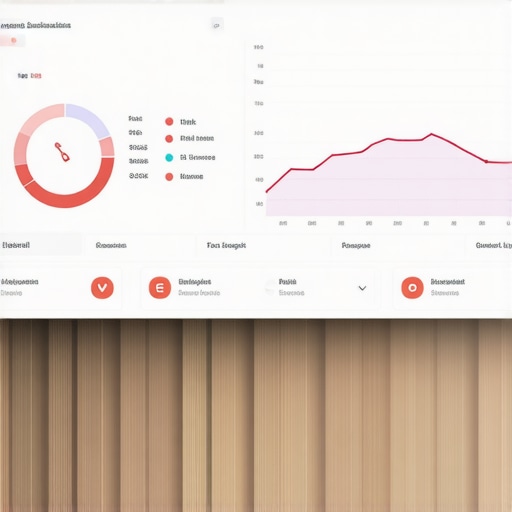
The 2025 shift toward real-time tax forecasting
We are moving into an era where waiting for a quarterly estimate is no longer enough. According to the IRS Revenue Procedure 2023-34, which adjusted over 60 tax provisions for inflation, the goalposts for tax brackets and standard deductions are shifting faster than most business owners can track. In the near future, I predict that ‘predictive tax auditing’ will become the standard. Your software won’t just tell you what you spent; it will tell you that you’re $4,000 away from a higher bracket and suggest a capital purchase to offset it. This is why finance authoritys guide to staying ahead of tax changes in 2025 emphasizes proactive tech over reactive filing.
Stop being the bottleneck in your own growth
If you are still the only one with the login to the bank and the payroll portal, you are a single point of failure. You need to leverage audit support strategies every business needs in 2025 by creating a ‘read-only’ access culture for your support team. This ensures transparency without giving away the keys to the kingdom. My advanced tip for you today: set up a ‘Tax Clearing’ bank account. Every time a sale hits your main account, move 25% of the profit into that separate, untouchable bucket. It sounds simple, but it is the difference between a thriving business and one that gets crushed by a surprise IRS notice. Try implementing this ‘automated reserve’ method this week and watch your stress levels drop instantly.
The Brutal Truths I Learned While Rebuilding My Books
Reflecting on my journey, the biggest shift wasn’t just technical; it was psychological. I used to think of my ledger as a chore for the IRS, but now I see it as the dashboard for my life’s work. Here are a few lightbulb moments that saved me: First, over-categorization is just as dangerous as no categorization—if you can’t explain why a category exists in five seconds, delete it. Second, your CPA is a profit-generator, not a cost center. When I stopped treating my accountant like a tax preparer and started treating them like a strategic partner, my margins grew by 15% in a single year. This is exactly why your accountant shouldn’t just be doing your taxes. Finally, never underestimate the power of Zero-Based Bookkeeping where every single transaction must earn its place on the statement.
The Toolkit for a Stress-Free Tax Season
If you want to move from chaos to clarity, you need more than just software; you need a system. I recommend diving deep into the finance authoritys guide to staying ahead of tax changes in 2025 to see where the goalposts are moving. For those of you managing a team, mastering payroll compliance: expert tips for 2025 success is non-negotiable for avoiding those heart-stopping IRS notices. I also highly suggest keeping a digital folder specifically for large asset purchases to ensure you’re utilizing tax preparation secrets to save money this year rather than letting depreciation go to waste.
Build the Business You Actually Want to Own
Financial clarity isn’t just about avoiding an audit; it’s about the freedom to make bold decisions without the fear of a hidden cash crisis. When your books are clean, you stop guessing and start leading. Remember, the effort you put into your foundation today determines how high you can build tomorrow. Don’t let another month of Miscellaneous expenses hold you back from the growth you deserve. Whether you are looking for audit support strategies every business needs in 2025 or simply trying to get through the next quarter, focus on the fundamentals of tax preparation first. Have you ever found a surprising expense hidden in your Miscellaneous folder that made you rethink your spending? Let’s discuss in the comments below!