
How to spot margin leaks with better expense tracking

I spent three years thinking I was a financial genius because my top-line revenue was a steep mountain climb. Then came the tax bill, and suddenly, my wealth felt like a mirage in the desert. I remember sitting at my kitchen table, surrounded by crumpled receipts and three different open browser tabs, trying to figure out why a sixty-thousand-dollar month felt like a loss. I had plenty of cash flowing in, but it was flowing out just as fast through holes I didn’t even know existed. I felt like a fraud. I was working eighty-hour weeks just to keep a leaky bucket full, and that is a fast track to burnout. Today, we are going to stop that cycle. I am going to show you how to find those invisible margin leaks by getting serious about your expense tracking, using the same hard-earned lessons I learned the painful way.
Your Ledger is Lying to You
If you are just glancing at your bank balance once a week, you aren’t running a business; you are gambling. Early on, I made the huge mistake of misclassifying my software as office supplies, which meant I had no idea my tech stack was eating 15% of my gross margin. It is a gut-punch when you realize that small, recurring ‘micro-expenses’ are actually the reason you can’t afford that next big hire. You need to categorize messy business expenses with surgical precision if you want to see the truth. A startling study from U.S. Bank found that 82% of businesses fold due to cash flow issues—often because they aren’t watching the exits as closely as the entrances. To avoid being a statistic, you have to use financial ratios to spot margin leaks early. It sounds technical, but it’s really just about knowing your numbers better than anyone else.
Is tracking every single receipt actually worth the headache?
Most people think they can just ‘eyeball’ their spending, but that is how you miss the five-dollar fee that turns into a five-hundred-dollar leak over a year. I used to be that person who thought professional CPA services were only for the big players, but the reality is that expert eyes catch what your tired eyes miss at midnight. Have you ever looked at your bank balance and wondered where the last five thousand dollars went despite having a great sales week? If so, you are exactly where I was three years ago. We need to implement a system where your business needs a monthly closing process to ensure nothing slips through the cracks. It’s not just about surviving; it’s about making sure the work you do actually stays in your pocket.
Clean Your Ledger Before the Tax Man Knocks
To fix your margins, you have to stop treating your accounting software like a shoebox where you throw every random transaction. You need to learn how to clean up your ledger before tax season officially starts by auditing every single category with a skeptical eye. I remember one December where I realized I was still paying for a project management tool for a team I’d disbanded six months prior. That single ‘ghost’ expense was eating $200 a month. Over a year, that is a $2,400 leak—the price of a high-end workstation or a significant marketing campaign—gone for absolutely nothing. You must also be proactive in fixing the ghost assets on your balance sheet before year-end. These are items—like broken laptops, obsolete inventory, or software you no longer use—that are still listed as value but actually carry zero weight. Getting them off the books prevents your taxable income from looking artificially high and gives you a realistic view of your equity.
Match Every Cent to Your Bank Statement
If your ledger and your bank statement do not shake hands at the end of the month, your data is effectively garbage. You have to ensure your ledger matches your bank statement perfectly to avoid a nightmare during tax season. Most people let their automated feeds do the heavy lifting, but those feeds are not infallible; they break often. I once had a duplicate sync error that made it look like I had double the revenue I actually did—a mistake that would have been a disaster for my tax preparation secrets to save money this year if I hadn’t caught it in time. By reconciling your bank feed without losing your mind on a weekly basis, you catch these glitches before they become month-long headaches that require a forensic accountant to fix. 
Expert Eyes Spot What You Miss at Midnight
There is a point where ‘doing it yourself’ becomes the most expensive way to run a business. Understanding how CPA services can transform small business accounting is not just about someone filing forms; it is about strategic oversight. I used to think I was saving $500 a month by handling my own books, but I was actually losing thousands in missed deductions and poor structuring because I didn’t know what I didn’t know. The messy truth about DIY tax filing for small S-Corps is that the IRS looks for specific patterns that a trained eye can smooth out before they become red flags. If you are serious about growth, you need to implement audit support key steps to ensure financial transparency so that when an investigator or potential investor looks at your books, they see a fortress, not a tent. It is about building a foundation that does not crumble the moment your revenue spikes or the tax laws shift.
Everyone will tell you that the secret to scaling is automation. They say that if you just pick the right platform, your compliance and margins will take care of themselves. But in my experience, that is a dangerous half-truth. While it is true that technology helps, the ‘set it and forget it’ mentality is exactly how you end up with a five-figure surprise from the IRS. You have to realize that why your payroll software choice dictates your compliance level is not about the features on the sales page, but about how that software handles the messy edge cases of real-world business. If you aren’t auditing the automation, you are just automating the errors. Have you ever fallen into this trap? Let me know in the comments.
Your Payroll Software is Setting a Trap You Won’t See Until Audit Season
The biggest myth in the gig economy is that payroll providers have ‘local’ expertise everywhere. They don’t. I have seen countless founders get burned because why your payroll provider is likely missing local tax changes is a systemic issue, not a glitch. They might handle federal withholding perfectly, but they often miss the tiny, local occupational taxes that vary by zip code. This creates a massive ‘Oops’ factor when you start scaling a remote team. If you are not mastering payroll compliance expert tips for 2025 success, you are essentially building your house on sand. You might think you’re saving money on the actual cost of processing payroll in-house vs outsourcing, but one misfiled local return can wipe out a year of ‘savings’ in penalties alone.
How much exposure are you carrying in your out-of-state remote hires?
This is the question that keeps savvy CFOs up at night. A recent study by the American Institute of CPAs (AICPA) highlighted that nearly half of business owners are unaware that a single remote employee can trigger a ‘nexus’—a legal presence that subjects your entire company to that state’s tax laws and the hidden costs of hiring out of state contractors next month. You might find yourself suddenly liable for corporate income tax in a state where you don’t even have an office. To protect yourself, you need audit support strategies every business needs in 2025 that specifically look for these nexus triggers before the state’s revenue department does. 
Cheap Accounting Services Create a Debt You Will Pay Later with Interest
It is tempting to look for the lowest bid when shopping for a firm, but why choosing the cheapest CPA usually costs the most later becomes painfully obvious the moment you face an inquiry. A discount firm is a ‘compliance factory’; they put your numbers in the right boxes, but they won’t tell you that the reason your business model needs a professional tax review is because your current structure is bleeding cash. For instance, I’ve seen businesses stick with an LLC structure far too long, missing out on how the strategy for minimizing effective tax rates legally through an S-Corp election could have saved them forty thousand dollars. This isn’t just about filing; it’s about the move to accrual accounting why growth demands better data. If you are serious about a future exit, you must learn how to structure your business for a future sale or acquisition starting now, not three months before you list it. Without an audit-ready ledger from day one, your valuation will take a massive hit because buyers hate ‘messy’ books.
I used to believe that scaling a business was purely about sales, but I quickly learned that growth without a solid financial infrastructure is just a faster way to hit a wall. When I finally decided to transition to a cloud-based accounting system safely, it wasn’t just about moving files; it was about reclaiming my time. I moved away from manual entries and toward a setup where my software actually talks to my bank. However, be warned: automation is a double-edged sword. I have personally dealt with the frustration of why your accounting integration keeps deleting important receipts, which usually stems from a simple field-mapping error that snowballs into an audit nightmare. You have to verify your syncs weekly, or you’re just automating your own downfall.
Stop Guessing and Start Syncing Your Stack
For my current tech-driven workflow, I prioritize tools that offer deep API integrations rather than just ‘export to CSV’ buttons. If you are streamlining payroll processes for tech-driven businesses, you need a system that can handle the nuance of 2025 regulations. According to the AICPA’s guidance on SOC for Service Organizations, ensuring your payroll provider maintains a SOC 1 Type 2 report is non-negotiable for anyone scaling past ten employees—it ensures the internal controls of the service provider are actually working. Without this level of rigor, you are just taking a vendor’s word for it. By mastering payroll compliance expert tips for 2025 success, you shift from being reactive to being strategic.
How do I maintain financial clarity without working more hours?
The secret isn’t more work; it’s better reporting. I now use a dashboard that pulls from my ledger to show me my ‘burn rate’ and ‘tax liability’ in real-time. This is how you better your financial reporting transparency for investors. It makes you look like a pro because you are one. Instead of waiting for a year-end report, I follow the Finance Authority’s guide to staying ahead of tax changes in 2025 to make micro-adjustments every quarter. If you haven’t consulted with a pro yet, CPA services demystified will show you that a good accountant is actually a profit center, not an expense. They find the leaks while you find the leads. 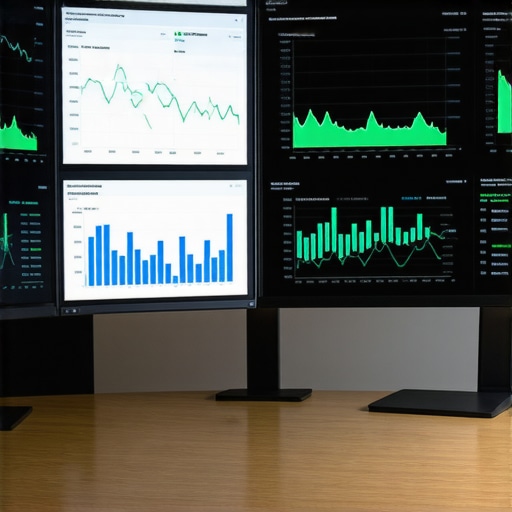
Real-Time Data is the Only Future for Tax Compliance
Looking forward, the trend is moving away from annual ‘tax seasons’ and toward continuous compliance. I predict that by 2027, the IRS will have the capability to query business bank feeds directly for larger entities, making audit support strategies every business needs in 2025 even more critical today. If your books aren’t clean now, you won’t be able to pivot when these real-time requirements become the law of the land. It is about building a ‘financial fortress’ that can withstand any inquiry. Try this today: Audit your software ‘tech stack’ and cancel exactly one recurring subscription that isn’t providing a specific tax benefit or a measurable margin-saving insight. You’ll be surprised how much ‘ghost overhead’ you can kill in ten minutes.
I spent three years thinking I was a financial genius because my top-line revenue was a steep mountain climb. Then came the tax bill, and suddenly, my wealth felt like a mirage in the desert. I remember sitting at my kitchen table, surrounded by crumpled receipts and three different open browser tabs, trying to figure out why a sixty-thousand-dollar month felt like a loss. I had plenty of cash flowing in, but it was flowing out just as fast through holes I didn’t even know existed. I felt like a fraud. I was working eighty-hour weeks just to keep a leaky bucket full, and that is a fast track to burnout. Today, we are going to stop that cycle. I am going to show you how to find those invisible margin leaks by getting serious about your expense tracking, using the same hard-earned lessons I learned the painful way.
Your Ledger is Lying to You
If you are just glancing at your bank balance once a week, you aren’t running a business; you are gambling. Early on, I made the huge mistake of misclassifying my software as office supplies, which meant I had no idea my tech stack was eating 15% of my gross margin. It is a gut-punch when you realize that small, recurring ‘micro-expenses’ are actually the reason you can’t afford that next big hire. You need to categorize messy business expenses with surgical precision if you want to see the truth. A startling study from U.S. Bank found that 82% of businesses fold due to cash flow issues—often because they aren’t watching the exits as closely as the entrances. To avoid being a statistic, you have to use financial ratios to spot margin leaks early. It sounds technical, but it’s really just about knowing your numbers better than anyone else.
Is tracking every single receipt actually worth the headache?
Most people think they can just ‘eyeball’ their spending, but that is how you miss the five-dollar fee that turns into a five-hundred-dollar leak over a year. I used to be that person who thought professional CPA services were only for the big players, but the reality is that expert eyes catch what your tired eyes miss at midnight. Have you ever looked at your bank balance and wondered where the last five thousand dollars went despite having a great sales week? If so, you are exactly where I was three years ago. We need to implement a system where your business needs a monthly closing process to ensure nothing slips through the cracks. It’s not just about surviving; it’s about making sure the work you do actually stays in your pocket.
Clean Your Ledger Before the Tax Man Knocks
To fix your margins, you have to stop treating your accounting software like a shoebox where you throw every random transaction. You need to learn how to clean up your ledger before tax season officially starts by auditing every single category with a skeptical eye. I remember one December where I realized I was still paying for a project management tool for a team I’d disbanded six months prior. That single ‘ghost’ expense was eating $200 a month. Over a year, that is a $2,400 leak—the price of a high-end workstation or a significant marketing campaign—gone for absolutely nothing. You must also be proactive in fixing the ghost assets on your balance sheet before year-end. These are items—like broken laptops, obsolete inventory, or software you no longer use—that are still listed as value but actually carry zero weight. Getting them off the books prevents your taxable income from looking artificially high and gives you a realistic view of your equity.
Match Every Cent to Your Bank Statement
If your ledger and your bank statement do not shake hands at the end of the month, your data is effectively garbage. You have to ensure your ledger matches your bank statement perfectly to avoid a nightmare during tax season. Most people let their automated feeds do the heavy lifting, but those feeds are not infallible; they break often. I once had a duplicate sync error that made it look like I had double the revenue I actually did—a mistake that would have been a disaster for my tax preparation secrets to save money this year if I hadn’t caught it in time. By reconciling your bank feed without losing your mind on a weekly basis, you catch these glitches before they become month-long headaches that require a forensic accountant to fix.
Expert Eyes Spot What You Miss at Midnight
There is a point where ‘doing it yourself’ becomes the most expensive way to run a business. Understanding how CPA services can transform small business accounting is not just about someone filing forms; it is about strategic oversight. I used to think I was saving $500 a month by handling my own books, but I was actually losing thousands in missed deductions and poor structuring because I didn’t know what I didn’t know. The messy truth about DIY tax filing for small S-Corps is that the IRS looks for specific patterns that a trained eye can smooth out before they become red flags. If you are serious about growth, you need to implement audit support key steps to ensure financial transparency so that when an investigator or potential investor looks at your books, they see a fortress, not a tent. It is about building a foundation that does not crumble the moment your revenue spikes or the tax laws shift.
Everyone will tell you that the secret to scaling is automation. They say that if you just pick the right platform, your compliance and margins will take care of themselves. But in my experience, that is a dangerous half-truth. While it is true that technology helps, the ‘set it and forget it’ mentality is exactly how you end up with a five-figure surprise from the IRS. You have to realize that why your payroll software choice dictates your compliance level is not about the features on the sales page, but about how that software handles the messy edge cases of real-world business. If you aren’t auditing the automation, you are just automating the errors. Have you ever fallen into this trap? Let me know in the comments.
Your Payroll Software is Setting a Trap You Won’t See Until Audit Season
The biggest myth in the gig economy is that payroll providers have ‘local’ expertise everywhere. They don’t. I have seen countless founders get burned because why your payroll provider is likely missing local tax changes is a systemic issue, not a glitch. They might handle federal withholding perfectly, but they often miss the tiny, local occupational taxes that vary by zip code. This creates a massive ‘Oops’ factor when you start scaling a remote team. If you are not mastering payroll compliance expert tips for 2025 success, you are essentially building your house on sand. You might think you’re saving money on the actual cost of processing payroll in-house vs outsourcing, but one misfiled local return can wipe out a year of ‘savings’ in penalties alone.
How much exposure are you carrying in your out-of-state remote hires?
This is the question that keeps savvy CFOs up at night. A recent study by the American Institute of CPAs (AICPA) highlighted that nearly half of business owners are unaware that a single remote employee can trigger a ‘nexus’—a legal presence that subjects your entire company to that state’s tax laws and the hidden costs of hiring out of state contractors next month. You might find yourself suddenly liable for corporate income tax in a state where you don’t even have an office. To protect yourself, you need audit support strategies every business needs in 2025 that specifically look for these nexus triggers before the state’s revenue department does.
Cheap Accounting Services Create a Debt You Will Pay Later with Interest
It is tempting to look for the lowest bid when shopping for a firm, but why choosing the cheapest CPA usually costs the most later becomes painfully obvious the moment you face an inquiry. A discount firm is a ‘compliance factory’; they put your numbers in the right boxes, but they won’t tell you that the reason your business model needs a professional tax review is because your current structure is bleeding cash. For instance, I’ve seen businesses stick with an LLC structure far too long, missing out on how the strategy for minimizing effective tax rates legally through an S-Corp election could have saved them forty thousand dollars. This isn’t just about filing; it’s about the move to accrual accounting why growth demands better data. If you are serious about a future exit, you must learn how to structure your business for a future sale or acquisition starting now, not three months before you list it. Without an audit-ready ledger from day one, your valuation will take a massive hit because buyers hate ‘messy’ books.
I used to believe that scaling a business was purely about sales, but I quickly learned that growth without a solid financial infrastructure is just a faster way to hit a wall. When I finally decided to transition to a cloud-based accounting system safely, it wasn’t just about moving files; it was about reclaiming my time. I moved away from manual entries and toward a setup where my software actually talks to my bank. However, be warned: automation is a double-edged sword. I have personally dealt with the frustration of why your accounting integration keeps deleting important receipts, which usually stems from a simple field-mapping error that snowballs into an audit nightmare. You have to verify your syncs weekly, or you’re just automating your own downfall.
Stop Guessing and Start Syncing Your Stack
For my current tech-driven workflow, I prioritize tools that offer deep API integrations rather than just ‘export to CSV’ buttons. If you are streamlining payroll processes for tech-driven businesses, you need a system that can handle the nuance of 2025 regulations. According to the AICPA’s guidance on SOC for Service Organizations, ensuring your payroll provider maintains a SOC 1 Type 2 report is non-negotiable for anyone scaling past ten employees—it ensures the internal controls of the service provider are actually working. Without this level of rigor, you are just taking a vendor’s word for it. By mastering payroll compliance expert tips for 2025 success, you shift from being reactive to being strategic.
How do I maintain financial clarity without working more hours?
The secret isn’t more work; it’s better reporting. I now use a dashboard that pulls from my ledger to show me my ‘burn rate’ and ‘tax liability’ in real-time. This is how you better your financial reporting transparency for investors. It makes you look like a pro because you are one. Instead of waiting for a year-end report, I follow the Finance Authority’s guide to staying ahead of tax changes in 2025 to make micro-adjustments every quarter. If you haven’t consulted with a pro yet, CPA services demystified will show you that a good accountant is actually a profit center, not an expense. They find the leaks while you find the leads.
Real-Time Data is the Only Future for Tax Compliance
Looking forward, the trend is moving away from annual ‘tax seasons’ and toward continuous compliance. I predict that by 2027, the IRS will have the capability to query business bank feeds directly for larger entities, making audit support strategies every business needs in 2025 even more critical today. If your books aren’t clean now, you won’t be able to pivot when these real-time requirements become the law of the land. It is about building a ‘financial fortress’ that can withstand any inquiry. Try this today: Audit your software ‘tech stack’ and cancel exactly one recurring subscription that isn’t providing a specific tax benefit or a measurable margin-saving insight. You’ll be surprised how much ‘ghost overhead’ you can kill in ten minutes.
What I Learned While Rebuilding My Ledger from Scratch
The biggest shift in my thinking happened when I realized that a bookkeeper records history, but a partner offering CPA services helps you write it. I learned that how we restructured this LLC to save forty thousand in taxes was only possible because we stopped treating my ledger as a chore and started treating it as a map. Another hard lesson? Never trust a default sync. If you are not verifying your bank feeds manually once a week, you aren’t in control of your data. Finally, transparency isn’t just for the IRS; it’s for your own peace of mind. When your books are airtight, you stop making decisions based on fear and start making them based on facts.
The Three Moves That Changed Everything for My Cash Flow
If you want to move from surviving to thriving, you need a specific roadmap. First, I highly recommend scheduling a mid-year tax planning session. It is the only way to avoid that gut-wrenching surprise in April. Second, evaluate if your growth has outpaced your current accounting method; often, the move to accrual accounting is the only way to see your true financial health as you scale. Lastly, don’t be afraid to ask for help before you think you need it. If you’re feeling overwhelmed by the complexity of local nexus or remote hiring, just contact us to start a conversation before a small error becomes a large penalty. #IMAGE_PLACEHOLDER_E#
Stop Running Away from Your Balance Sheet
The journey to financial clarity is rarely a straight line, but it is the most rewarding work you will do as a founder. By securing high-level audit support and refining your tax preparation habits today, you are building more than just a business—you are building a legacy that can withstand scrutiny. You’ve worked too hard to let a ‘ghost asset’ or a mismanaged payroll sync take it all away. Take that first step toward a clean ledger this week; your future self will thank you for the clarity. Have you ever discovered a ‘ghost’ subscription or a hidden bank fee that was eating your margins for months without you noticing? Let me know in the comments below!