
The move that helps you survive a state tax inquiry without stress

I’ll never forget the cold sweat that broke over me when I opened that plain white envelope from the Department of Revenue. It wasn’t the IRS—which somehow felt less personal—it was my own state, basically asking me to justify every penny I’d earned and spent over the last thirty-six months. At the time, I thought my system of digital folders and a master spreadsheet was bulletproof. I was wrong. I spent the next three weeks in a frantic scramble, realizing that a simple expense categorization mistake from my first year was coming back to haunt me. It was a wake-up call that changed how I handle my books forever. Today, I’m going to share the exact move that will help you breeze through these inquiries so you never have to feel that panic. We are going to build a defense-first accounting habit that turns an inquiry into a minor administrative task rather than a business-ending crisis. [image_placeholder]
Your State Revenue Office Isn’t Actually Out to Get You
It feels personal when the state comes knocking, doesn’t it? But here’s the reality: state governments are often just looking for consistency and proof of nexus. Early in my journey, I made the classic blunder of assuming that if my federal taxes were fine, my state ones were a mirror image. I didn’t realize that state-specific rules, especially regarding unexpected sales tax reviews, could be so aggressive. According to the Tax Foundation, state tax collections have hit record highs in recent years, meaning audits are more frequent as states look to close budget gaps. If you aren’t prepared with modern audit support strategies, you’re essentially leaving your front door unlocked in a storm.
Does This Inquiry Mean I’ve Already Failed?
The short answer is no. Most people panic because they think an inquiry is an accusation. In reality, it is often just a request for more information based on a data mismatch or a routine check. However, the stress comes from the lack of a proper paper trail. If you’ve ever felt that pit in your stomach wondering if you saved a specific receipt, you know exactly what I mean. Have you ever received one of these notices and felt completely lost on where to start? Tell me your story in the comments—I’ve likely been there too. The key is moving toward monthly closing processes that ensure your ledger is always ready for a spotlight. By the time we are done today, you will know how to structure your records so that an inquiry is nothing more than a five-minute email to your CPA.
Open the Envelope and Mark Your Calendar
Ignoring a letter from the state is like ignoring a leak in your roof; it only gets more expensive every day. The very first thing you need to do is identify the response deadline. State agencies operate on strict statutory timelines, and missing one can forfeit your right to appeal. In my early years, I once buried a notice under a pile of invoices, thinking I’d get to it on Friday. By the time I did, I had forty-eight hours to provide three years of documentation. It was a nightmare. Now, the moment a notice arrives, I check for the ‘due date’ and immediately begin surviving a state income tax inquiry by establishing a timeline that gives me a buffer. If you need more time, call them immediately. Often, an agent will grant a short extension if you show you are proactively working on the request.
Clean the Ledger Before You Hit Send
Never send over your raw data without a thorough review. You need to look at your records through the eyes of an auditor. They aren’t looking for your successes; they are looking for inconsistencies between your reported income and your bank deposits. I remember a specific instance where I realized I had accidentally categorized a personal loan to the business as ‘revenue.’ Had I sent that over, I would have paid tax on my own money. This is where the simple fix for misclassified business expenses becomes your best friend. Before any data leaves your office, ensure every category is defensible and every transaction has a corresponding piece of evidence. If you’ve been messy, now is the time to apply ledger cleanup strategies to ensure your data tells a clear, honest story. 
Why You Need a Professional Buffer
One of the biggest mistakes I made early on was trying to handle the auditor myself. I thought I could explain away the nuances of my business model. The problem is that anything you say can be used to expand the scope of the inquiry. Bringing in a pro isn’t just about math; it’s about communication. Using professional CPA services creates a firewall between you and the state. They know the ‘Revenue-ese’ language and can prevent you from accidentally volunteering information that triggers a sales tax review or a payroll audit. It’s about more than just filling out forms; it’s about having a strategist who knows exactly what the state is legally entitled to see—and what they aren’t.
Build an Audit-Ready Habit for Next Time
The goal shouldn’t just be to survive this inquiry, but to ensure the next one is a non-event. This starts with how you handle your recurring obligations. If you operate in multiple jurisdictions, you must prioritize handling payroll across state lines correctly, as this is a frequent trigger for state inquiries. During a particularly messy year, I learned that starting with an audit-ready ledger from day one is the only way to avoid the ‘scramble’ entirely. By implementing modern audit support strategies, you turn your accounting into a shield. You want to reach a point where your ledger matches your bank statement perfectly every single month, making any future inquiry a simple matter of clicking ‘export.’
Most business owners I talk to have a dangerous level of faith in their accounting software. They assume that because the dashboard is green and the bank feed is synced, they are ‘audit-proof.’ But here is the contrarian truth: your software is a reporting tool, not a compliance officer. In fact, relying solely on automated categorization is one of the quickest ways to trigger a red flag. I’ve seen countless entrepreneurs fall into the trap of thinking why your accounting software isn’t a substitute for a pro, only to realize during a state inquiry that the software has been silently misclassifying transactions for months.
Why ‘Close Enough’ Isn’t Enough for Multi-State Nexus
A common myth is that if you aren’t a massive corporation, you don’t have to worry about complex tax nexus rules. This is fundamentally wrong in the post-Wayfair era. According to the AICPA, state-level tax regulations are evolving faster than most software updates can keep up with. If you have a single contractor in another state, you might have created a payroll nexus without even knowing it. This is where mastering payroll compliance becomes vital. If you’ve been treating everyone as a local 1099, the state won’t just ask for the missing tax; they will hit you with back-dated penalties and interest that can dwarf the original bill.
The ‘Oops’ factor usually hits when you realize you’ve fallen into the tax trap of misclassifying your key contractors. I once worked with a founder who thought they were being efficient by using a single ‘Software’ category for everything from SaaS subscriptions to custom development. The state auditor, however, viewed those custom development payments as wages for an unregistered out-of-state employee. It was a fifty-thousand-dollar mistake that could have been avoided with a more granular chart of accounts. Have you ever had an auditor challenge how you classified a specific person or expense? Let me know in the comments—I’m curious how you handled it.

Can Your Business Entity Choice Actually Trigger an Inquiry?
The short answer is yes, especially if your distributions don’t align with ‘reasonable compensation’ standards. This is a sophisticated nuance many DIY filers miss. When you transition from a simple freelancer to an S-Corp, the state looks closely at your payroll-to-distribution ratio. If you are underpaying yourself to avoid payroll taxes, you are essentially painting a target on your back. This is why CPA services demystified can be a game-changer; a pro will ensure your compensation is defensible before the inquiry letter even arrives. They help you stay ahead by providing staying ahead of tax changes in 2025 that the software hasn’t even flagged yet.
Ultimately, the goal is to stop viewing audit support as an emergency service and start seeing it as a structural requirement. Whether it is streamlining payroll processes or performing a mid-year review, the secret is in the details that a computer simply cannot see. Don’t let a ‘user-friendly’ interface lull you into a false sense of security. Real defense is built through modern audit support strategies that prioritize human expertise over automated convenience.
Maintaining your defense isn’t about working harder; it’s about having a system that works while you’re asleep. I switched to a ‘Continuous Compliance’ model three years ago, and it changed everything. Instead of a year-end box of receipts, I use a high-speed Fujitsu ScanSnap iX1600 combined with a secure cloud vault. You need to know exactly the paperwork you must keep for seven years to stay safe. If you haven’t yet, transitioning to a cloud-based accounting system is the single best move for scaling. It allows for real-time collaboration with your team and ensures you never lose a document to a spilled cup of coffee.
IRS Publication 583, ‘Starting a Business and Keeping Records,’ explicitly states that you must keep your business records available at all times for inspection. This is a higher standard than most people realize. To meet this, I’ve moved away from local drives toward encrypted portals. I’ve found that better encryption and security for accounting data isn’t just about privacy; it’s about ensuring your audit trail doesn’t vanish in a hard drive crash or a physical fire. It’s about building a digital fortress around your life’s work.
How do I maintain an audit-proof system as I scale?
As you grow, your complexity grows too. What worked for a solo operation won’t work when you have a team. You need to be mastering payroll compliance across every state where you have employees. I predict that in the next few years, we will see generative AI ‘pre-auditors’ built into our software that flag nexus issues and classification errors before the state even notices. For now, you have to be the sentinel of your own ledger.
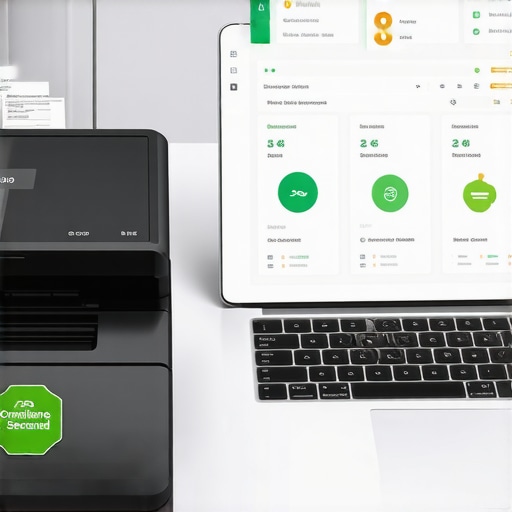
I recommend a ‘Monthly Deep Dive.’ Every thirty days, I sit down with my reports and look for anomalies. I use tax prep tips for freelancers and gig workers to keep my personal and business expenses strictly separated—no exceptions. If you’re seeing margins slip, use better expense tracking to spot leaks before they become gouts of wasted cash that attract unwanted attention from the authorities.
Get Ahead of the 2025 Tax Changes Now
Waiting until April is a strategy for losers. The real pros are already looking at staying ahead of tax changes in 2025. This involves modern audit support strategies that include quarterly ‘mock audits’ performed by your tax professional. This isn’t paranoia; it’s preparation. It’s the difference between a minor email and a month-long headache. My challenge to you this week: Open your ledger and find the three largest ‘miscellaneous’ expenses. Categorize them properly today using this simple categorization method. It takes ten minutes but saves hours of explanation later.
Most business owners I talk to have a dangerous level of faith in their accounting software. They assume that because the dashboard is green and the bank feed is synced, they are ‘audit-proof.’ But here is the contrarian truth: your software is a reporting tool, not a compliance officer. In fact, relying solely on automated categorization is one of the quickest ways to trigger a red flag. I’ve seen countless entrepreneurs fall into the trap of thinking why your accounting software isn’t a substitute for a pro, only to realize during a state inquiry that the software has been silently misclassifying transactions for months.
Why ‘Close Enough’ Isn’t Enough for Multi-State Nexus
A common myth is that if you aren’t a massive corporation, you don’t have to worry about complex tax nexus rules. This is fundamentally wrong in the post-Wayfair era. According to the AICPA, state-level tax regulations are evolving faster than most software updates can keep up with. If you have a single contractor in another state, you might have created a payroll nexus without even knowing it. This is where mastering payroll compliance becomes vital. If you’ve been treating everyone as a local 1099, the state won’t just ask for the missing tax; they will hit you with back-dated penalties and interest that can dwarf the original bill.
The ‘Oops’ factor usually hits when you realize you’ve fallen into the tax trap of misclassifying your key contractors. I once worked with a founder who thought they were being efficient by using a single ‘Software’ category for everything from SaaS subscriptions to custom development. The state auditor, however, viewed those custom development payments as wages for an unregistered out-of-state employee. It was a fifty-thousand-dollar mistake that could have been avoided with a more granular chart of accounts. Have you ever had an auditor challenge how you classified a specific person or expense? Let me know in the comments—I’m curious how you handled it.
Can Your Business Entity Choice Actually Trigger an Inquiry?
The short answer is yes, especially if your distributions don’t align with ‘reasonable compensation’ standards. This is a sophisticated nuance many DIY filers miss. When you transition from a simple freelancer to an S-Corp, the state looks closely at your payroll-to-distribution ratio. If you are underpaying yourself to avoid payroll taxes, you are essentially painting a target on your back. This is why CPA services demystified can be a game-changer; a pro will ensure your compensation is defensible before the inquiry letter even arrives. They help you stay ahead by providing staying ahead of tax changes in 2025 that the software hasn’t even flagged yet.
Ultimately, the goal is to stop viewing audit support as an emergency service and start seeing it as a structural requirement. Whether it is streamlining payroll processes or performing a mid-year review, the secret is in the details that a computer simply cannot see. Don’t let a ‘user-friendly’ interface lull you into a false sense of security. Real defense is built through modern audit support strategies that prioritize human expertise over automated convenience.
Maintaining your defense isn’t about working harder; it’s about having a system that works while you’re asleep. I switched to a ‘Continuous Compliance’ model three years ago, and it changed everything. Instead of a year-end box of receipts, I use a high-speed Fujitsu ScanSnap iX1600 combined with a secure cloud vault. You need to know exactly the paperwork you must keep for seven years to stay safe. If you haven’t yet, transitioning to a cloud-based accounting system is the single best move for scaling. It allows for real-time collaboration with your team and ensures you never lose a document to a spilled cup of coffee.
IRS Publication 583, ‘Starting a Business and Keeping Records,’ explicitly states that you must keep your business records available at all times for inspection. This is a higher standard than most people realize. To meet this, I’ve moved away from local drives toward encrypted portals. I’ve found that better encryption and security for accounting data isn’t just about privacy; it’s about ensuring your audit trail doesn’t vanish in a hard drive crash or a physical fire. It’s about building a digital fortress around your life’s work.
How do I maintain an audit-proof system as I scale?
As you grow, your complexity grows too. What worked for a solo operation won’t work when you have a team. You need to be mastering payroll compliance across every state where you have employees. I predict that in the next few years, we will see generative AI ‘pre-auditors’ built into our software that flag nexus issues and classification errors before the state even notices. For now, you have to be the sentinel of your own ledger.
I recommend a ‘Monthly Deep Dive.’ Every thirty days, I sit down with my reports and look for anomalies. I use tax prep tips for freelancers and gig workers to keep my personal and business expenses strictly separated—no exceptions. If you’re seeing margins slip, use better expense tracking to spot leaks before they become gouts of wasted cash that attract unwanted attention from the authorities.
Get Ahead of the 2025 Tax Changes Now
Waiting until April is a strategy for losers. The real pros are already looking at staying ahead of tax changes in 2025. This involves modern audit support strategies that include quarterly ‘mock audits’ performed by your tax professional. This isn’t paranoia; it’s preparation. It’s the difference between a minor email and a month-long headache. My challenge to you this week: Open your ledger and find the three largest ‘miscellaneous’ expenses. Categorize them properly today using this simple categorization method. It takes ten minutes but saves hours of explanation later.
Stop Treating Your State Agent Like the Boogeyman
One of the hardest lessons I had to learn was that state auditors aren’t villains; they are bureaucrats following a checklist. If you provide exactly what they ask for, in the format they expect, they move on. The real danger isn’t the auditor—it’s the uncertainty in your own data. This is why tax preparation secrets to save money often start with clean documentation rather than complex loopholes. When you prioritize audit support key steps, you aren’t just defending against a tax bill; you’re building a scalable infrastructure. I realized that a professional review is much cheaper than an amateur mistake every single time.
The Defense Toolkit That Keeps Me Sane
Building a fortress around your finances doesn’t require a massive IT department, but it does require better standards. For my daily workflow, I rely on a trifecta of tools and experts. First, a high-quality scanner to digitize every scrap of paper immediately. Second, a cloud-based ledger that allows my tax pro to spot issues in real-time. Finally, and most importantly, I stopped bargain-hunting for accounting help. I learned the hard way why choosing the cheapest CPA usually costs the most later. Before you sign with anyone, take the time for vetting your fractional CFO to ensure they understand your specific industry nexus rules.
Your Business Deserves a Future Without Financial Anxiety
Receiving that state envelope doesn’t have to be the end of the world. In fact, it can be the beginning of a much more disciplined and profitable chapter for your company. By leaning into navigating financial regulations effectively, you take the power back from the bureaucracy. You’ve worked too hard to let a paperwork error slow you down. Start today by organizing one folder or scheduling one review. When you have dedicated audit support in your corner, you can focus on what you actually love: growing your business. Have you ever received a notice that turned out to be a simple misunderstanding, or did it uncover a bigger issue in your books? Share your experience in the comments below.