
The Move to Cashless Operations and New Compliance Risks

I remember standing at my counter, staring at a crumpled hundred-dollar bill like it was a live grenade. A long-time customer wanted to pay for a bulk order in cash, and for the first time in ten years, I actually didn’t want to take it. My books were finally clean. My digital systems were humming. But that one cash transaction felt like a thread that, if pulled, would unravel the whole sweater. I took the money, of course, but I spent the next three hours wondering why my cash flow doesn’t match my bank balance. That was my wake-up call: the world is moving away from paper, and if we don’t adapt our compliance habits, we’re essentially inviting the IRS to dinner.
Why Going Digital is Smarter than Keeping a Cash Box
Transitioning to a cashless model isn’t just about convenience for your customers; it’s about protecting your sanity. When I first started, I thought a “cash-heavy” business was a sign of success. I was wrong. It was a sign of a looming audit support nightmare. The reality is that digital trails are your best friend during tax season. I learned this the hard way after a particularly grueling state-level employment audit notice that could have been avoided if I had just automated my records from day one. Today, I’m going to show you how to embrace a cashless operation without leaving your business vulnerable to the new, stricter compliance landscape we’re all living in.
Is This Digital Shift Actually Worth the Compliance Risk?
I get it. You’re worried that every swipe and tap is a breadcrumb leading right to your doorstep. You might even be thinking that generic DIY tax software can handle it all for you. Spoiler: it usually can’t. The IRS has significantly increased its focus on digital assets and third-party settlement organizations, with the reporting threshold for 1099-K forms being a major point of contention and change lately according to official IRS announcements. If you aren’t prepared, these automated reports will catch discrepancies you didn’t even know existed. I once ignored a small $200 digital payment discrepancy, thinking it was “rounding error,” only to have it flagged during an audit support strategy review. It’s the small stuff that gets you.
Have you ever looked at your monthly statement and realized your digital processor took a fee you didn’t account for, making your reconciliation a total mess? Comment below or shoot me a message—I’ve been there, and it’s a headache we can fix together. We are going to dive into mastering payroll compliance and ensuring your tax preparation secrets actually save you money rather than just hiding mistakes.
The Sneaky New Rules That Want to Catch You Off Guard
The biggest mistake I made early on was assuming that my bank statement was a substitute for a general ledger. I thought, “If the money is in the account, I’m good, right?” Wrong. Especially with cashless operations, you need to know why you shouldn’t rely on your bank statement for tax prep. You need a system that tracks the intent of the money, not just the movement of it. When you stop taking cash, you gain transparency, but you also lose the “fudge factor” that many small businesses accidentally rely on. This is where CPA services become your secret weapon, turning data into a shield. Let’s look at how we can bridge the gap between your digital sales and your ultimate tax liability.
Switch from Cash to Accrual Without the Migraine
Most of us start on a cash basis because it’s simple: money comes in, money goes out. But the moment you move to a cashless operation with subscriptions, deferred payments, or credit terms, cash-basis accounting starts to fail you. You need to learn how to transition from cash basis to accrual accounting to ensure your income matches when the work was actually done, not just when the stripe notification pings. This shift gives you a realistic view of your liabilities. I remember a grueling month where I thought I was flush with cash, only to realize I hadn’t accounted for three weeks of merchant processing fees and upcoming software renewals. Moving to accrual was like finally putting on the right pair of glasses; suddenly, I could see the cliff I was about to walk over.
Your Bank Sync is Not Your Friend
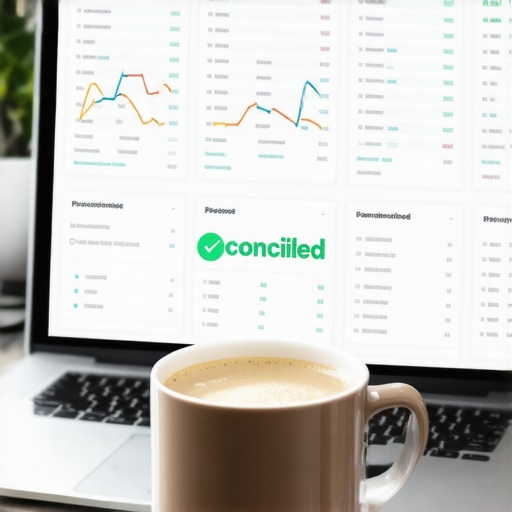
We’ve been sold a lie that ‘automation’ means you don’t have to look at your books. In reality, why your accounting softwares automatic sync is often wrong is one of the biggest risks to your business. I once let my software run on autopilot for three months, only to find it had categorized every single loan repayment as ‘miscellaneous income.’ I was effectively paying taxes on money I was paying back! You must learn how to reconcile your bank accounts without the headache by verifying each digital batch against your actual sales reports. Digital payments often bundle multiple transactions into one deposit, and if you aren’t unbundling them, your records are a fiction.

Organize Your Digital Paper Trail Like a Pro
An auditor doesn’t care about your clean office; they care about the document trail that stops auditors in their tracks. When you stop taking cash, your ‘receipts’ become digital ghosts scattered across emails and merchant dashboards. You need a centralized hub. I spent a weekend last year implementing a system for how to organize your digital receipts for a stress-free audit defense, and it saved me when a vendor disputed a payment six months later. Don’t rely on the ‘search’ bar in your inbox; download the PDFs, tag them by project, and link them directly to the transaction in your ledger. This level of audit support is what separates a hobbyist from a professional.
Stop Letting Manual Entry Ruin Your Payroll
Even in a cashless business, payroll is where the wheels usually fall off. If you are still manually typing hours from a spreadsheet into a processor, you are begging for a typo that results in a five-figure penalty. I’ve seen businesses crumble because they didn’t understand the benefits of centralizing your payroll operations into a single, integrated digital flow. We once had to figure out how we fixed a year of payroll errors in three days because a client’s digital system wasn’t talking to their bank properly. The fix isn’t more spreadsheets; it’s better integration. Every minute you spend manually moving data is a minute you aren’t spending on growth. Your goal is a ‘set it and verify it’ system where the data flows from the time-clock to the paycheck without a human finger touching it.
Everyone tells you that moving to digital payments is a magic bullet for transparency, but they rarely mention the mess it creates if your backend isn’t ready. Most business owners think that as long as they have a ‘clean’ digital trail, they are safe. In my experience, a digital trail is only as good as the eyes reviewing it. I’ve seen more businesses get flagged for ‘clean’ digital errors than for missing paper receipts. This brings us to a hard truth: the reason your bookkeeper cant help with tax strategy is that they are focused on the past, while a true compliance strategy focuses on the future.
Why Does Your P&L Statement Feel Like a Work of Fiction?
If you’ve ever looked at your books and wondered why you have no cash despite showing a profit, you’ve encountered the great accounting disconnect. This happens because why your profit and loss statement is lying to you 2 often comes down to timing differences and non-cash items like depreciation that haven’t been properly mapped. You might think you’re killing it, but without why your business needs a real cfo not just a bookkeeper, you’re flying a plane with a broken altimeter. According to data from the National Federation of Independent Business (NFIB), tax compliance costs for small firms are still nearly 65% higher per employee than for larger firms, largely due to these misunderstood nuances in reporting. Have you ever fallen into this trap? Let me know in the comments.
Stop Treating Your CPA Like a Seasonal Guest
The biggest contrarian take I have is that ‘tax season’ shouldn’t actually exist for a healthy business. If you are only talking to your professional in April, you have already lost the game. I found that the hidden benefit of monthly rather than yearly tax planning isn’t just about lower bills; it’s about agility. When you wait until the end of the year, your ability to leverage why your business might be eligible for the rd credit or other strategic moves has already expired. You need CPA services that act as a proactive shield, not a reactive mop-up crew.
The ‘oops’ factor usually hits when you trust your software too much. I’ve watched clients deal with the simple fix for quickbooks syncing errors that mess up your ledger only after the errors had compounded for six months. These ‘ghost entries’ happen when digital payment processors sync multiple times or fail to account for refunds properly. To stay safe, ensure why your cpa should review your operating agreement to make sure your digital distributions actually match your legal obligations. High-level compliance isn’t about avoiding the IRS; it’s about building a fortress of data that makes an auditor want to close your file after five minutes because everything is so damn tight.
Building that digital fortress isn’t a one-and-done project; it’s a garden that needs constant weeding. I’ve seen too many founders set up a high-end digital system only to watch it turn into a tangled mess of ‘uncategorized’ transactions within six months. To avoid this, I treat my financial tech like a physical machine that needs regular oiling. If you’re running a digital shop, you need to understand why your e-commerce store needs specialized accounting tech rather than just the basic version everyone else uses. A generic setup will fail to account for the granular data—like SKU-level profitability or cross-border VAT—that keeps you safe during a deep dive by the authorities.
Stop Your Tech Stack From Becoming a Data Graveyard
The biggest risk in a cashless business is data fragmentation. You have your processor, your bank, your payroll software, and your ledger, and often they are all shouting different numbers at you. I personally rely on the checklist for vetting a new accounting software integration before I ever click ‘connect.’ If the API doesn’t support two-way synchronization or doesn’t allow for manual overrides, it’s a hard pass for me. I’ve learned that the more ‘automated’ a system claims to be, the more carefully you have to watch its output. This is where audit support strategies every business needs in 2025 come into play—you are building the audit defense in real-time by ensuring every digital handshake between your apps is documented and verified.

How can I keep my digital books clean as I scale?
The secret is what I call the ‘Sunday Sync.’ Every Sunday, I spend exactly 20 minutes looking for the one thing my automation missed. Usually, it’s a software subscription that didn’t map right or a messy payroll reconciliation for remote teams issue where a tax jurisdiction was mislabeled because an employee moved. By catching these in real-time, you prevent the ‘Year-End Panic’ that leads to expensive tax preparation secrets being used to fix errors instead of saving money. I also highly recommend using a tool like Fathom or Jirav for visual reporting. Seeing your cash flow as a trend line rather than a column of numbers makes it much easier to spot the move that cut my monthly bookkeeping time in half. When you scale, you can’t be in the weeds; you need the view from 30,000 feet, but you need to know the ground is solid.
The Future of Compliance is Invisible
In the next few years, I predict that ‘filing taxes’ will become a relic of the past for truly digital businesses. We are moving toward a ‘continuous compliance’ environment where the IRS or state authorities could eventually have direct API access to transaction volumes in real-time, much like the system currently used in parts of Europe. According to the AICPA’s guidance on Service Organization Control (SOC) 1 reports, ensuring your third-party providers have rigorous controls is no longer optional; it is the foundation of your own business’s integrity. This shift actually removes the risk of a massive surprise state-level employment audit notice. To prepare, you should be streamlining payroll processes for tech-driven businesses today, so your data is already clean, tagged, and ready for a future where reporting is automatic. My advanced tip for you this week: Go into your ledger right now and ensure every single digital transaction from the last 30 days is mapped to a specific line item. Don’t let a single ‘miscellaneous’ entry survive the weekend.
What My Last Audit Taught Me About Data Integrity
I used to think that as long as my bank balance was high, I was winning. But a deep dive into my records showed me that audit support strategies every business needs in 2025 are more about the ‘why’ than the ‘how much.’ I realized that every digital transaction is a story, and if you don’t tell it correctly, the IRS will write its own version for you. My lightbulb moment was realizing that automation is a tool, not a savior; you have to be the pilot, not just a passenger on your own financial journey. One big lesson I learned the hard way: don’t let a single ‘miscellaneous’ category live in your ledger for more than a week, as it is essentially a magnet for unwanted questions during a review.
The Compliance Survival Kit I Swear By
To keep my sanity while scaling, I’ve built a small but mighty toolkit. First, I never skip a monthly P&L review with your CPA because it catches the ghosts before they haunt me at year-end. I also rely heavily on the Finance Authority insights navigating financial regulations effectively to stay ahead of the curve as digital laws shift. For those working for themselves, I highly recommend studying tax prep tips for freelancers and gig workers in 2025 to ensure your digital footprint doesn’t lead to an accidental penalty. These aren’t just bookmarks; they are the actual pillars of a workflow that prioritizes sleep over stress.
#IMAGE_PLACE_HOLDER_E#
Your Clean Slate Starts Now
Transitioning to a cashless model feels like jumping into the deep end, but it is exactly where the real growth happens. You aren’t just moving numbers; you are building a transparent, scalable machine that finally frees you from the burden of paper trails and the dreaded shoe-box accounting. When you combine how CPA services can transform small business accounting with modern digital tools, you gain more than just efficiency—you gain the freedom to focus on your vision instead of your receipts. Take that first step today to stop letting manual data entry ruin your payroll accuracy and embrace the peace of mind that comes with a bulletproof ledger. Have you ever felt that sinking feeling when a digital sync goes wrong, or has the transition to digital been smooth sailing for your business so far? Let me know in the comments below!