
The truth about your home office deduction limits and risks

I still remember the sweat on my palms as I hovered over the ‘Submit’ button on my first solo tax return. I’d spent the last three hours with a tape measure, trying to convince myself that my kitchen island was technically a ‘desk’ and that my hallway was a ‘professional corridor.’ I thought I was being a savvy entrepreneur by claiming nearly forty percent of my apartment as a business expense. I was wrong. That one decision led to a grueling six-month back-and-forth that cost me more in stress than I ever saved in cents. Most people think they are being clever when they write off their couch because they occasionally answer emails there, but the IRS has seen every trick in the book. Today, I want to peel back the curtain on the actual limits of this deduction so you don’t repeat my expensive mistakes. We are going to look at the ‘exclusive use’ rule, the reality of the simplified method, and how to build a defense that keeps your personal assets safe.
Why your spare bedroom is more than just a storage unit to the IRS
For years, the home office deduction was seen as a major audit trigger, and while that has cooled off slightly, the rules haven’t gotten any looser. If you are operating in a remote or hybrid environment, you need to know the truth about the home office deduction for modern hybrid teams before you start doing the math. The biggest trap I fell into was the ‘exclusive use’ requirement. If your home office doubles as a guest room or a place where your kids play video games, you legally cannot claim it. It is that simple, and that harsh. It’s one of those tax prep tips for freelancers and gig workers that usually gets ignored until an auditor is sitting across the table asking why there’s a treadmill in your ‘boardroom.’ According to IRS Publication 587, the space must be used regularly and exclusively for your business. Even a small personal intrusion into that square footage can disqualify the entire claim. Have you ever felt like you were stretching the truth just to shave a few hundred dollars off your bill?
Is claiming a home office actually worth the audit risk?
Many of my neighbors ask me if the deduction is even worth the hassle given how strict the scrutiny can be. My answer is always: yes, but only if you have the receipts to back it up. If you don’t have a dedicated room, you might be better off looking into how to build a tax defense that protects your personal assets through other, less ‘red-flag’ avenues. Early in my career, I ignored the importance of a clean ledger, and it nearly sank me. You have to treat your home office like a separate business entity if you want the IRS to respect it as one. We aren’t just talking about a few bucks; we’re talking about the integrity of your entire filing status.
The simple way to pick between two math problems
When I first started out, I thought more math meant more money back, but that is not always the case. The IRS gives you two distinct paths: the simplified method and the actual expense method. Think of the simplified method like a flat-rate shipping box; you get $5 per square foot up to 300 square feet. It is clean, requires zero utility bill tracking, and is remarkably hard for an auditor to argue with. On the flip side, the actual expense method is like a custom-built crate. You track every cent of mortgage interest, insurance, and electricity, then multiply it by the percentage of your home used for business. I once spent sixteen hours digging through old gas bills to use the actual method, only to realize I saved exactly twelve dollars more than the simplified version would have given me. It was a hard lesson in the simple way to categorize messy business expenses for better margins. If your home office is small and your utilities are low, the simplified method is your best defense against a paperwork headache.
Stop guessing and start measuring
The IRS does not accept ‘about ten percent’ as a valid measurement. You need a tape measure and a floor plan. If you are claiming a 10×12 room, you need to prove it is exactly 120 square feet. I recommend taking a photo of the room with your business equipment clearly visible and the ‘personal’ items removed. This creates a digital timestamp of your ‘exclusive use’ claim.  This level of detail is exactly why you should stop using estimates for your quarterly tax planning strategies. When I faced my first inquiry, having a dated photo of my workspace and a copy of my floor plan shut down the auditor’s questions in less than ten minutes.
Treat your office like a separate island
To maintain the integrity of your deduction, your home office must function as a distinct entity from your living space. If you are using your work laptop on the couch, that couch is not a deduction. If you are printing personal photos on your business printer, you are blurring the lines. You have to be disciplined. I used to keep a physical log on my door for a month just to prove I was the only one entering that space during business hours. It felt like overkill until I realized that audit support key steps to ensure financial transparency always begin with these small, granular habits.
Why a pro catches what your software misses
Many freelancers assume their DIY software handles the nuances of local property tax or depreciation schedules, but software is only as good as the data you feed it. There is a huge difference between an expense and a depreciable asset. For example, how to clean up your ledger before tax season officially starts involves more than just clicking ‘import’ on your bank feed. A professional can help you determine if you should be depreciating the portion of your home’s value or just sticking to the standard deduction. This is where cpa services demystified really show their value; they look for the ‘why’ behind the numbers. Remember, why your accounting software isnt a substitute for a pro is often proven when a human eye spots a deduction you didn’t even know existed, like the specific percentage of your home security system that protects your business inventory.The biggest mistake I see high-earning freelancers make isn’t missing a receipt; it is falling for the ‘free money’ myth of depreciation. While writing off a portion of your mortgage and the wear-and-tear of your home office feels like a win today, the IRS has a long memory. When you eventually sell your home, you are often hit with depreciation recapture, where the government taxes those previous ‘savings’ at a rate of up to 25%. This is exactly why your depreciation schedule might be costing you money in the long run. Many professionals think they are being clever by maximizing every cent, but without a long-term exit strategy for their property, they are just deferring a massive tax bill to a time when they might not have the liquid cash to pay it.
What happens to your home office deduction when you decide to move?
In my experience, most people assume the ‘primary residence exclusion’ protects all their home sale gains, but that is a dangerous half-truth. If you’ve been depreciating your office for a decade, that specific portion of the gain is often ineligible for the exclusion. This is a classic ‘oops’ factor that DIY software rarely explains clearly. It is also a primary reason why the messy truth about diy tax filing for small s-corps is so painful; the software calculates the current year perfectly but fails to warn you about the 2030 consequences.  Beyond the home office, I’ve noticed a shift in how the IRS views business equipment. Everyone tells you to buy a new laptop at the end of the year to lower your bracket, but in my experience, you should prioritize how to structure asset purchases for maximum tax benefits over simple year-end spending. According to a study by the Government Accountability Office (GAO), nearly 60% of small business tax returns contain errors related to asset classification, often because owners confuse ‘supplies’ with ‘capital assets.’ This confusion leads to ‘ghost assets’—items still on your books that have actually been in a landfill for years. You must learn the art of fixing the ghost assets on your balance sheet before year end or you’ll keep paying personal property tax on items you no longer own. If you find yourself guessing, remember that why choosing the cheapest cpa usually costs the most later is almost always proven during an inquiry. A bargain-bin preparer will file what you give them; a partner will tell you when a deduction is a ticking time bomb. This level of foresight is a cornerstone of the audit support strategies every business needs in 2025. Have you ever fallen into this trap of over-deducting only to face the consequences later? Let me know in the comments.Maintaining that ‘separate island’ vibe requires more than just a locked door; it requires a tech stack that doesn’t betray you. I’ve transitioned entirely to a paperless environment because, frankly, ink fades and IRS agents don’t have patience for smudged thermal receipts. My go-to is a dedicated document scanner—not just a phone app, but a physical Fujitsu ScanSnap iX1600. Why? Because it handles OCR (Optical Character Recognition) locally, ensuring that every ‘marketing expense’ I scan is searchable by keyword in five years. This is a huge part of how to transition to a cloud-based accounting system safely without losing your mind in the process. However, even the best scanner won’t save you if your software is buggy. I stopped relying on automated bank feeds alone after I noticed a duplicate transaction glitch. It’s why I argue that why your accounting integration keeps deleting important receipts is a conversation you need to have with your IT setup or your CPA immediately.
How do I keep my home office records audit-proof over many years?
The secret isn’t a massive end-of-year push; it’s the ‘Sunday Reset.’ Every Sunday, I spend 20 minutes reconciling my week. I verify that every charge on my business card has a corresponding digital image. You’d be surprised at how quickly how to ensure your ledger matches your bank statement perfectly becomes second nature when you do it in small bites. According to the National Association of Enrolled Agents (NAEA), keeping digital copies backed up in three locations—cloud, local, and off-site—is the gold standard for surviving a long-term inquiry. 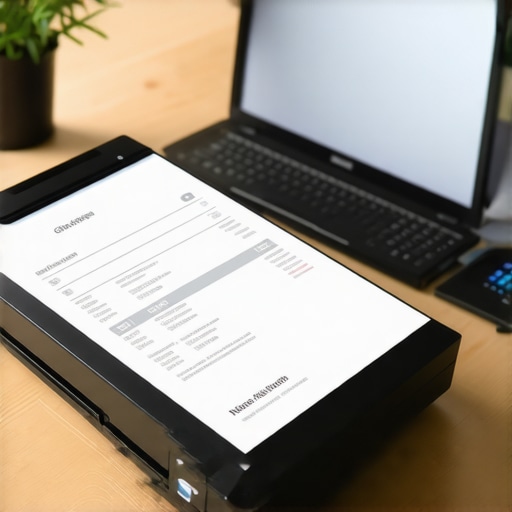 As we look toward 2025, I predict the IRS will lean even harder into AI-driven ‘anomaly detection.’ They won’t just look for high deductions; they’ll look for patterns that don’t match your industry’s specific benchmarks. This makes finance authoritys guide to staying ahead of tax changes in 2025 essential reading. If your utilities suddenly spike by 400% but your revenue stays flat, the algorithm is going to flag you. You need to be able to how to spot inconsistencies in your monthly profit reports before their servers do. Finally, don’t ignore the cadence. Most freelancers wait until April to talk to a professional, but why your bookkeeping needs to be done weekly instead of monthly is the difference between a thriving business and a chaotic hobby. If you’re serious about scaling, try this: audit your own ‘office’ category this weekend. If you find even one personal item—a box of holiday decorations or a gym bag—move it out. Re-measure the space. It’s a five-minute fix that could save you five figures in an audit.
Everything I Got Wrong About the ‘Home Office’ Label
The hardest pill I had to swallow wasn’t the tax bill; it was realizing that my home is no longer just a sanctuary once I start claiming deductions. One major lightbulb moment was discovering that exclusive use means zero exceptions. If you use that desk to pay personal bills for five minutes on a Saturday, you’ve technically broken the seal and disqualified the space. I also learned that the IRS cares more about your official floor plan than your aesthetic furniture. It’s better to claim a smaller, strictly compliant area than to risk your entire return by being greedy with the guest room square footage. Finally, remember that your home office is a depreciable asset, and unless you have a plan for tax preparation secrets to save money this year, that depreciation might haunt your home sale profit later.
#IMAGE_PLACEHOLDER_E#
The Gear That Keeps My Workspace Audit-Proof
To keep my records straight, I don’t just rely on my memory; I rely on a specific toolkit that provides an undeniable paper trail. First, IRS Publication 587 is my north star—it’s the actual rulebook the auditors use, and reading it cover-to-cover changed how I viewed every utility bill I paid. For digital organization, I use a high-speed document scanner to ensure my paper receipts never fade into illegibility. More importantly, I’ve found that cpa services demystified the complex math of actual expenses versus the simplified method, which saved me from over-calculating my mortgage interest. I also keep a digital folder of time-stamped photos of my office setup, which is a key part of the audit support strategies every business needs in 2025. These tools turn a guessing game into a defensible financial strategy.
Reclaim Your Workspace and Your Peace of Mind
Taking the home office deduction shouldn’t feel like a high-stakes gamble every April. When you approach your tax preparation with a clear boundary between your personal life and your professional square footage, you gain more than just a lower tax bill—you gain the confidence to scale your business without fear. If you find errors in your past filings, don’t panic. You can always look into the simple fix for misclassified business expenses in your ledger to get back on track. Your home office is the engine of your business; stay informed with finance authoritys guide to staying ahead of tax changes in 2025. Treat your workspace with the respect it deserves, and the IRS will likely do the same. Have you ever had a deduction questioned because the space wasn’t ‘exclusive’ enough? Let me know in the comments below.